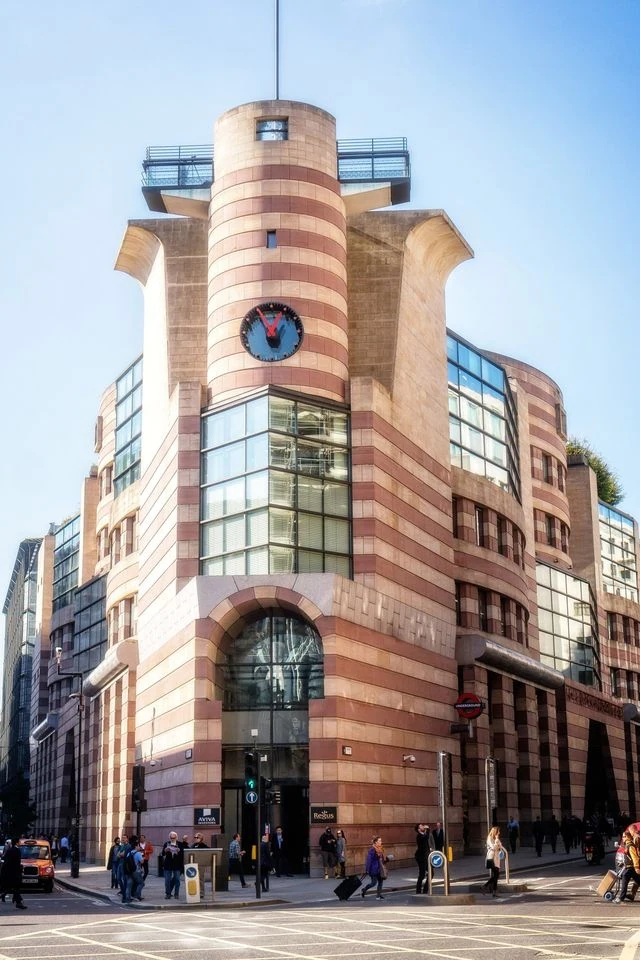
Michael Wilford’s career joined a long collaboration with James Stirling to an independent practice that reached across Britain and Europe. He entered Stirling’s office in 1960; in 1971 they established the Stirling/Wilford partnership. Their best-known work included the Staatsgalerie in Stuttgart and the Clore Gallery in London. After Stirling’s death, Wilford continued to lead practices in Britain and Germany, designing buildings for the arts, education and public life.
Training and partnership
Wilford was born in Surbiton, Surrey, on 9 September 1938. He studied at the Northern Polytechnic School of Architecture in London from 1955 to 1962, and at the Regent Street Polytechnic Planning School in 1967. In 1960 he joined the practice James Stirling had established four years earlier. The distinction matters: their working relationship began before they formally became partners in 1971.
The Stirling/Wilford partnership lasted until Stirling’s death in 1992. Among its most prominent projects was the Staatsgalerie in Stuttgart, completed in 1984. The museum brought classical references together with postmodern forms. Its coloured façades, circular motifs and dynamic shapes gave the building a distinctive visual character, while its design connected the gallery with its urban setting. The project established an important part of Wilford’s professional record beyond Britain.
Art, education and public buildings
In London, Wilford worked on the Clore Gallery, an extension to Tate Britain dedicated to the works of J.M.W. Turner. It opened in 1987, adding gallery space to an established institution and providing a setting for Turner’s art. The project brought contemporary architecture into a British cultural context: a new building connected to a gallery with a substantial artistic history.
Wilford’s later work included buildings for music, art and performance. The Hochschule für Musik und Darstellende Kunst, the University for Art and Music in Stuttgart, received the 1997 Stirling Prize. In Salford, the Lowry brought performing and visual arts together. It received the Royal Fine Art Commission Building of the Year Award in 2001. These projects show the range of institutions with which his practice was involved, from a German university to an arts centre in northern England.
Another significant commission was the British Embassy in Berlin, completed in 2000. Together with the Lowry and his German projects, it reflects a career that crossed national borders and encompassed different kinds of public building. Wilford’s work included performing arts centres, galleries, museums and libraries in several countries; it was not confined to one building type or to his collaboration with Stirling.
Independent practice and teaching
After the partnership ended, Wilford worked under the name Michael Wilford and Partners from 1993 to 2001. His subsequent practices included Michael Wilford Architects in the UK and Wilford Schupp, based in Stuttgart. In this later phase, he continued to work in Britain and Germany, maintaining an international professional life while developing projects independent of Stirling.
Teaching was another sustained part of Wilford’s career. He taught at schools of architecture in Britain, the United States, Canada and Australia. His appointments included the Architectural Association in London, the University of Sheffield and the University of Newcastle in Australia, as well as institutions in North America. He also became a visiting professor at the Liverpool School of Architecture, which he described as his favourite school of architecture. Liverpool was part of his teaching career, not the institution at which he completed his architectural studies.
His professional activity extended to examining and judging as well as designing and teaching. Wilford served as an external examiner at UK schools of architecture and sat on juries for international architectural competitions and awards. He belonged to the Royal Institute of British Architects and the Singapore Institute of Architects, was a Fellow of the Royal Society of Arts, and held honorary membership of the Bund Deutscher Architekten. The range of these roles placed him within professional networks in Britain and abroad.
Recognition and later years
Wilford was appointed a Commander of the Order of the British Empire in 2001. The 1997 Stirling Prize for the Stuttgart University for Art and Music and the 2001 award for the Lowry recognised two different projects within a broader body of work. In 2009, the British Library’s National Life Stories collection recorded an oral-history interview with him for its Architects’ Lives series, preserving an account of his professional life.
He died on 10 March 2023, aged 84. His career had moved from architectural study in London to a formative partnership, then to practices working in Britain and Germany. It also combined the creation of buildings with teaching, professional service and participation in the evaluation of other architects’ work.
Why Michael Wilford deserves a place in British Legacy
Michael Wilford’s British legacy is visible in buildings that give lasting settings to art and public culture. The Clore Gallery extended Tate Britain and provided space for the works of J.M.W. Turner. The Lowry brought performing and visual arts together in Salford. These projects serve different audiences and purposes, but both connect architecture with the institutions and activities taking place inside it. His work on the British Embassy in Berlin adds a civic and diplomatic building to that record, while his projects in Stuttgart demonstrate how a British architect’s practice could also contribute to cultural life abroad.
His contribution was not limited to completed buildings. Wilford taught architecture at institutions in Britain and overseas, examined students at UK schools, and served on international competition and award juries. Those roles linked professional practice to education and the assessment of future work. His career also records a substantial progression: he joined Stirling’s office in 1960, formed a partnership with him in 1971, and continued through practices in Britain and Germany after 1992. The honours attached to the Stuttgart university and the Lowry, alongside his CBE, mark distinct elements of that achievement. Remembering Wilford in British Legacy recognises an architect whose work supported cultural, educational and public institutions at home while carrying his practice across borders.
Sources
Adapted in part from Michael Wilford by Wikipedia contributors, under CC BY-SA 4.0. Text has been edited and combined with the existing article; this adapted text is shared under the same licence. Contributor history.