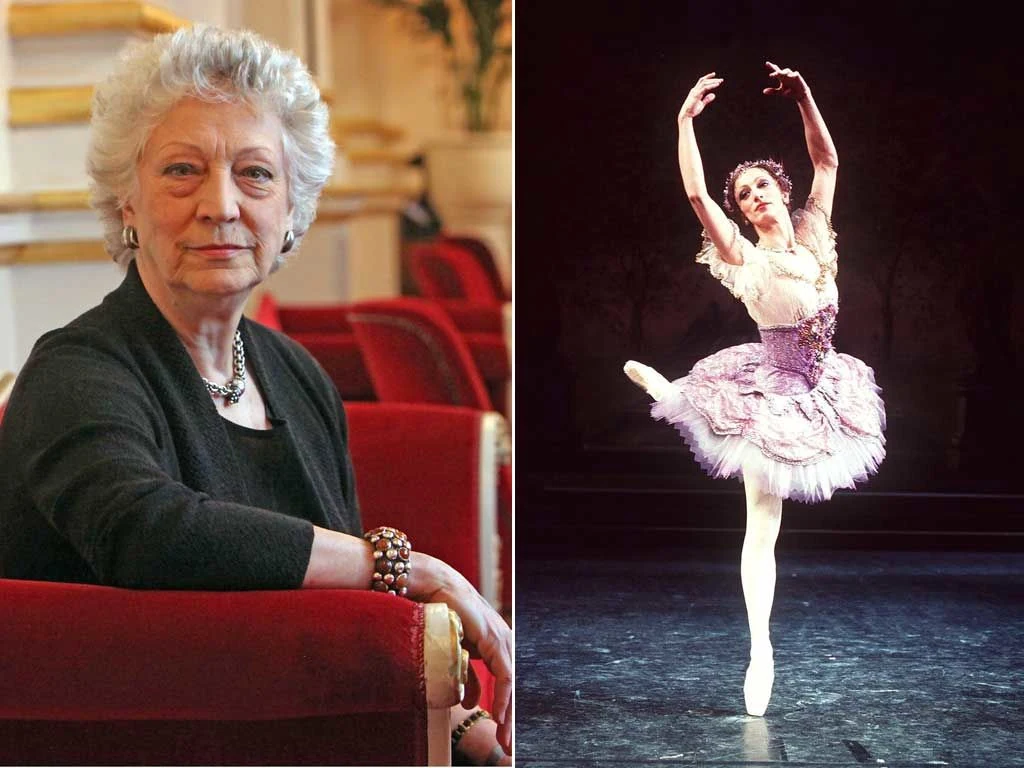
Monica Mason’s career at The Royal Ballet spanned more than half a century and took her from its youngest company member to its artistic director. She made roles in Kenneth MacMillan’s ballets, became a principal dancer and, after leaving the stage, built a second career as a teacher and rehearsal director. Her path through the company’s ranks gives a close view of how performance, training and leadership sustain a major British ballet institution.
From Johannesburg to the Royal Ballet School
Mason was born Monica Margaret Mason in Johannesburg, South Africa, on 6 September 1941, into a family of British ancestry. She began ballet training in her home city with Ruth Inglestone, Reina Berman and Frank Staff. In 1956, she came to London to study with Nesta Brooking before entering the Royal Ballet School as an advanced student. Alongside dance, she continued her academic education.
Two years later, aged 16, Mason joined The Royal Ballet’s corps de ballet. She was the youngest member of the company. Her early years there brought a formative encounter with choreographer Kenneth MacMillan, who cast her as the Chosen Maiden in his version of The Rite of Spring, set to Igor Stravinsky’s score. The performance was filmed by Tony Palmer, and Mason’s work in the role established an important artistic association: she went on to dance in almost all MacMillan’s works in the company’s repertory and created roles in six of them.
A performer of range
Mason became a soloist in 1963 and was promoted to principal dancer in 1968. Her repertory ranged from classical roles, including Odette and Odile in Swan Lake and Nikiya in La Bayadère, to abstract works such as Song of the Earth, choreographed by MacMillan to Mahler’s Das Lied von der Erde. The range also extended to sharply contrasting characters and styles: she played the Black Queen in Ninette de Valois’s Checkmate and Lady Elgar in Frederick Ashton’s Enigma Variations (My Friends Pictured Within).
Her work in MacMillan’s repertory included roles created in Manon (1974), Elite Syncopations and The Four Seasons (both 1975), Rituals (1975), and Isadora (1981). These parts sat alongside her performances in the established repertory. In Giselle she danced Myrtha, the implacable queen of the Wilis; in The Sleeping Beauty she played Carabosse, the malevolent fairy. She also appeared in works by George Balanchine and Jerome Robbins, including Liebeslieder Walzer and Dances at a Gathering, where her stage presence took on a different warmth and grace.
From the stage to the rehearsal room
After many years performing at the Royal Opera House in Covent Garden, Mason began a new phase of her career in teaching and rehearsal direction. In 1980, she became principal répétiteur for MacMillan’s ballets. That year she also began teaching classical variations to senior girls at the Royal Ballet School, connecting her company work with the training of the next generation of dancers.
Her responsibilities grew steadily. Mason became the company’s principal répétiteur in 1984, assistant to the director in 1988 and assistant director to Anthony Dowell in 1991. The progression brought her experience as a dancer into the practical work of preparing performances and supporting a company. By the time she took on the artistic directorship, she had spent decades inside the organisation, across its repertory, rehearsal rooms and school.
Leading The Royal Ballet
In 2002, Mason became artistic director of The Royal Ballet, succeeding Ross Stretton. She held the post for ten years, retiring in July 2012; Kevin O’Hare succeeded her. Her tenure brought together the parts of the work she had known from earlier positions: maintaining a repertory, developing performers and making decisions about what the company would present.
The record of her leadership includes fostering talent and enriching the repertory. The post was not simply a continuation of her performing career: it placed her in responsibility for the company as a whole, after years of experience as a dancer, teacher and rehearsal director. Peter Wright regarded her as the best artistic director since Ninette de Valois, a strong personal assessment that reflects the regard in which her leadership was held.
Honours and recognition
Mason’s service was recognised in the Order of the British Empire. She was appointed an Officer (OBE) in 2002 and elevated to Dame Commander (DBE) in 2008. The honours followed a career that had combined performance and administration within one of Britain’s best-known ballet companies. Her professional life also demonstrates how artistic leadership can grow from detailed knowledge of the stage: she had performed the repertory, worked closely with its choreographers, taught students and directed rehearsals before becoming artistic director.
Why Monica Mason deserves a place in British Legacy
Monica Mason’s place in British Legacy rests on a sustained contribution to The Royal Ballet, rather than on a single performance or title. She joined the company at 16, became a principal dancer and created roles in ballets by Kenneth MacMillan. Her repertory crossed classical and modern works, while her performances in parts such as Myrtha in Giselle and Carabosse in The Sleeping Beauty show the range of characters she brought to the stage. This is a British cultural legacy built through the daily work of performance: learning roles, sustaining a repertory and helping make choreography live for audiences.
Her later work extended that contribution beyond her own dancing. As a teacher and rehearsal director, Mason helped prepare performers and productions; as artistic director from 2002 to 2012, she led the company and fostered talent while enriching its repertory. The progression from dancer to institutional leader illustrates how experience gained in the studio and on stage can inform the stewardship of a major arts organisation. Her career also links the Royal Ballet School’s training to the company’s performance life, and recognises the value of skilled work behind the scenes as well as in the spotlight. That combination of artistic achievement, teaching and leadership makes her an important figure in the history of British ballet.
Sources
Monica Mason — revision 1341020450
Adapted in part from Monica Mason by Wikipedia contributors, under CC BY-SA 4.0. Text has been edited and combined with the existing article; this adapted text is shared under the same licence. Contributor history.