In Much Ado About Nothing, a conversation overheard at the right—or wrong—moment can kindle a romance, wreck a reputation or expose a deception. Shakespeare sets the comedy in Messina, where soldiers arrive home from battle and two couples take very different routes towards love. Beatrice and Benedick turn their mutual attraction into a contest of wit; Claudio and Hero face a slander that nearly destroys their marriage. The play’s pleasures lie not only in its reversals, but in the uneasy contrast between playful matchmaking and the severe consequences of believing an accusation.
A comedy built on overhearing
The play is thought to have been written in 1598–99. Its first recorded performances were at court during the winter of 1612–13, at celebrations before the marriage of Princess Elizabeth and Frederick V of the Palatinate. An earlier debut in the late 1590s is likely, but is not the same as a documented performance. The first quarto appeared in 1600, and the play was included in the First Folio of 1623.
The title carries a clue to the action. In Shakespeare’s time, “nothing” and “noting” sounded alike; the latter could mean noticing, gossiping or overhearing. Characters repeatedly watch, listen and draw conclusions from partial evidence. A staged courtship makes Claudio suspect Don Pedro of pursuing Hero for himself. Later, Don John arranges for Claudio to see Borachio at Hero’s window, apparently with Hero, though the woman is her attendant Margaret. Claudio accepts the appearance as proof and denounces Hero at their wedding.
Other deceptions are meant kindly. Don Pedro and his companions arrange for Benedick to overhear that Beatrice loves him; Hero and Ursula, in turn, ensure that Beatrice hears a similar account of Benedick. Each is persuaded to reconsider a declared resistance to marriage. The plots make overhearing a comic engine, but also show how readily people can be steered by what they think they have witnessed.
Two very different courtships
Beatrice, Leonato’s niece, and Benedick, a soldier and companion of Don Pedro, greet each other with insults and insist that they will never marry. Their “merry war” supplies much of the comedy: both are quick with a retort, and neither wants to appear vulnerable. Once each believes the other is secretly in love, their performances of indifference begin to give way. At the close, they acknowledge their feelings publicly, even as they try to preserve their comic defiance.
Claudio’s courtship of Hero, Leonato’s daughter, is more exposed to the codes of honour and male reputation that shape the play’s society. Don John, Don Pedro’s illegitimate brother, sets out to cause trouble. His plot exploits Claudio’s fears by making Margaret’s meeting with Borachio look like Hero’s infidelity. At the wedding, Claudio publicly rejects Hero. Leonato is ready to condemn his daughter, while a friar argues that she is innocent and recommends that the family pretend she has died.
The local Watch overhears Borachio and his associate Conrade discussing the plot and arrests them. Their constable, Dogberry, is famously inept, but the Watch’s evidence reaches Leonato and reveals Hero’s innocence. Claudio agrees to marry Leonato’s niece, who is in fact Hero, and she is restored to him. Don John has fled when his deception is uncovered; news of his capture arrives as the couples celebrate. The ending offers reconciliation, but it does not erase the public humiliation and harm caused by Claudio’s credulity.
Messina, language and social expectations
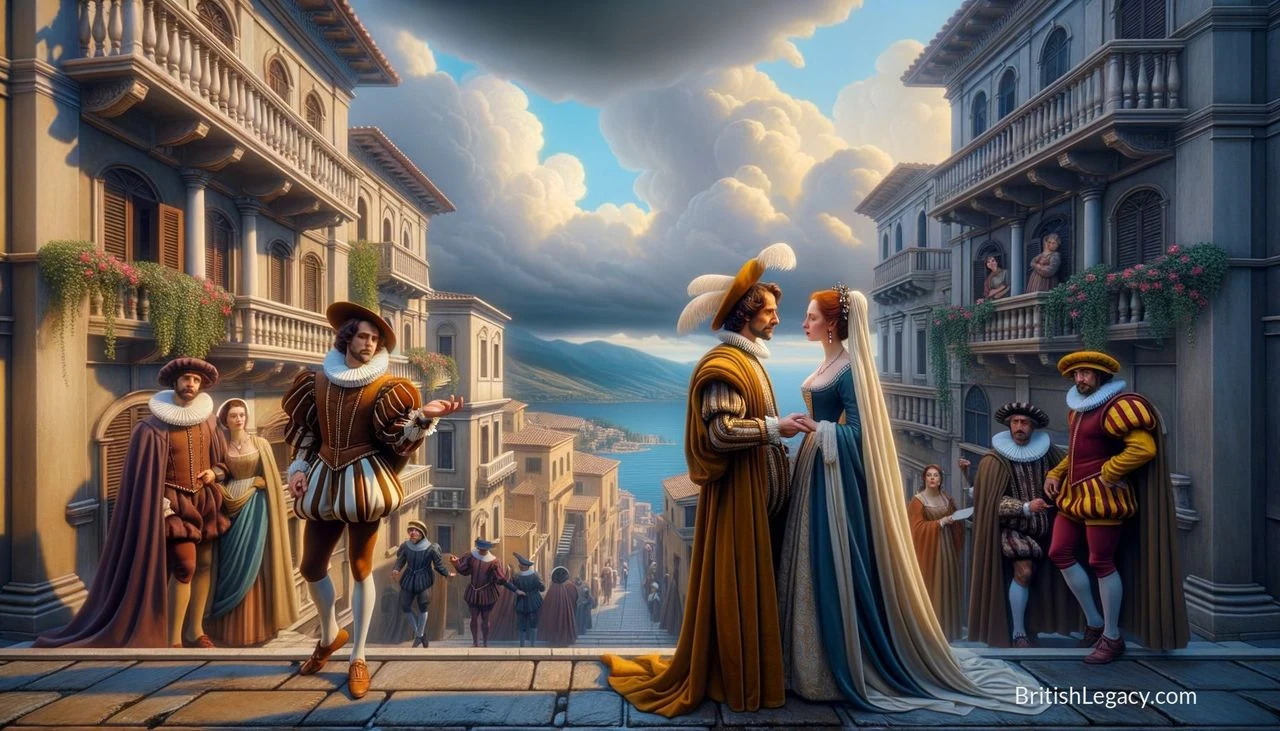
Set in a Sicilian port under Aragonese rule, the play takes place chiefly at Leonato’s home and grounds. Its soldiers return from a successful battle, yet the central conflicts unfold through conversation, performance and domestic observation rather than military action. Much of the play is written in prose, with substantial verse passages. The mixture gives the exchanges a brisk social energy while allowing moments of ceremony and emotional weight.
Its treatment of gender is part of that design. Men judge Hero by a strict standard of sexual honour and are quick to accept a charge against her; her father initially joins in the public condemnation. Beatrice’s verbal independence gives the play a different kind of female authority, although the comic resolution still turns on marriage. The contrast matters: the play’s wit can expose the assumptions behind men’s actions without making those assumptions harmless.
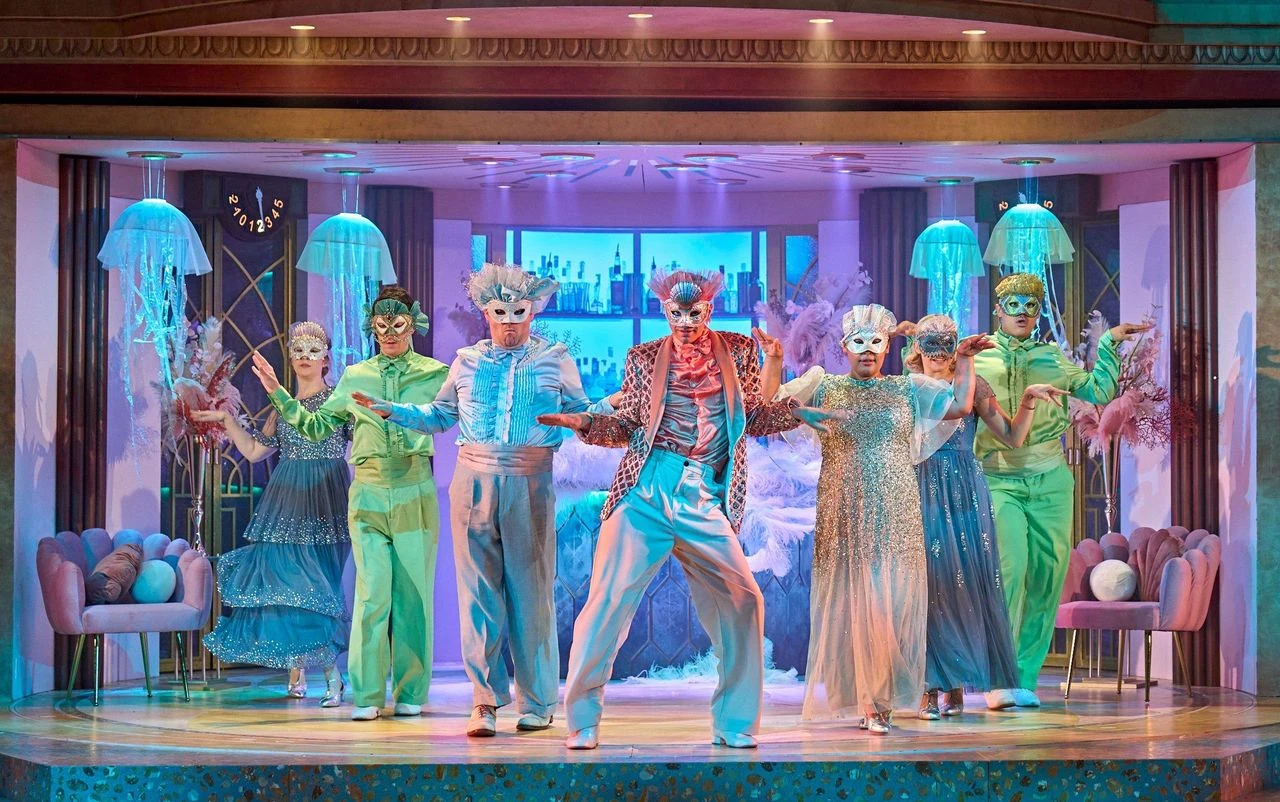
The repeated business of masks and mistaken identities makes outward appearance unreliable. At a masked ball, Don Pedro courts Hero for Claudio, while Beatrice speaks disparagingly about Benedick to Benedick himself, without recognising him. Later, Margaret is mistaken for Hero, and Hero’s supposed death allows her to return under another identity. Such devices make for intricate comedy, but the plot also asks what happens when a person’s reputation depends on what others think they have seen.
Centuries of performance and adaptation
The play has remained a regular part of theatre repertory. In 1836, Helena Faucit appeared as Beatrice opposite Charles Kemble as Benedick at Covent Garden. Henry Irving and Ellen Terry later made the pair a celebrated stage partnership. John Gielgud played Benedick from 1931 and kept the role in his repertory until 1959. In 1982, Derek Jacobi and Sinéad Cusack starred in a Royal Shakespeare Company production directed by Terry Hands; Jacobi won the Evening Standard Award for Best Actor. Jacobi and Cusack took the production to Broadway in 1985, where he won the Tony Award for Best Actor in a Play.
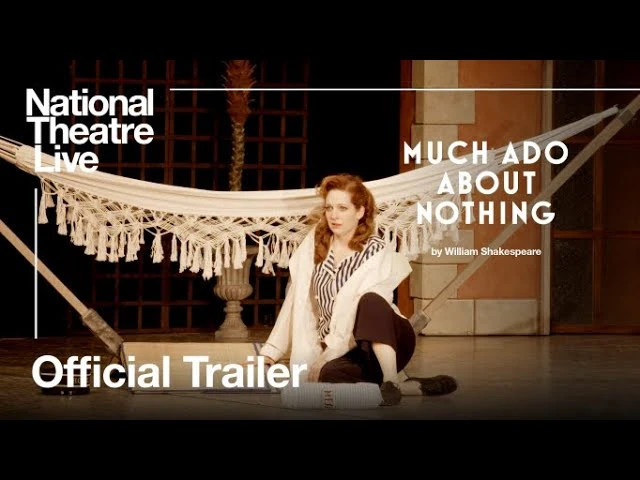
Later British productions brought new casts and interpretations to the comedy. Tamsin Greig won the Laurence Olivier Award for Best Actress for the Royal Shakespeare Company’s 2006 production. The National Theatre staged it in 2007 with Zoë Wanamaker and Simon Russell Beale, and Shakespeare’s Globe presented it in 2011 with Eve Best and Charles Edwards. The Royal Shakespeare Company’s 2012 production, directed by Iqbal Khan, used an Indian setting and featured Meera Syal and Paul Bhattacharjee. In 2013, Vanessa Redgrave and James Earl Jones played Beatrice and Benedick at the Old Vic.
Screen adaptations have carried the play to further audiences. Kenneth Branagh’s 1993 film starred Branagh as Benedick and Emma Thompson as Beatrice. Joss Whedon filmed a contemporary adaptation in 2011; it was released in 2013. The story has also been reworked for television, including a BBC version broadcast in 1984 and the BBC’s modern-day ShakespeaRe-Told adaptation in 2005. Its plots have inspired operas and other musical works, among them Hector Berlioz’s Béatrice et Bénédict (1862) and Charles Villiers Stanford’s opera of the same English title (1901).
Why Much Ado About Nothing deserves a place in British Legacy
Much Ado About Nothing deserves a place in British Legacy because it shows the continuing life of English-language drama through both performance and reinvention. Written by Shakespeare around the turn of the seventeenth century, it entered print in a 1600 quarto and the 1623 First Folio; its subsequent British stage history includes actors such as Helena Faucit, Charles Kemble, Henry Irving, Ellen Terry and John Gielgud. More recent Royal Shakespeare Company, National Theatre, Globe and Old Vic productions demonstrate that the play remains part of the country’s working theatrical repertoire, not merely an item in literary history.
Its legacy also rests on the friction within its comedy. Beatrice and Benedick’s wordplay makes resistance to romance entertaining, while Claudio and Hero’s plot gives the play a sharper account of how suspicion and gendered standards of honour can damage a woman’s standing. The same structure that generates comic misunderstandings can reveal how easily hearsay becomes accepted as fact. Productions and adaptations—from Branagh’s film to the BBC’s television versions and the RSC’s Indian-set staging—have offered different audiences ways into those tensions. This combination of theatrical craft, memorable character interplay and continuing reinterpretation explains the play’s particular value to British cultural heritage.
Sources
Much Ado About Nothing (revision 1369705199)
Adapted in part from Much Ado About Nothing by Wikipedia contributors, under CC BY-SA 4.0. Text has been edited and combined with the existing article; this adapted text is shared under the same licence. Contributor history.