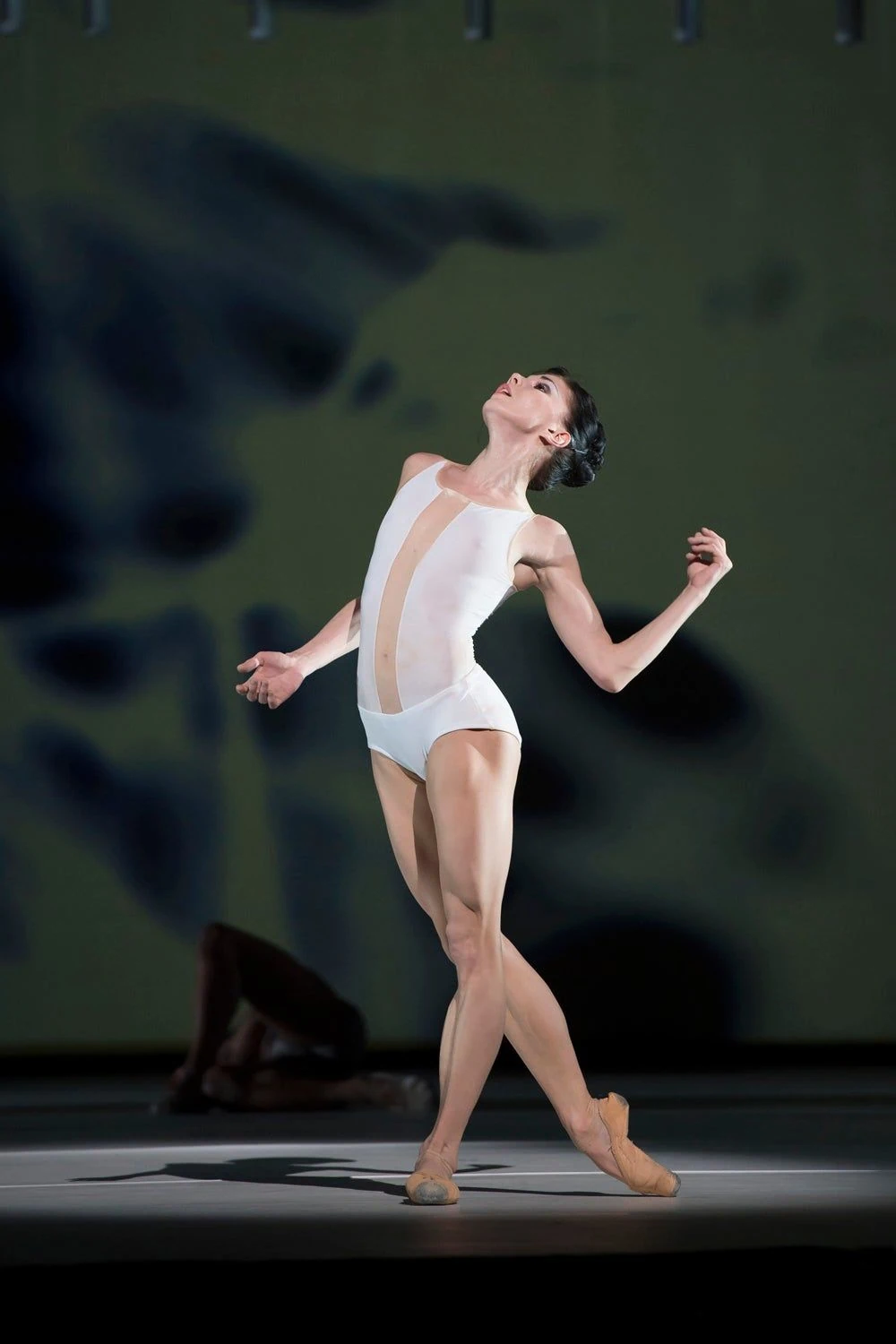
Natalia Osipova’s career has crossed major ballet companies and national traditions. Born in Moscow, she trained at the Bolshoi Ballet Academy, rose through the Bolshoi Ballet and joined the Royal Ballet in 2013. In London, she has performed both celebrated classical roles and work from a broad repertory. Her story is not simply one of arrival: she chose the Royal Ballet for its range, and became a principal dancer in a company whose repertoire gave her room to pursue that breadth.
Training in Moscow
Osipova was born in Moscow on 18 May 1986. She began formal ballet training at the Mikhail Lavrosky Ballet School when she was nine. From 1996 to 2004, she studied at the Moscow State Academy of Choreography, also known as the Bolshoi Ballet Academy, with Marina Kotova and Marina Leonova. That training preceded her entry into the Bolshoi Ballet, where she joined the corps de ballet at 18.
Her early career developed quickly. In 2005, she danced Kitri in Alexei Fadeyechev’s production of Don Quixote, a performance that brought critical acclaim. She became a soloist in 2006 and a leading soloist in 2009. In 2010, she was promoted to principal dancer at the Bolshoi. The sequence marks a rapid progression from the corps de ballet to the company’s leading rank, built around roles that demand both speed and forceful stage presence.
Kitri became an important part of her repertory: her debut in the role on 7 November 2005 launched her solo career. Osipova also danced Giselle and other leading parts as her range grew. In 2007, Dance Magazine named her one of its 25 to Watch. Her awards in this period included the Grand Prix at the Prix de Luxembourg International Ballet Competition in 2003 and third prize at the Moscow International Ballet Competition in 2005.
A move shaped by artistic range
Osipova left the Bolshoi in 2011, citing artistic freedom as her reason. She then appeared as a guest dancer with American Ballet Theatre during its Metropolitan Opera House season, dancing in Don Quixote, The Sleeping Beauty and Romeo and Juliet. In December of that year she joined the Mikhailovsky Ballet. Her work outside traditional full-length classical roles included Roy Assaf’s Six Years Later and Alexei Ratmansky’s Valse Triste, as well as solo performances to music by Beethoven.
On 8 April 2013, it was announced that Osipova would join the Royal Ballet as a principal dancer. She had previously appeared with the company as a guest in Swan Lake. The wider and more diverse repertoire was her stated reason for moving. She made her Royal Ballet debut on 21 November 2013 as Juliet in Romeo and Juliet, partnered by Carlos Acosta. The move brought her to a British company not as a newcomer to principal roles, but as a dancer already established on international stages.
At the Royal Ballet, her roles have included Juliet, Giselle, Odette and Odile in Swan Lake, Manon, and parts in The Nutcracker. She has also appeared in works including Woolf Works, In the Upper Room and Connectome. The range helps explain why the London appointment appealed to her: her repertory encompasses narrative classics, works by twentieth-century choreographers and contemporary pieces.
Roles beyond the classical repertory
In 2016, Osipova performed in Kenneth MacMillan’s Anastasia as Grand Duchess Anastasia Nikolaevna and Anna Anderson. The role draws on the story of the Russian grand duchess and the woman who claimed to be her. This is a more specific account than describing Osipova simply as playing a supposed grand duchess: the production’s role is identified with both Anastasia and Anderson.
She continued to take on work outside the standard classical repertoire. In 2018, she appeared with David Hallberg in Antony Tudor’s The Leaves Are Fading, presented in Pure Dance. In 2019, she played a mother in Arthur Pita’s The Mother. That June, she appeared in Gerald Fox’s documentary film Force of Nature. She also danced Giselle with Hallberg at Lincoln Center in New York. These projects place her ballet work alongside performance and screen appearances, without displacing the company roles for which she is best known.
Her honours reflect a career recognised in both Russian and British dance contexts. Among them are the Ballet Magazine Soul of Dance Prize as Rising Star in 2007, the Leonide Massine Award for Significance of Talent in 2008 and the Prix Benois de la Danse in 2008. She received Golden Mask recognition for In the Upper Room and La Sylphide, and the UK National Dance Award for Best Female Dancer in 2007, 2010 and 2014.
Making a life and career in Britain
Osipova moved to London in 2013, the year she began dancing with the Royal Ballet. She became a naturalised British citizen in 2022. Her connection to Britain is therefore both professional and personal: for more than a decade, her work has been closely associated with one of the country’s leading ballet companies, and she has since become a British citizen.
Her career has not been confined to a single company or style. Before London came the Bolshoi, a period with the Mikhailovsky Ballet and guest appearances with American Ballet Theatre. With the Royal Ballet, she has continued to dance roles ranging from Kitri and Juliet to parts in modern works. That movement between companies and repertories is a defining feature of her career, rather than a break between a Russian past and a British present.
Why Natalia Osipova deserves a place in British Legacy
Natalia Osipova deserves a place in British Legacy because her contribution to British ballet is grounded in sustained work with the Royal Ballet. She joined as a principal dancer in 2013, having already built a substantial career at the Bolshoi and elsewhere. Her reason for choosing London—the company’s broader and more diverse repertoire—helps explain the value of that connection. In the Royal Ballet, she has brought experience of major classical roles while continuing to appear in works by choreographers including Kenneth MacMillan, Antony Tudor and Arthur Pita.
Her British legacy is also part of a wider cultural exchange. Osipova trained and established herself in Russia, then made London her professional home and became a naturalised British citizen. That path does not make her early career less significant; it shows how an established dancer’s skills can become part of a British institution and its ongoing repertory. Audiences in Britain have been able to see her in works as varied as Romeo and Juliet, Giselle, Anastasia and Woolf Works. Her career consequently offers a concrete example of how the Royal Ballet’s international reach enriches the performing arts in Britain: through an individual dancer’s performances, choices and continued participation in the company’s artistic life.
Sources
Adapted in part from Natalia Osipova by Wikipedia contributors, under CC BY-SA 4.0. Text has been edited and combined with the existing article; this adapted text is shared under the same licence. Contributor history.