Francis Henshall has one overriding practical concern: how to serve two employers without either discovering the other. In Richard Bean’s One Man, Two Guvnors, that predicament turns an Italian commedia dell’arte plot into a fast-moving comedy set in 1963 Brighton. The production opened at the National Theatre in 2011, then travelled through the West End, Broadway and touring stages, carrying its physical comedy and skiffle soundtrack with it.
A classic plot, recast in Brighton
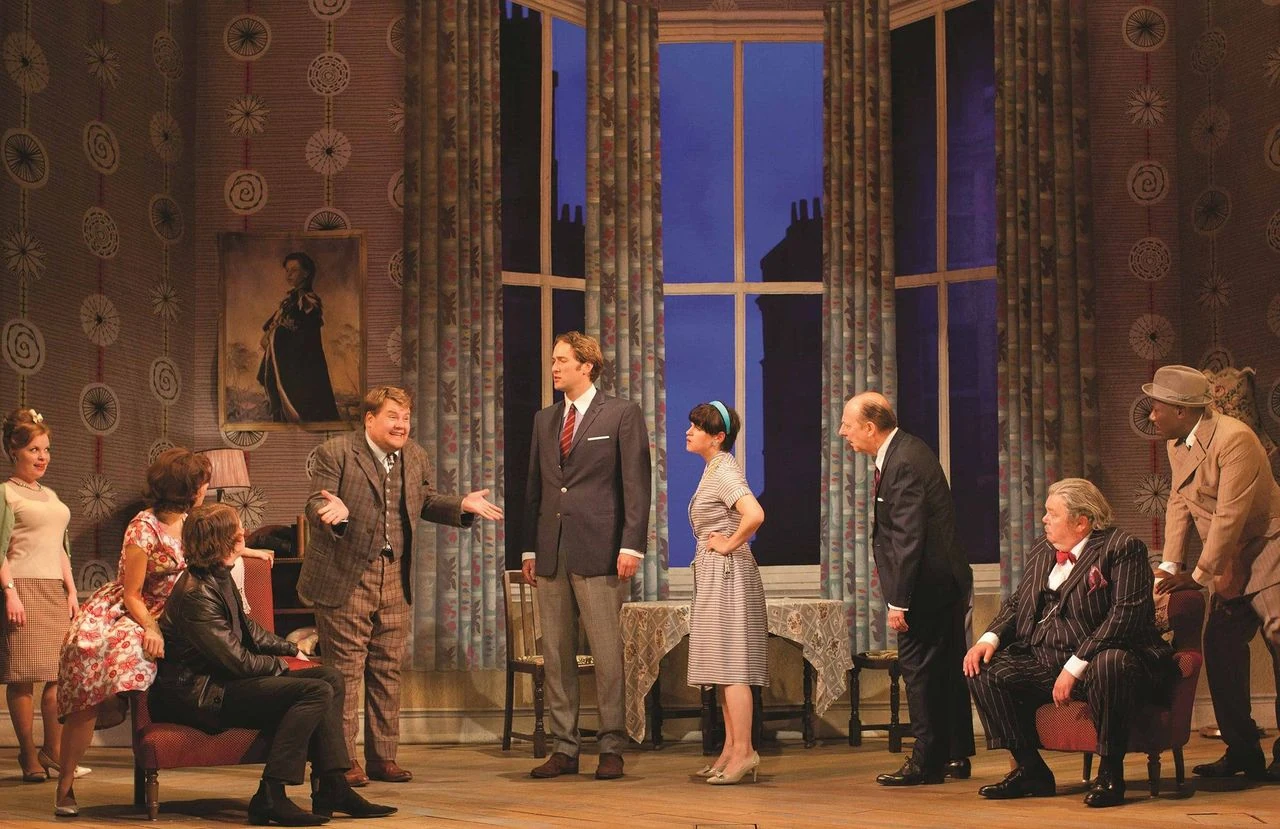
Bean adapted Carlo Goldoni’s The Servant of Two Masters, an Italian comedy written in the commedia dell’arte tradition. The original’s period setting gives way to Brighton in 1963, while its central device remains: a servant tries to keep two masters apart. The shift brings the story into a British seaside town and gives the production a setting for its own music, accents and social comedy.
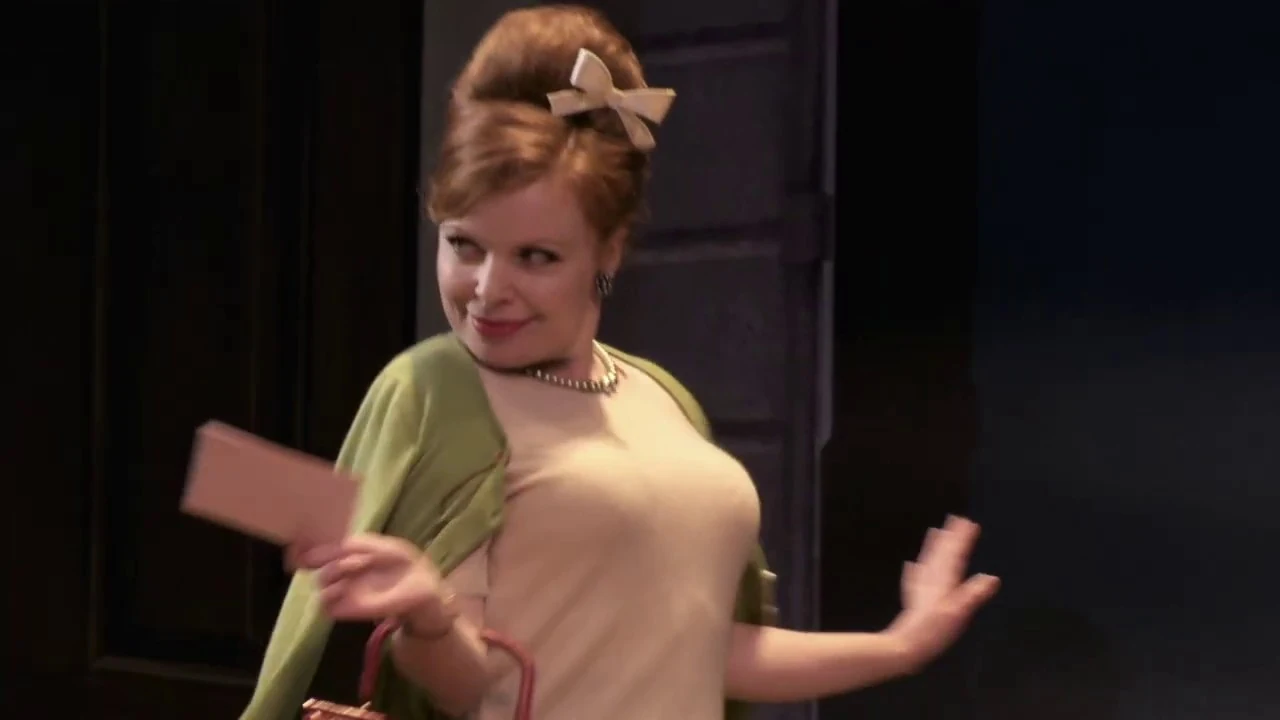
Francis, an out-of-work skiffle player, takes separate jobs from Roscoe Crabbe, a gangster, and Stanley Stubbers, an upper-class fool. He must stop them meeting, not least because Stanley has killed the real Roscoe. The man Francis believes to be Roscoe is in fact Rachel Crabbe, Roscoe’s twin sister, in disguise. Rachel is in love with Stanley, and the tangled relationships leave Francis struggling to keep his employers, and their secrets, straight.
Further complications come from local mobster Charlie the Duck, who has arranged for his daughter Pauline to marry Roscoe, though Pauline prefers the amateur actor Alan Dangle. Letters, a heavy trunk and Francis’s appetite add further obstacles. So does his interest in Dolly, Charlie’s bookkeeper. The plot’s multiplying misunderstandings give Bean room to combine verbal jokes with physical business, direct address and audience involvement.
From the National to Broadway
The play premiered at the National Theatre’s Lyttelton Theatre in London on 24 May 2011, following previews from 17 May. Nicholas Hytner directed, with James Corden as Francis Henshall. Associate director Cal McCrystal was responsible for the physical comedy, an important part of a show built around movement, timing and the management of ever more precarious situations.
Music by Grant Olding, performed in skiffle style by the band The Craze, helped establish the production’s early-1960s sound. The band was not simply an accompaniment: it was part of the theatrical world of the play, helping place the action in its chosen period while giving the comedy a live musical pulse.
After its National Theatre engagement, the production toured the UK and opened in the West End in November 2011. Corden continued in the role at first; when the production moved to the Theatre Royal Haymarket in March 2012, Owain Arthur took over. The London run continued with further cast changes until March 2014, and the play returned to tour in the UK.
Broadway followed in April 2012, with Corden reprising Francis at the Music Box Theatre. He won the Tony Award for Best Performance by a Leading Actor in a Play. The Broadway production received seven Tony nominations in total, including recognition for direction, design, sound and Olding’s score. Tom Edden, who played Alfie, won the Outer Critics Circle Award for Outstanding Featured Actor in a Play. The show also won the Drama Desk Award for Outstanding Music in a Play.
A comedy made to travel
The play’s life extended beyond its first London and Broadway engagements. A second UK touring production, starring Rufus Hound, began in October 2012 and visited venues including Leicester, Newcastle, Glasgow, Belfast, Norwich, Leeds, Salford and Cardiff. An international tour followed in 2013, playing Hong Kong, Adelaide, Auckland, Sydney and Melbourne, with Owain Arthur leading the cast. Further UK tours followed in 2014 and 2015.
In London, performers including Rufus Hound and Owain Arthur took turns as Francis, while other roles also passed to new actors during the run. That succession of casts reflects the practical life of a repertory-style hit: the work was not confined to the original performers or a single theatre. Later productions included an actor-musician staging at Eastbourne’s Devonshire Park Theatre in 2017 and a production at the New Vic Theatre in Newcastle-under-Lyme in 2024.
The National Theatre production was broadcast to cinemas on 15 September 2011 as part of National Theatre Live. In April 2020, a recording was made available for a week through National Theatre at Home; it was watched by around 2.5 million viewers. A stage comedy that depends on timing and shared physical space could thus reach audiences far beyond the theatre where it began.
Comedy built from performance
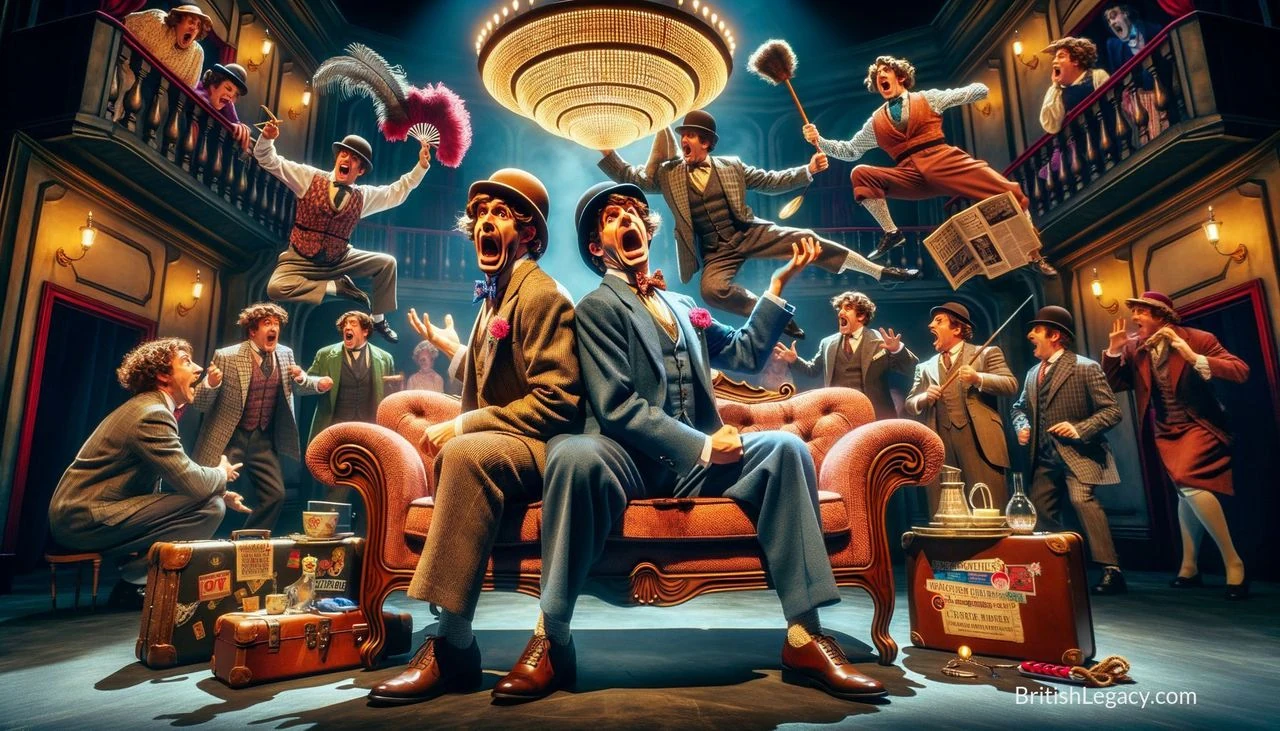
Bean’s adaptation retains the stock characters and comic machinery associated with commedia dell’arte, but the production’s effect depended on more than the survival of an old plot. Its Brighton setting, period music, broad physical humour and exchanges with the audience made those conventions immediate for contemporary theatre-goers. The audience volunteers, an increasingly troublesome trunk and Francis’s repeated attempts to manage two jobs all offered opportunities for performance as well as plot.
The show received widespread critical acclaim and won Best Play at the Evening Standard Theatre Awards in 2011. Its Broadway recognition extended that success into the American theatre industry, while UK and international tours took the production to audiences who had not seen it at the National. The results demonstrate how a play rooted in a British setting could travel without losing the comic structure that made it work.
Why One Man, Two Guvnors deserves a place in British Legacy
One Man, Two Guvnors merits a place in British Legacy because it makes a clear case for adaptation as a creative act: Bean takes Goldoni’s commedia dell’arte plot and gives it a distinct home in 1963 Brighton. The result is not simply an older comedy dressed in period clothes. A British seaside setting, skiffle music and physical performance reshape the material for a new audience, while Francis’s increasingly desperate double employment keeps the farce moving. The production connected that local frame to an international theatrical tradition without concealing either side of the exchange.
Its history also shows how a National Theatre production can develop beyond its original stage. The show moved into the West End, crossed to Broadway, toured across the UK and travelled to Hong Kong, Australia and New Zealand. Corden’s Tony win, the Broadway nominations and the Evening Standard Best Play award mark notable recognition, while the National Theatre Live broadcast brought the performance to cinema audiences. Later UK stagings and the 2020 home-streaming release extended that reach. Together, these achievements give the play a documented place in modern British theatre: an adaptation shaped by British setting and performance, and a production whose success was sustained through touring, new casts and different ways of reaching audiences.
Sources
One Man, Two Guvnors — revision 1372442682 · One Man, Two Guvnors
Adapted in part from One Man, Two Guvnors by Wikipedia contributors, under CC BY-SA 4.0. Text has been edited and combined with the existing article; this adapted text is shared under the same licence. Contributor history.