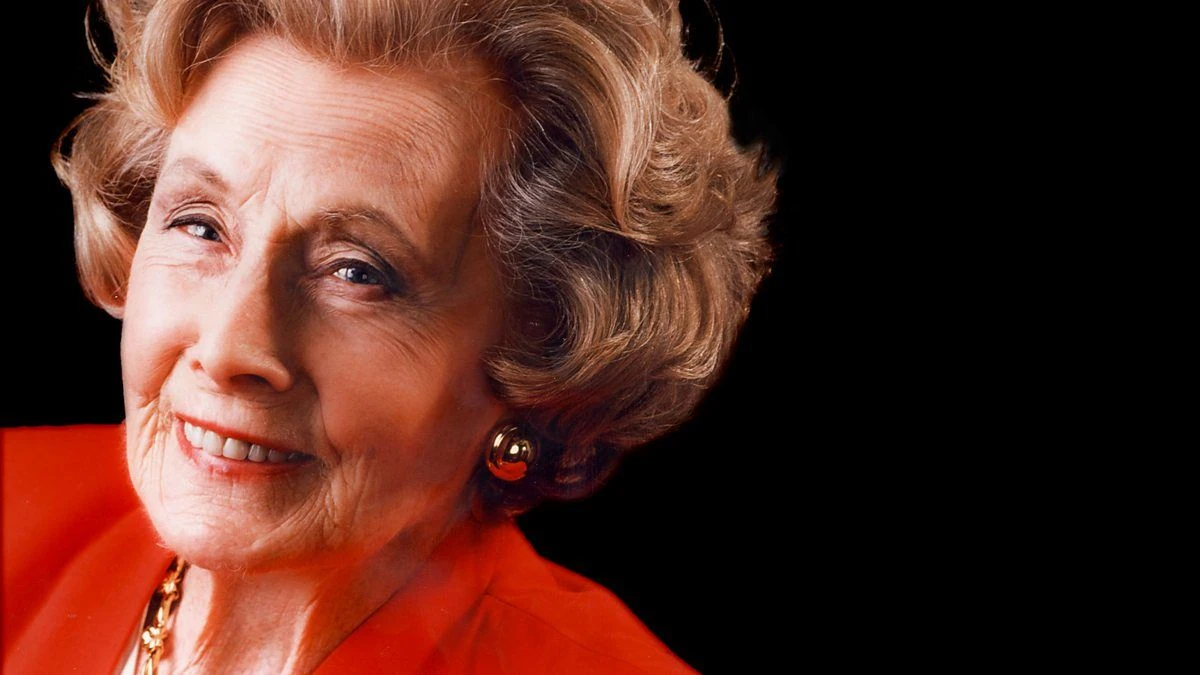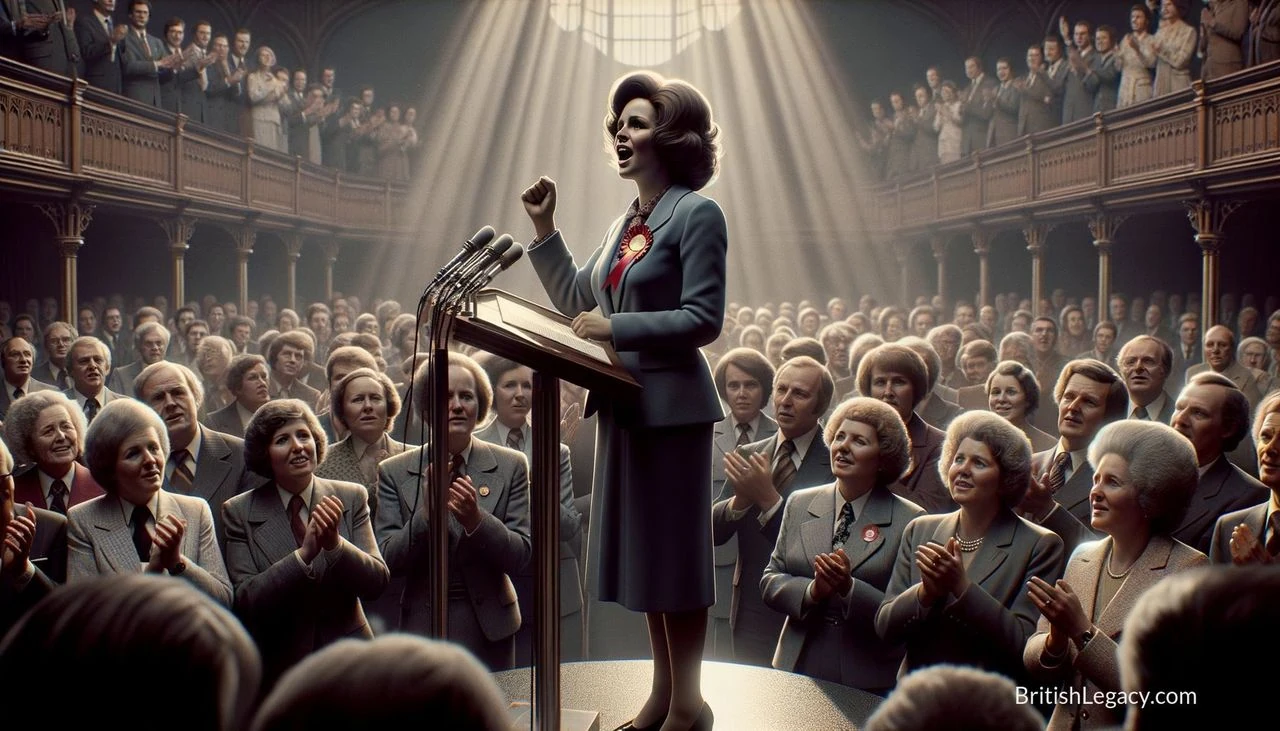
Barbara Castle’s political career ranged from road safety and overseas aid to equal pay and social security. She became one of Labour’s most prominent cabinet ministers, but her influence was not confined to government office: as an MP, campaigner and later Member of the European Parliament, she continued to argue for policies she believed mattered. Her work on the Equal Pay Act followed the 1968 Ford sewing machinists’ strike at Dagenham; as transport minister, she legislated for breathalyser tests and compulsory seat belts.
From a politically active family to Parliament
Born Barbara Anne Betts in Chesterfield, Derbyshire, on 6 October 1910, Castle was the youngest of three children. Her father, Frank Betts, was a tax inspector, and the family moved several times as his work and promotions took them around the country. Her mother, Annie, ran the household and a soup kitchen for coalminers. The family became involved with the Independent Labour Party after moving to Bradford, and Castle joined the Labour Party as a teenager.
Castle attended Bradford Girls’ Grammar School, where she excelled academically and developed her public-speaking skills. At St Hugh’s College, Oxford, she studied philosophy, politics and economics, graduating in 1932. She took an active role in the Oxford University Labour Club and became its treasurer. Before entering Parliament, she served on St Pancras Metropolitan Borough Council, worked at the Ministry of Food during the Second World War and wrote for Tribune and the Daily Mirror. She married Ted Castle in 1944.
In 1945, Castle was elected Labour MP for Blackburn, then a two-member constituency, alongside fellow Labour candidate John Edwards. Women in the local party had pressed for her inclusion on the candidate shortlist. Keen to understand the constituency rather than appear an outsider, she studied its weaving and spinning industries and stayed with a local family. In the Commons she became a parliamentary private secretary to Stafford Cripps and, later, Harold Wilson. Their political partnership would shape much of her time in government.
Roads, transport and public safety
When Labour returned to office in 1964, Wilson appointed Castle the first Minister for Overseas Development, a new department for which she and the Fabian Society had developed plans. She sought greater control over overseas aid, then spread among other departments, and argued for interest-free loans to some recipient countries. Disputes over the ministry’s budget limited what she could achieve.
In December 1965 she became Minister of Transport. She did not drive, but that did not stop her from taking on road safety. She backed breathalyser tests to tackle drink-driving, made the 70-mile-per-hour national speed limit permanent after its trial period, and legislated for seat belts to be fitted in new cars. The measures were controversial, but Castle argued that reducing road deaths justified the political risk. She also authorised the construction of the Humber Bridge.
Her record in transport was not a simple story of expansion or preservation. Castle oversaw the closure of about 2,050 miles of railway as part of the Beeching cuts, despite Labour’s earlier pledge to halt them. At the same time, she resisted some proposed closures and introduced government subsidies for socially necessary but unprofitable railways through the Transport Act 1968. The contrast reflects the choices she faced as a minister managing a system under pressure, rather than a single-minded commitment to one mode of transport.
Equal pay and a difficult industrial relations debate
In 1968 Wilson appointed Castle First Secretary of State and Secretary of State for Employment and Productivity. She was the first woman to hold the office of First Secretary of State. The employment role brought her into the centre of a divisive argument about trade unions. Her 1969 white paper, In Place of Strife, proposed changes to union powers and provoked a split in the Cabinet. The plan was eventually withdrawn after a deal with unions removed most of its contentious provisions.
Castle’s intervention in the Ford sewing machinists’ strike at Dagenham also came during this period. In 1968, women workers protested against being classified as unskilled and paid less than men. Castle supported the strikers and helped bring the dispute to an end; their pay rose to 92 per cent of the men’s rate. The strike helped prompt the Equal Pay Act 1970, which Castle steered through Parliament. The legislation was a substantial change in the law, though it did not make the dispute’s immediate settlement full pay equality.
Labour lost the 1970 general election, and Castle remained in Parliament. She later returned to Cabinet when Wilson became prime minister again in 1974, appointing her Secretary of State for Social Services. In that role she introduced Invalid Care Allowance and the Child Benefit Act 1975. Child benefit extended support to a family’s first child, unlike the previous arrangements, and Castle ensured it was paid directly to mothers. She also sought to remove private pay beds from the NHS and opposed continued British membership of the European Economic Community in the 1975 referendum. When James Callaghan succeeded Wilson in 1976, he dismissed her from Cabinet.
European politics, peerage and public remembrance
Castle left the Commons at the 1979 general election, but quickly moved to another elected chamber. She became a Member of the European Parliament, representing Greater Manchester from 1979 to 1989. She led Labour’s delegation and served as a vice-chair of the Socialist Group. Her position on Europe changed: after campaigning against membership in the 1975 referendum, she later argued that Labour should work within the European Community.
Her diaries, published in two volumes, recorded her years in government and offered an account of Cabinet politics. Castle was created Baroness Castle of Blackburn in 1990, and remained active in political debate. She died at her home in Ibstone, Buckinghamshire, on 3 May 2002, aged 91. Blackburn’s public memorials include a bronze statue unveiled in 2021, showing her carrying a copy of the Equal Pay Act, and a road named in her honour.
Why Barbara Castle deserves a place in British Legacy
Castle’s place in British history rests on more than her prominence as a woman in high office. She used ministerial responsibility to change everyday rules and services. Breathalyser tests and compulsory seat belts addressed risks on British roads; permanent speed limits and support for socially necessary rail services shaped transport policy. As Secretary of State for Social Services, she introduced Invalid Care Allowance and helped establish child benefit for the first child in a family, paid directly to mothers. These were concrete interventions in how public policy affected people’s safety, income and care responsibilities.
Her work on equal pay also shows how pressure from workers and action inside government could meet. The Dagenham machinists’ strike did not end with equal wages, but Castle’s support and the resulting legislation helped put equal pay into statute. Her career was not free of controversy: In Place of Strife split the Cabinet, and railway closures sat uneasily beside her support for some threatened lines. That complexity makes her legacy more instructive, not less. Castle was a British politician who pressed difficult reforms through the institutions available to her, while also facing opposition and compromise. The law, public services and transport measures associated with her work continue to make her story relevant to the history of social change in Britain.
Sources
Barbara Castle — Wikipedia revision 1373172464
Adapted in part from Barbara Castle by Wikipedia contributors, under CC BY-SA 4.0. Text has been edited and combined with the existing article; this adapted text is shared under the same licence. Contributor history.