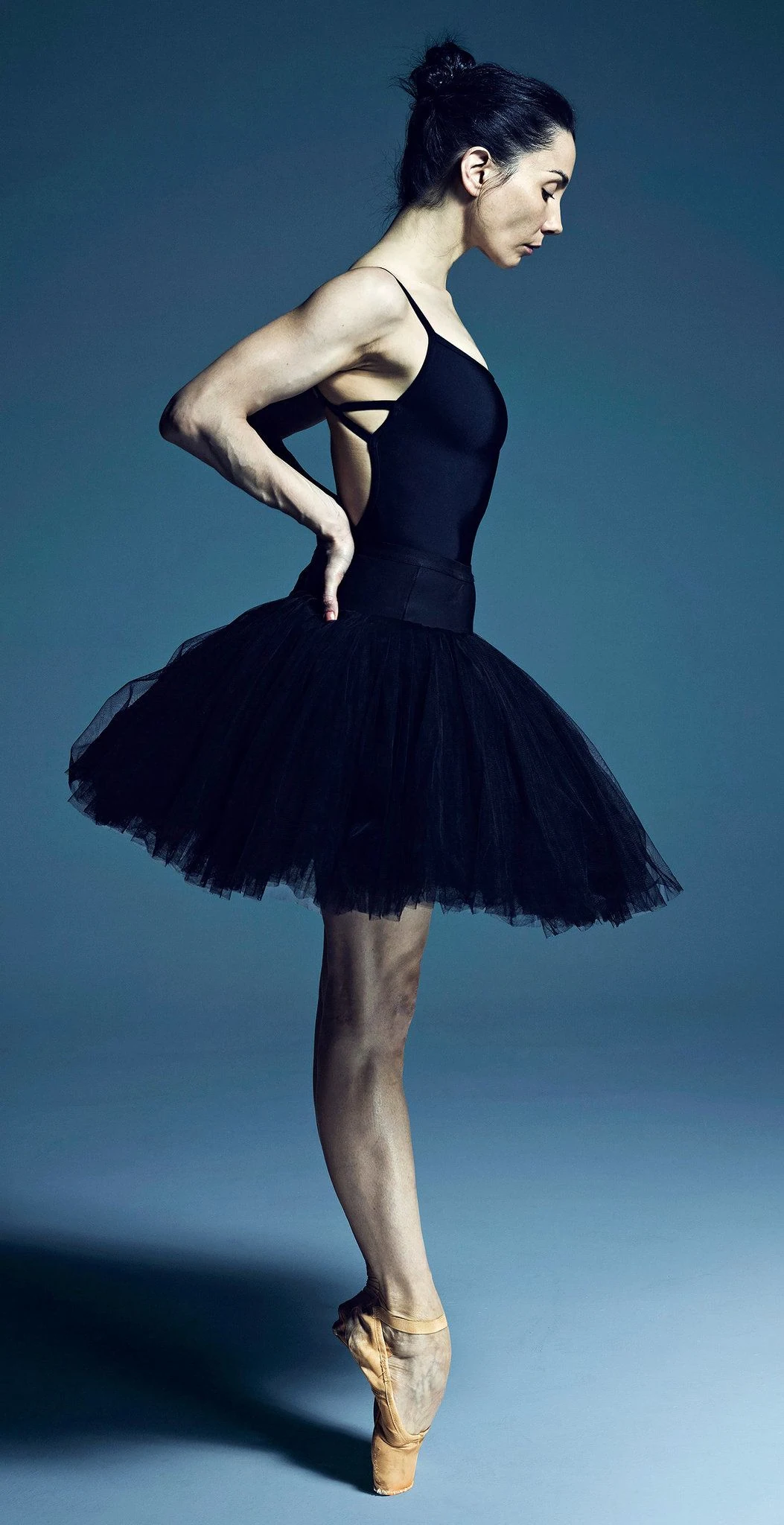
Tamara Rojo’s career in British ballet crossed the studio, the stage and the artistic director’s office. After joining English National Ballet in 1997, she became a principal dancer at the Royal Ballet, then returned to English National Ballet as its artistic director in 2012. She held that role for a decade while continuing to dance, commissioning new work and taking the company to the Paris Opera Palais Garnier for the first time. Her story is not simply one of an internationally trained dancer arriving in Britain: it is also the account of how a performer used leadership to change what a British ballet company staged and how it worked.
Training in Madrid, recognition in Paris
Rojo was born in Montreal, Quebec, on 17 May 1974. Her Spanish parents returned with her to Spain when she was four months old. She began dance classes in Madrid at five and, at 11, became a full-time student at the city’s Royal Professional Conservatory of Dance, Mariemma. There she studied with Víctor Ullate and Karemia Moreno.
Her parents supported her ballet training but also expected her to complete an academic education. She attended evening classes after rehearsals, graduated from the conservatory at 16 and completed her secondary studies over the following two years. She later pursued further study, including a bachelor’s degree in dance and a master’s in scenic arts. In 2016, she received a doctorate in performing arts, graduating magna cum laude from King Juan Carlos University.
Rojo began her professional career in 1991 with the Ballet de la Comunidad de Madrid, directed by Ullate. In 1994, she won a gold medal at the Paris International Dance Competition and a Special Jury Award. These early milestones established her as a dancer before her career became closely associated with British companies.
Building a career on British stages
In 1996, Galina Samsova, then artistic director of Scottish Ballet, invited Rojo to join the company. She performed leading roles in works including Swan Lake, The Nutcracker, La Sylphide and John Cranko’s Romeo and Juliet. The following year, Derek Deane, artistic director of English National Ballet (ENB), asked her to join his company.
At ENB, Deane created the roles of Juliet in Romeo and Juliet and Clara in The Nutcracker for Rojo. The Times named her “Dance Revelation of the Year” in 1997. She also danced principal roles in Swan Lake, Paquita, Coppélia and Glen Tetley’s The Sphinx. These years supplied an early measure of her range: a repertory that moved between familiar classical narratives and the work of contemporary choreographers.
In 2000, Rojo joined the Royal Ballet as a principal dancer. During the next 12 years she performed major roles across the company’s repertory, including ballets by Kenneth MacMillan and Frederick Ashton, Anthony Dowell’s Swan Lake, Natalia Makarova’s La Bayadère and Rudolf Nureyev’s Don Quixote. She danced in the premiere of Snow White, created for her by Ricardo Cué, and took the title role in MacMillan’s Isadora, reconstructed for her by the choreographer’s widow, Deborah MacMillan.
Performance under pressure
Several episodes in Rojo’s Royal Ballet years tested the limits of a dancer’s physical resilience. In 2000, she was asked at short notice to replace the injured Darcey Bussell in Giselle. Rojo had a sprained ankle, but learned the role in a fortnight and received strong reviews. In 2002, after performing Clara in The Nutcracker, she was taken to hospital and told that her appendix had burst. Although advised to rest for six weeks, she returned to dancing after two, relapsed and went back to hospital.
In 2003, while preparing for the Royal Ballet’s Australian tour, an infected bunion caused her foot to swell severely. Doctors recommended surgery that could have ended her career. After months of rehabilitation, she returned to dancing. In later comments, she reflected that continuing to perform while ill or injured was wrong and not worth the risk. The experience changed how she thought about her body and her work.
It also led to a practical project beyond the stage. Rojo and her father developed a device to stretch pointe shoes and reduce pressure on bunions; in 2017, they formed a company to market it. The episode joined a performer’s intimate knowledge of the demands of pointe work with an attempt to address one of its physical difficulties.
Leading English National Ballet
In 2012, Rojo left the Royal Ballet and became artistic director of ENB, succeeding Wayne Eagling. She also remained a lead principal dancer with the company until 2022. Her tenure therefore combined responsibility for the company’s direction with continued work on stage.
One of the clearest examples of the company’s expanded reach came in June 2016, when ENB was invited to perform at the Paris Opera Palais Garnier for the first time. It presented Le Corsaire, in Anna-Marie Holmes’s revival of the Petipa and Sergeyev version. Rojo had herself appeared in the ballet as Medora, in Holmes’s version of the work.
Her leadership also brought new interpretations of familiar stories into the company’s repertory. In 2017, choreographer Akram Khan created a new Giselle for ENB, a project Rojo had commissioned. The production’s impact was recognised at the Critics’ Circle National Dance Awards: Khan received the award for Best Classical Choreography, Alina Cojocaru won Outstanding Female Performance (Classical), and the company received an Olivier Award for Outstanding Achievement in Dance.
Rojo presented the BBC documentary Good Swan, Bad Swan: Dancing Swan Lake in 2014. In 2017, she followed it with Giselle: Belle of the Ballet, exploring the history of the original ballet alongside the new production made for ENB by Khan. These programmes placed the company’s repertory and its changing interpretations before a wider television audience.
In January 2022, ENB presented Rojo’s choreographic debut, Raymonda, at the London Coliseum. Inspired by Florence Nightingale and set during the Crimean War, the work reimagined the ballet’s story in a different historical setting. That year also marked the end of her ENB leadership: she left to take up the artistic directorship of San Francisco Ballet, becoming the first woman to lead that company.
Recognition across two countries
Rojo’s awards reflect both her work in performance and her place in Spanish cultural life. In 2002, she received Spain’s Gold Medal of Merit in the Fine Arts. Her honours included the Prix Benois de la Danse in 2008 and a Laurence Olivier Award in 2010 for Goldberg: The Brandstrup-Rojo Project, made with choreographer Kim Brandstrup. She was appointed Commander of the Order of the British Empire in 2016 for services to ballet.
In 2021, she received the Gold Medal of the Academy of Performing Arts of Spain. The following year, the South Bank Sky Arts Awards recognised her with its Outstanding Achievement Award for her ten years as artistic director of ENB. The breadth of this recognition mirrors a career that has never belonged to one national tradition alone: Rojo is Spanish, was born in Canada, and spent a substantial and formative part of her career leading and performing with British companies.
Why Tamara Rojo deserves a place in British Legacy
Rojo’s British legacy rests on specific work, not simply on her association with a celebrated company. At ENB, she became both artistic director and lead principal dancer, holding the two roles from 2012 to 2022. She helped carry the company’s work beyond its home audience, including its first invitation to perform at the Paris Opera Palais Garnier. She also commissioned Akram Khan’s Giselle, a production whose choreography, leading performance and company achievement each received major dance recognition. Those outcomes give substance to the claim that her leadership shaped the repertory and profile of an important British ballet institution.
Her contribution also shows how artistic leadership can connect inherited forms with new ideas. The Khan production rethought a classic story; her own Raymonda placed the ballet in a Crimean War setting inspired by Florence Nightingale. As a dancer, Rojo brought a wide repertory to Scottish Ballet, ENB and the Royal Ballet; as a director, she helped make room for new interpretations while retaining ballet’s established works. Her British connection is therefore grounded in sustained performance and institutional responsibility, rather than birthplace. It is a legacy of practice: helping a company reach international stages, commissioning work that expanded its repertory and earning recognition for the company’s collective achievement.
Sources
Adapted in part from Tamara Rojo by Wikipedia contributors, under CC BY-SA 4.0. Text has been edited and combined with the existing article; this adapted text is shared under the same licence. Contributor history.