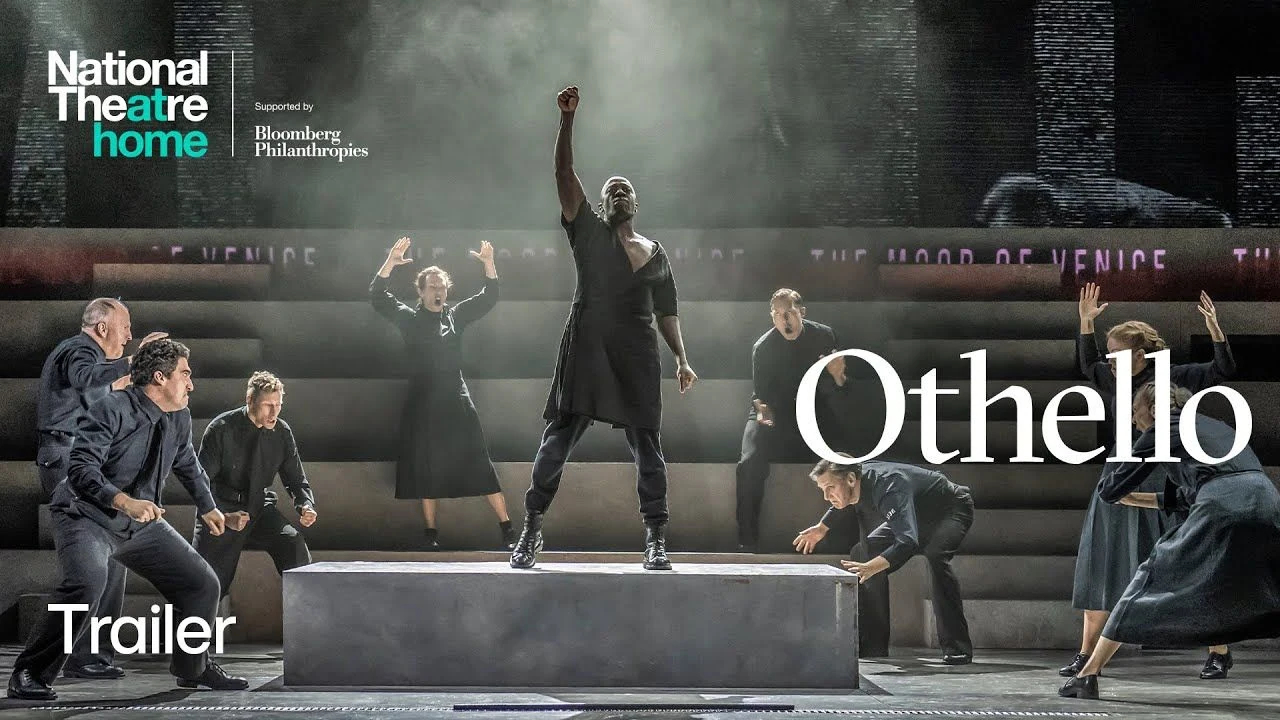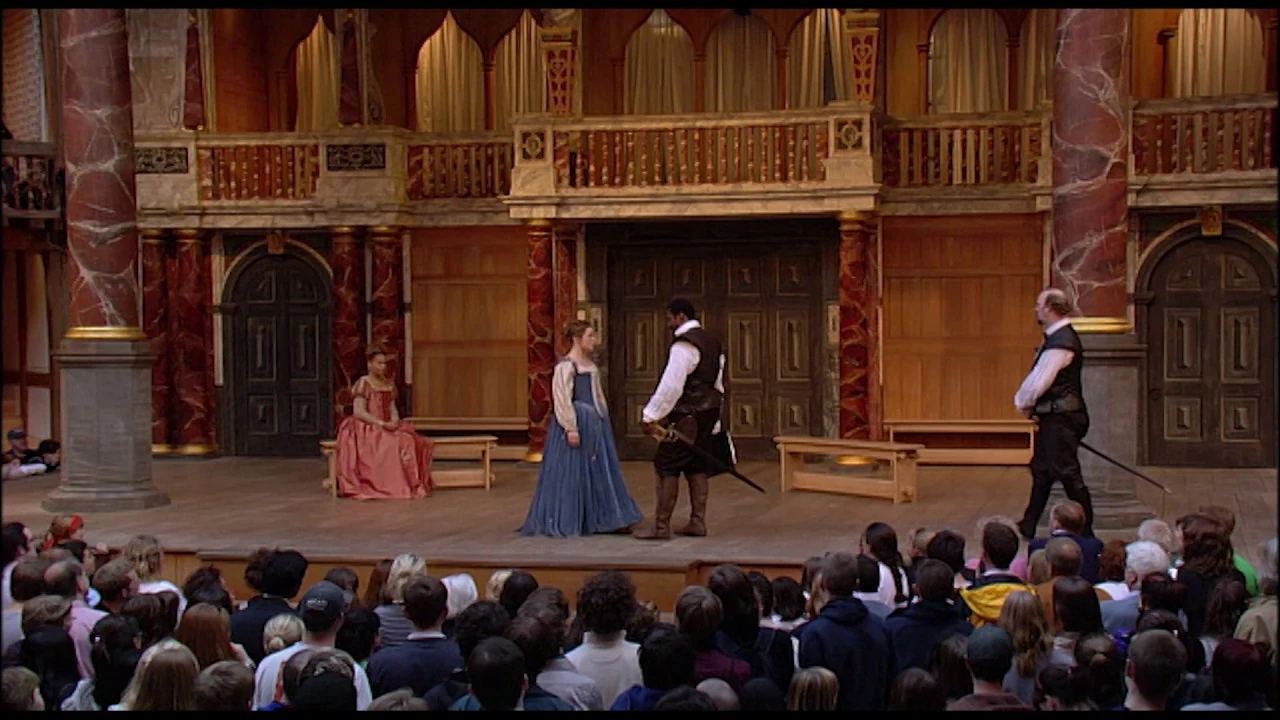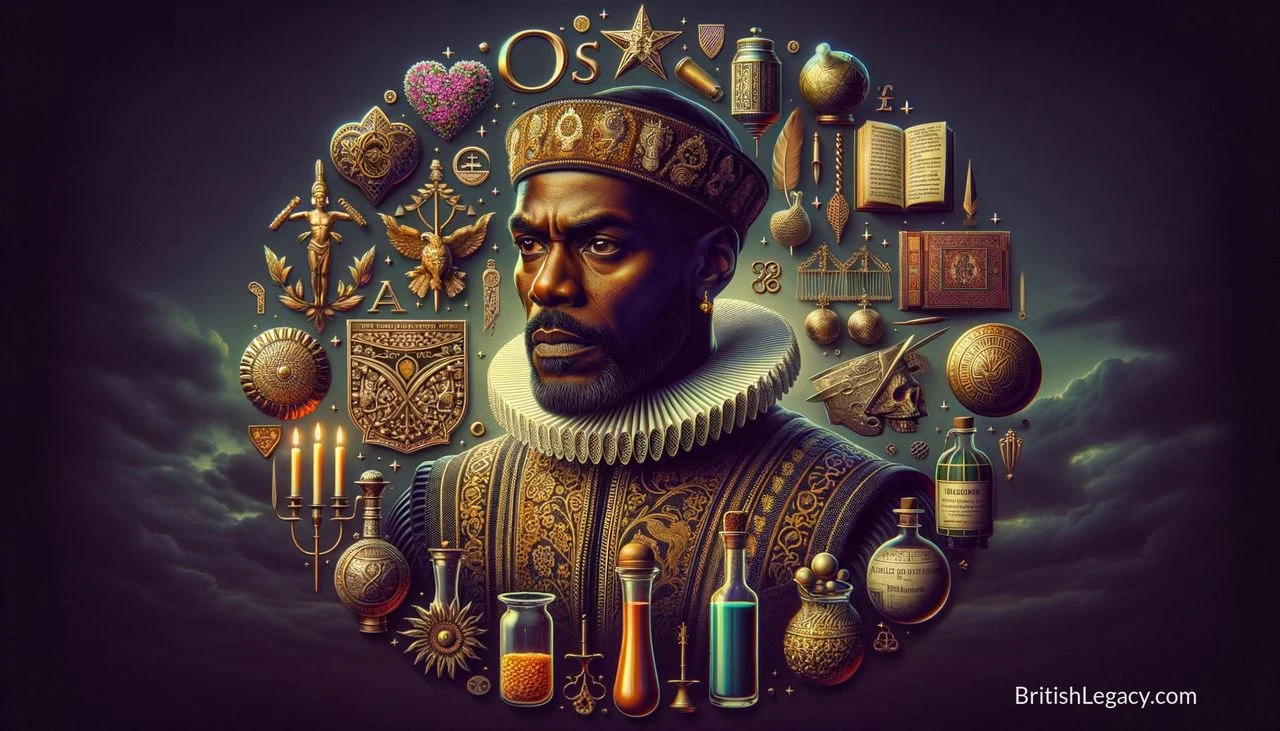
In Othello, a trusted soldier comes to believe that his wife has betrayed him. Iago does not need proof: insinuation, a planted handkerchief and Othello’s growing suspicion are enough to drive the general towards murder. Shakespeare’s tragedy turns that intimate deception into a wider drama about race, reputation and the vulnerability of trust. First recorded in performance at the English court in 1604, it has since become one of the most contested and repeatedly reinterpreted works in the British theatrical tradition.
A tragedy made for the stage
Shakespeare wrote Othello around 1601–04. A Revels account records a performance by the King’s Men at Whitehall Palace on 1 November 1604. The record establishes that the play was performed at court on that date; it does not establish that this was its first-ever performance. Richard Burbage is considered almost certainly to have played Othello in the original production.
The play draws on the story “Un Capitano Moro” (“A Moorish Captain”) in Giovanni Battista Giraldi Cinthio’s collection Gli Hecatommithi. Shakespeare centres the action on Othello, a soldier in Venetian service who is appointed general, and on Iago, his ensign. Othello secretly marries Desdemona, the daughter of a Venetian senator. Iago, resentful and calculating, sets out to make him suspect her of an affair with Michael Cassio, his captain.
The movement from suspicion to catastrophe is the play’s dramatic engine. Iago turns ordinary exchanges into apparent evidence, while Othello’s confidence in his marriage gives way to jealousy. When Emilia reveals the truth, Othello understands that Desdemona was faithful. He has already strangled her, and, after recognising what he has done, takes his own life. The ending is not simply the result of a trick: Shakespeare makes the audience watch how manipulation finds purchase in Othello’s fears and in the assumptions others make about him.
Race, identity and the word “Moor”
The play moves between Venice and Cyprus, but its account of Othello’s place in Venetian society is unsettled from the outset. He is a respected military leader and an outsider whose marriage provokes hostility. Iago and Roderigo use racist language to attack him, while Othello’s own descriptions of himself and the play’s references to his complexion have invited centuries of interpretation.
There is no settled agreement about whether Othello should be understood as North African, sub-Saharan African or otherwise. The term “Moor” was used inconsistently in the period, and the play does not provide a modern, precise ethnic classification. Its language includes both references to Othello’s dark skin and racialised insults; the latter are spoken by hostile characters and should not be treated as neutral descriptions. The play therefore presents race not as a simple label to be resolved, but as a force shaping how Othello is seen, addressed and made to doubt his place in the society he serves.
Jealousy and betrayal remain central, but the tragedy’s racial dimension complicates any reading that treats the action as a private marital crisis alone. Othello’s military standing coexists with the prejudice directed at him. Desdemona’s whiteness is set against his dark complexion in the play’s imagery, while the language around their marriage exposes the anxieties and hostility surrounding their union. These tensions have kept questions of race and identity within the play’s performance and criticism, rather than safely in the background.
Changing the face of Othello
Who plays Othello has become part of the play’s history. In London in 1825, Ira Aldridge began to establish the prominence of Black actors in the role. During the nineteenth century the character was also frequently performed as an Arab Moor. For much of the play’s stage history, white actors took the part using theatrical make-up. Paul Robeson, an American actor and singer, played Othello in several productions between 1930 and 1959, including Margaret Webster’s 1943 Broadway staging, which featured a Black Othello in an otherwise all-white cast.
British stages have also shaped the play’s international performance history. Laurence Olivier played Othello at the Royal National Theatre in 1964; the production was filmed in 1965. Among other British performers who have taken the role are Paul Scofield at the National Theatre in 1980, Anthony Hopkins in the BBC Shakespeare television production of 1981, and Michael Gambon in Alan Ayckbourn’s Scarborough production in 1990. Adrian Lester and Wil Johnson are among later British actors to have played Othello on stage.
The history has not moved in a straight line from exclusion to a single settled practice. Patrick Stewart, a white actor, played Othello in a 1997 production with race-reversed casting: he was a white man entering a Black society, and the rest of the cast was Black. Such choices bring questions of representation into the production itself, and show how staging can shift the audience’s attention to power and belonging. The range of performers, from Aldridge and Robeson to Olivier, Stewart and Lester, is a record not only of celebrated interpretations but of changing theatrical conventions.
A work that travels and changes
Othello has travelled well beyond the English stage. Its story has been adapted in different languages and settings, including the Malayalam film Kaliyattam (1997), in which Suresh Gopi plays a counterpart to Othello, and the Hindi film Omkara (2006), with Ajay Devgn in the corresponding role. These adaptations carry the play’s structure of suspicion and betrayal into other cultural contexts rather than simply reproducing its original setting.
Its performance history also includes changes in casting convention and in the relationship between the central roles. Actors have sometimes alternated between Othello and Iago: notable examples include William Charles Macready and Samuel Phelps at Drury Lane in 1837, and Richard Burton and John Neville at the Old Vic in 1955. These experiments underline how much the audience’s understanding can depend on the actors and staging, even when the text remains Shakespeare’s.
Why Othello deserves a place in British Legacy
Othello belongs in British Legacy because its history connects a specific record of early English court performance with a continuing, changing life in British theatre. The Whitehall entry of 1604 places the play within the documented culture of Shakespeare’s company and the King’s Men. The later British performances by Aldridge, Olivier, Scofield, Hopkins, Gambon, Johnson and Lester show how the role has been taken up across generations, while Stewart’s race-reversed production demonstrates that a staging can make the play’s questions of racial power newly explicit.
That legacy is not a claim that the play offers an uncomplicated lesson about race. Its language contains racist abuse, and its central character’s identity remains open to debate; responsible productions and readings have to confront those facts. The work’s value lies partly in how clearly its action exposes the consequences of prejudice and manipulation, while leaving audiences to reckon with the society that gives Iago’s insults their force. Its adaptations in India and its continuing international performance history also show how a British play can enter other traditions and be reinterpreted there. For British Legacy, Othello is both a landmark of Shakespearean theatre and a living performance text whose changing treatment of race, casting and belonging records a substantial part of British cultural history.
Sources
Othello (character), revision 1378578473 · Othello (character)
Adapted in part from Othello (character) by Wikipedia contributors, under CC BY-SA 4.0. Text has been edited and combined with the existing article; this adapted text is shared under the same licence. Contributor history.