In George Bernard Shaw’s Pygmalion, a flower seller’s accent is treated as evidence of her place in society—and as a problem a phonetics professor believes he can solve. Henry Higgins wagers that he can train Eliza Doolittle to pass as a duchess. But the experiment’s success leaves a harder question: what happens to Eliza when the men who have remade her speech assume their work is finished?
A London story, first staged in Vienna
Shaw wrote Pygmalion in 1912. Although the play is set in London and is closely associated with British theatre, its first stage performance was in German translation at Vienna’s Hofburg Theatre on 16 October 1913. Its English-language premiere followed at His Majesty’s Theatre in London on 11 April 1914. Herbert Beerbohm Tree played Higgins and Mrs Patrick Campbell played Eliza; the London production ran for 118 performances.
The distinction matters: the play’s first performance and its first performance in English were not the same event. Shaw had read the work to Campbell in June 1912, but a delay in the London production followed, in part, after she experienced a nervous breakdown. Shaw directed the London actors through tempestuous rehearsals. The play also opened in New York in March 1914, in a German-language production, before the West End staging.
Its title refers to the mythological sculptor Pygmalion, who falls in love with a statue that comes to life. Shaw’s play transfers the idea of transformation to speech and social identity. The title also had a theatrical history before Shaw: W. S. Gilbert wrote Pygmalion and Galatea, a successful play on the myth first staged in 1871. The character Higgins, meanwhile, drew on several real phonetics professors, with Shaw identifying Henry Sweet as the principal inspiration.
What an accent appears to promise
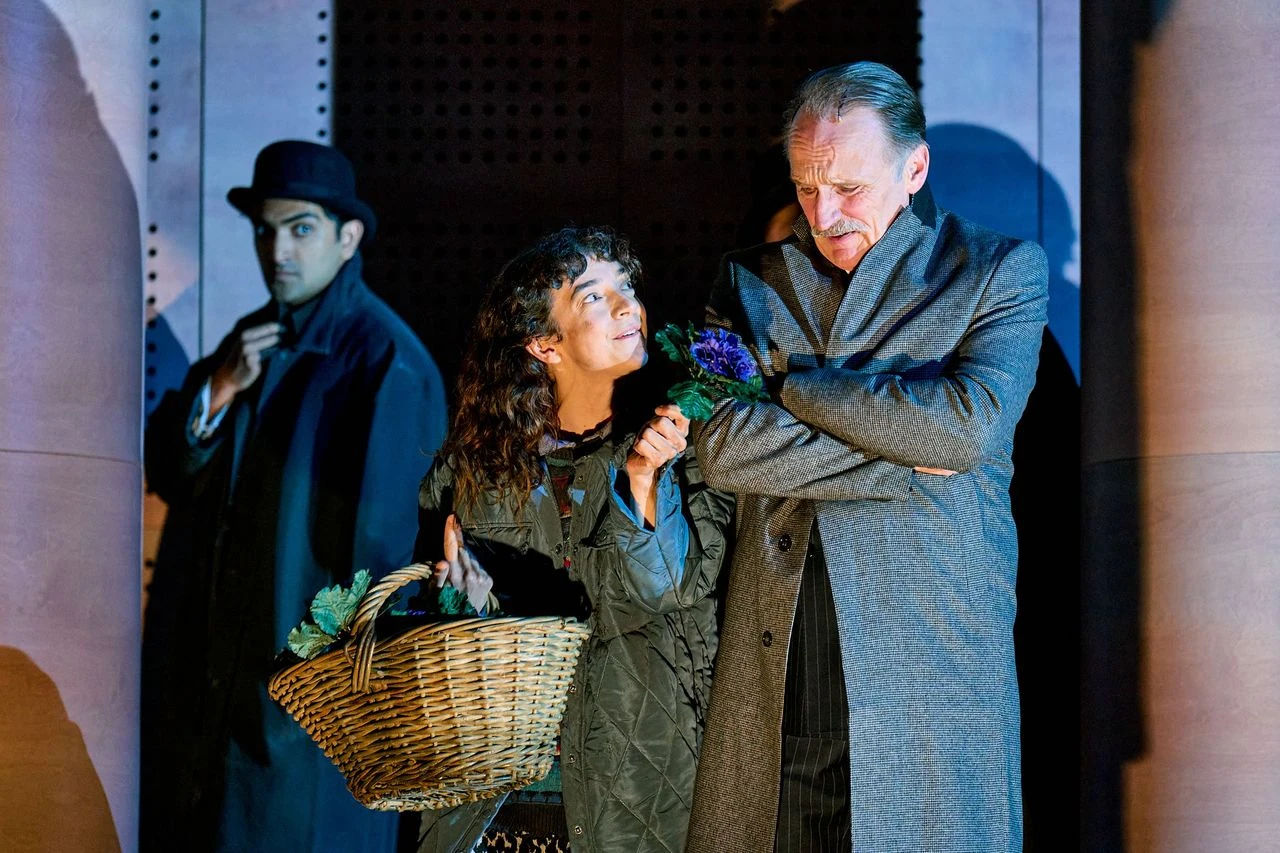
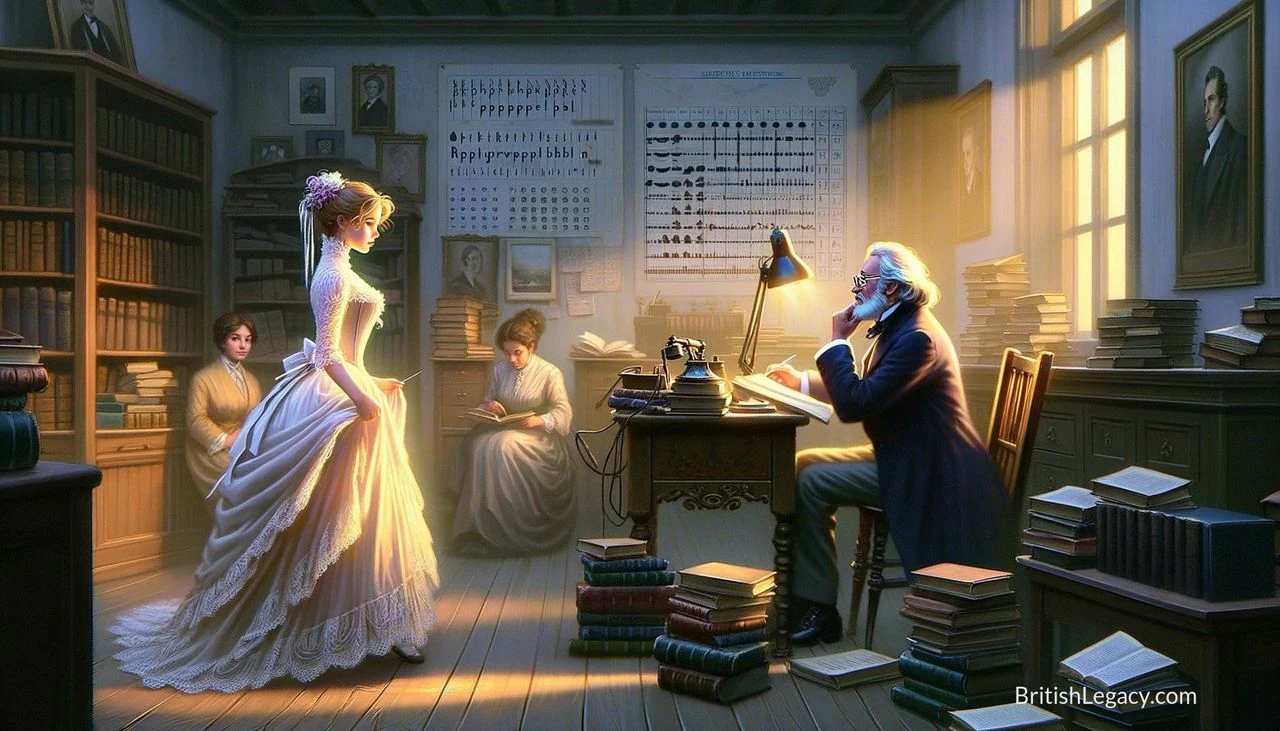
The action begins on a rainy evening at Covent Garden. Eliza, selling flowers, is heard by Higgins, a specialist in phonetics who records and identifies people’s regional speech. He tells Colonel Pickering, a student of Indian dialects, that he can teach Eliza to speak so convincingly that she will be taken for a duchess. Pickering offers to cover the costs if Higgins can achieve this within six months and pass her at an ambassador’s garden party.
Eliza has her own reason for seeking lessons: she wants to speak well enough to work in a flower shop. At first Higgins regards her chiefly as material for a linguistic experiment. His housekeeper, Mrs Pearce, raises practical and moral concerns about Eliza’s welfare and what will become of her when the training ends. Pickering, too, asks Higgins to treat his pupil honourably. Higgins promises, but the play makes clear that courtesy and genuine responsibility are not the same thing.
Eliza’s father, Alfred Doolittle, arrives looking for money. He presents himself as one of the “undeserving poor” and argues that conventional middle-class morality constrains men like him. Rather than acting out a simple story of a pupil being rescued by her teacher, Shaw gives the Doolittles their own arguments and interests. The play’s comedy draws on clashes of class, manners and language, while repeatedly showing how other people try to define Eliza by her voice and appearance.
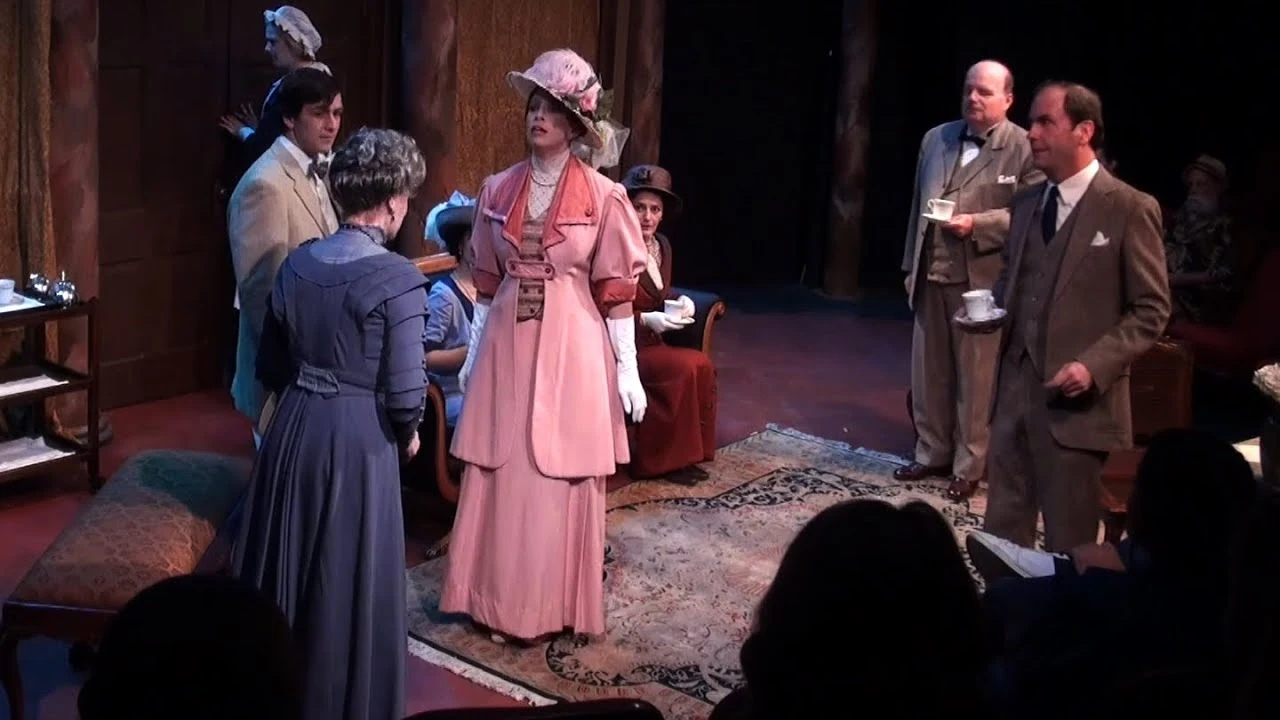
As Eliza’s pronunciation changes, so does the way strangers read her. At a gathering at Higgins’s mother’s home, she initially impresses the company, but her conversation about her aunt reveals her origins. Her use of “not bloody likely” shocks her listeners; Clara Eynsford-Hill later adopts the expression as fashionable. At the embassy reception, Eliza’s speech is so polished that Nepommuck, a former pupil of Higgins, decides she must be Hungarian aristocracy. The misunderstanding completes the wager: those who hear Eliza’s accent treat it as proof of status, even when they have mistaken her identity entirely.
The wager ends; Eliza’s choices do not
After the formal engagements, Higgins and Pickering return home pleased that they have won. Eliza has stayed silent while they discuss the result. Once Pickering leaves, she confronts Higgins: he has concentrated on the success of the experiment, not on what it has meant for her or what she should do next. His suggestions—that she might marry or work in a flower shop—do not answer her demand to be recognised as a person with her own future.
In the final act, Eliza appears composed and self-possessed. She credits Pickering’s courteous treatment with helping her feel self-respect, while challenging Higgins for continuing to regard her as the product of his teaching. She says she will support herself, perhaps by teaching phonetics or by marrying Freddy Eynsford-Hill. Higgins does not offer a conventional declaration of love or agree to change his manner. Eliza refuses to return to a subordinate role in his household and leaves with her independence intact.
That ending was a point of contention from the play’s early performances. Tree changed it during the 1914 London run without Shaw’s approval, giving audiences the implication of a happier romantic resolution. Shaw objected and defended an ending in which Eliza does not fall back into dependence on Higgins. In a postscript published with the 1916 edition, “What Happened Afterwards”, he argued against a marriage between them. The contrast between Shaw’s ending and its more romantic interpretations is central to the play’s argument: Eliza’s transformation is not complete if she is still treated as someone else’s creation.
Versions, revivals and adaptations
There is more than one version of the printed play. Shaw revised material over time, and a later version, first published in 1941, includes sequences that are absent from the earlier text published in 1914. As a result, editions and productions can differ in their scenes and lines. The 1938 British film, made with Shaw among its writers, also introduced familiar pronunciation exercises such as “the rain in Spain stays mainly in the plain”; these lines are not in the original play.
The play’s reach extends well beyond its first London production. It has been staged internationally, with productions adapting its language and social setting for their own audiences. Its most widely known adaptation is My Fair Lady, the musical by Alan Jay Lerner and Frederick Loewe, first staged in 1956. The musical was itself adapted into the 1964 film starring Audrey Hepburn as Eliza and Rex Harrison as Higgins. These versions brought the story to audiences around the world, though their romantic treatment is often more pronounced than Shaw’s insistence on Eliza’s independence.
Shaw’s work has also remained present in British theatre through successive productions, including stagings at the Old Vic, the Royal National Theatre and the Royal Exchange Theatre in Manchester. The changing productions keep attention on the same unsettled questions: how speech marks class, whether social standing can be taught or performed, and what obligations come with power over another person’s prospects.
Why Pygmalion deserves a place in British Legacy
Pygmalion deserves a place in British Legacy because Shaw made speech the engine of a story about social power. In its London streets, drawing rooms and embassy reception, an accent is not merely a sound: it affects how Eliza is judged and what opportunities seem open to her. The wager gives the comedy a clear structure, but its outcome exposes the limits of that structure. Higgins can teach Eliza a different way of speaking; he cannot claim ownership of the person she becomes. Her refusal to accept the role he has prepared for her gives the play an unusually direct account of independence.
The work’s British legacy is also visible in the path from its London setting and West End production to generations of theatre revivals and the international success of My Fair Lady. That afterlife has made Eliza and Higgins recognisable far beyond the original play, while also creating an ongoing tension between Shaw’s ending and adaptations that favour romance. This is a useful legacy to preserve, not because the play offers a settled answer, but because it connects language, class and self-determination in a form that can be performed, debated and reinterpreted. Its comic exchanges carry a serious point: changing how society hears someone is not the same as granting that person control over her life.
Sources
Pygmalion (play), revision 1376184507 · Pygmalion (play)
Adapted in part from Pygmalion (play) by Wikipedia contributors, under CC BY-SA 4.0. Text has been edited and combined with the existing article; this adapted text is shared under the same licence. Contributor history.