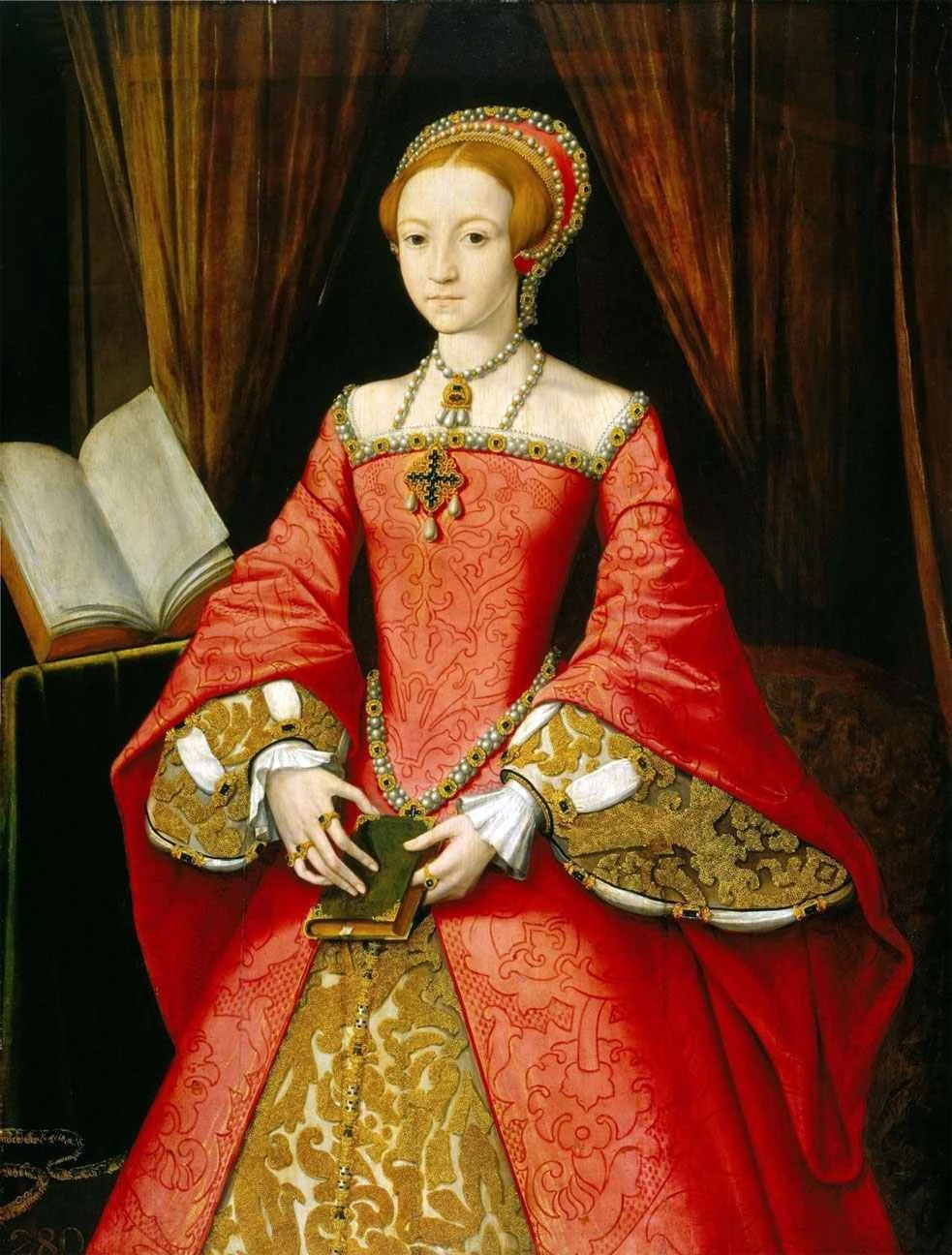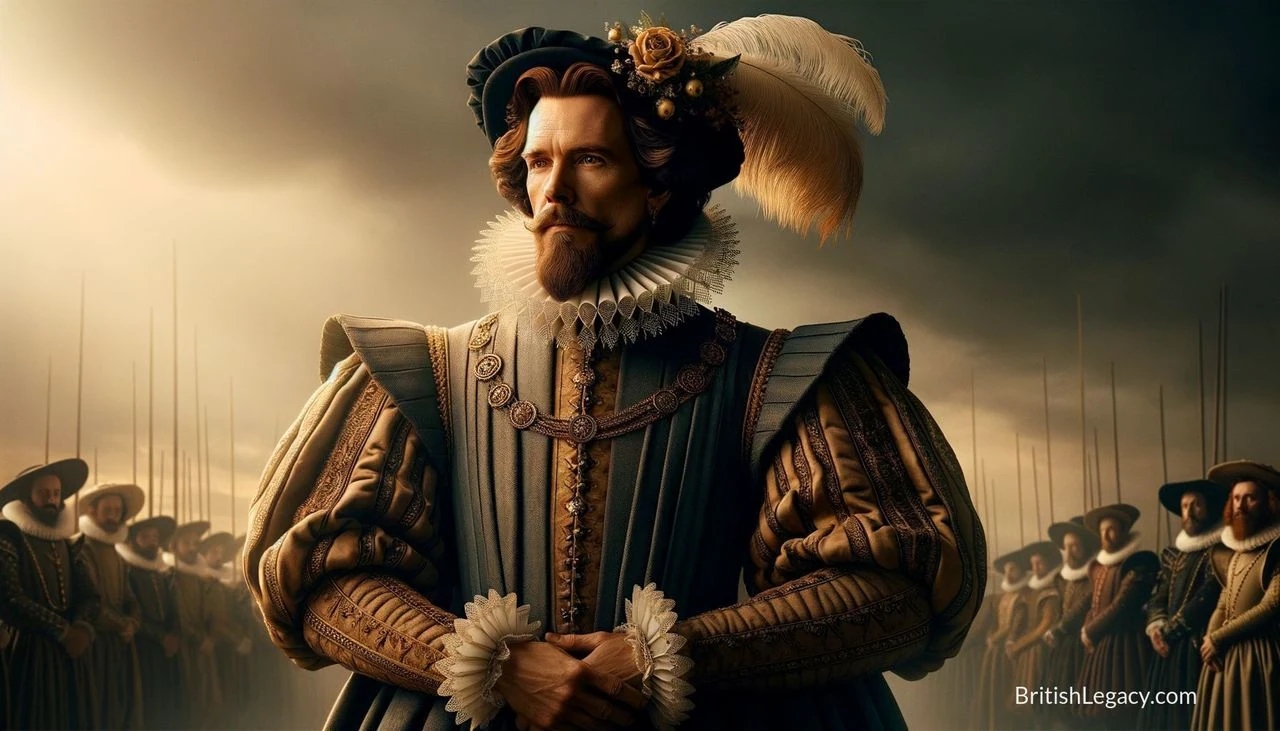
Elizabeth I’s 45-year reign joined political survival to a period remembered for its literature, theatre and exploration. She came to the throne in 1558 after the short reigns of her half-brother, Edward VI, and half-sister, Mary I. Her rule, ending with her death in 1603, became known as the Elizabethan Age: a formative chapter in England’s cultural and political history, though claims of unbroken stability or national unity should not obscure the religious and political tensions of the period.
A precarious start and a contested succession
Born on 7 September 1533, Elizabeth was the daughter of Henry VIII and Anne Boleyn. After Anne was executed, Elizabeth was declared illegitimate. The succession remained uncertain through the reigns of her younger half-brother Edward and her half-sister Mary. When Elizabeth became queen, she was regarded as a hope for the Protestant cause, but her accession did not make the divisions within the country disappear.
Elizabeth received an extensive education and learned Latin, French and Italian. Those languages were useful in the diplomatic world in which she ruled. The account of her early life also describes her as intelligent and prudent, qualities associated with her ability to manage competing interests at court and the pressures of religious conflict, rebellion and foreign threats. Her reign was not simply a story of personal determination: it required her to govern amid disputes over religion and the direction of the kingdom.
Religion, authority and the crown
The Elizabethan Religious Settlement was central to the shape of her rule. Elizabeth reinstated the Church of England and asserted royal supremacy over it, establishing a Protestant settlement after the turbulent reigns of her predecessors. The settlement helped set the religious terms of the reign, but it did not remove disagreement between Protestants and Catholics. The careful balancing of political and religious interests is more accurate to the period than the idea that Elizabeth’s policies placated everyone or ended discord.
Her decision not to marry became a prominent part of her public identity as the Virgin Queen. It was politically significant as well as personal: marriage could have affected the queen’s autonomy and the country’s prospects. The account presents her unmarried status as a choice associated with prioritising England’s stability. It is safer, however, to describe this as the public meaning attached to her decision than to claim certainty about private motives.
Literature, theatre and voyages
The Elizabethan Age is closely associated with English writing. William Shakespeare’s plays and sonnets became central to the literary tradition, while Christopher Marlowe, Edmund Spenser and Sir Philip Sidney also contributed to the period’s poetry and drama. Theatre, music and the visual arts developed alongside literature. Elizabeth’s interest in music and dance influenced court life, which formed part of the wider cultural setting of the reign.
Overseas voyages also shaped the period’s reputation. Sir Francis Drake circumnavigated the globe between 1577 and 1580, while Sir Walter Raleigh undertook expeditions to the New World. Such ventures widened England’s horizons and contributed to its maritime ambitions; they were also part of the beginnings of English expansion overseas. The defeat of the Spanish Armada in 1588 became a defining event of Elizabeth’s reign and strengthened England’s standing as a maritime power. It should not be mistaken for the work of the monarch alone: the account’s emphasis on Elizabeth’s leadership sits alongside the actions of those who sailed and fought.
Why Elizabeth I deserves a place in British Legacy
Elizabeth I deserves a place in British Legacy because her reign connects several consequential strands of English history. The religious settlement established the Church of England under royal supremacy, shaping the relationship between crown and church without ending religious disagreement. Her rule also coincided with a flowering of literature and theatre associated with Shakespeare, Marlowe, Spenser and Sidney. These works remain part of the cultural inheritance through which the Elizabethan period is remembered.
Her legacy also includes the voyages of Drake and Raleigh and the Armada’s defeat in 1588, events that helped define England’s maritime ambitions. This British connection should be described in its historical terms: Elizabeth ruled England, and the period’s expansion overseas contributed to later English and British histories. Her unmarried rule and management of religious and political pressures add another dimension, showing how questions of authority and succession were bound up with the monarchy. The lasting significance of Elizabeth’s reign lies not in a claim that it was free of conflict, but in the durable cultural and political marks associated with it.