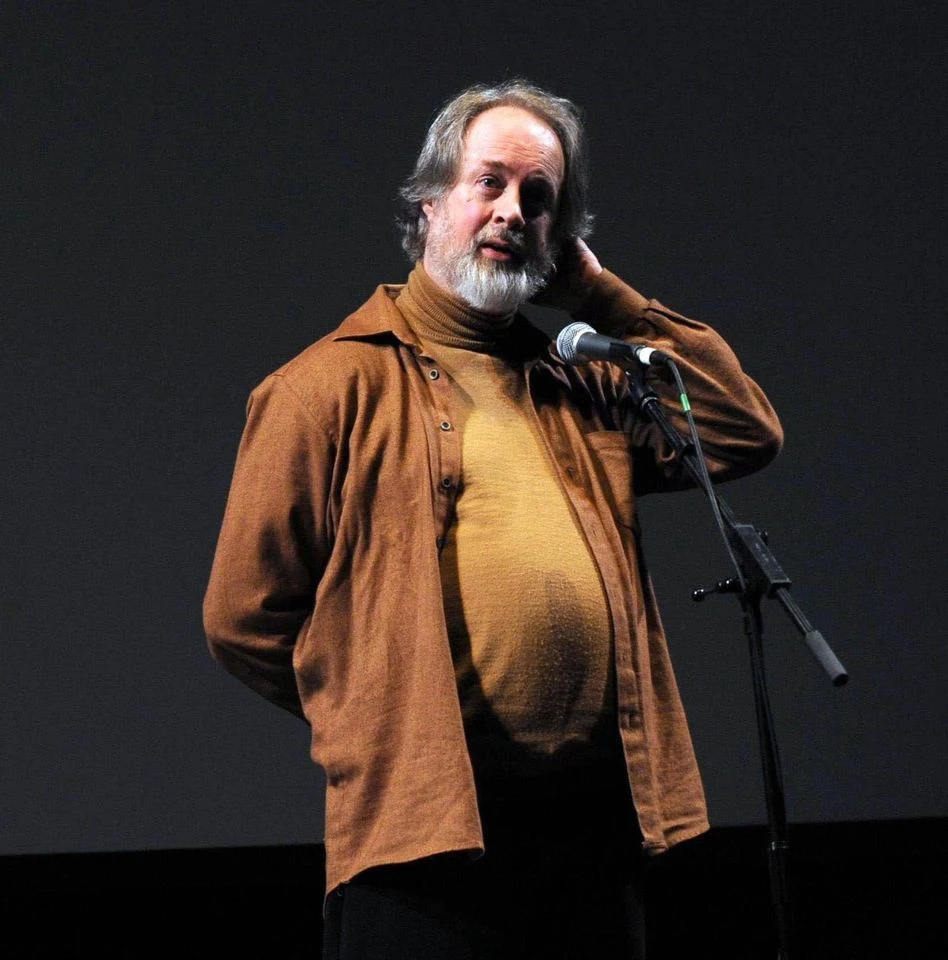
Richard Alston built a career around the meeting of music and movement. A choreographer whose work was described for its musicality and clarity, he helped establish independent contemporary dance in Britain, led Ballet Rambert and, from 1994, directed The Place while creating a company of his own. His career connected choreographic experiment with the institutions, dancers and audiences that sustain a live art form.
Training and the first company
Richard John William Alston was born on 30 October 1948 in Stoughton, Sussex. He was educated at Eton College before training at the London School of Contemporary Dance. The existing account records that he studied fine art and theatre design at Croydon College of Art before enrolling at the London school in 1967; the fuller career chronology identifies his training there but does not confirm those earlier studies or that enrolment date.
Alston’s interest in Merce Cunningham took him to New York in 1976 to study at the Cunningham Dance Studio. The encounter belongs to a wider story of exchange: Alston developed as a British choreographer while engaging with an influential American approach to dance. His later work was associated with musicality and fluid movement, though it is more useful to describe those qualities through the productions and companies he worked with than to turn them into sweeping claims about a single signature style.
In 1972, Alston choreographed for the London Contemporary Dance Theatre before helping form Strider. The company is identified as the United Kingdom’s first independent dance company. It offered an alternative to working solely within established institutions and became an early platform for Alston’s choreography. In 1981, Strider merged with Siobhan Davies and Dancers to form Second Stride.
Rambert: choreographer and artistic director
Alston joined Ballet Rambert as resident choreographer in 1980. During his time there, he also made work for other companies: the Royal Danish Ballet in 1982 and the Royal Ballet in 1983. His choreography for Rambert included 25 works. Among the productions associated with this period was Soda Lake, one of two solo works made for dancer Michael Clark; the other was Dutiful Ducks.
In 1986, Alston became Rambert’s artistic director, a position he held until 1992. The role brought responsibility for the company as well as for his own work as a choreographer. He returned to Rambert in 2001 to make Unrest for its 70th anniversary. In 2003, Scottish Ballet toured a revival of his Dangerous Liaisons, first created in 1985. These later encounters with earlier work show how choreography can remain active through revival and performance, rather than ending with its first production.
The Place and a company of his own
In 1994, Alston became artistic director at The Place, the London centre for contemporary dance, and formed the Richard Alston Dance Company. The company was launched to critical acclaim and gave him a sustained setting in which to make and present work. Across its life he created more than 50 pieces for it. His broader choreographic output exceeded 100 works, according to the existing account.
That repertoire included Overdrive (2003), described in the earlier account for its use of recurring motifs and kinetic energy, and Unfinished Business (2011), associated there with Mozart’s piano sonatas. Another work, A Rugged Flourish, was created in 2011 for New York Theatre Ballet. In 2002, the BBC commissioned Alston to choreograph excerpts from The Rite of Spring for its Masterworks series, directed by Jonathan Haswell. The following year, the company introduced Martin Lawrance’s Grey Allegro, its first performance of a work by another choreographer.
Alston’s company also took his work beyond the UK. In May 2004 it made its New York debut with a week of performances at the Joyce Theater. The existing account describes international performances more broadly, naming New York and Sydney, but does not give dates or productions for those appearances. The company ceased activity in March 2020, in line with new touring priorities agreed between The Place and Arts Council England.
Honours and later recognition
Alston received an honorary Doctor of Philosophy in Dance from the University of Surrey in 1992 and an honorary MA from University College Chichester in 2003. France named him a Chevalier dans l’Ordre des Arts et des Lettres in 1995 in recognition of his work there.
In the 2001 New Year Honours, he was appointed a Commander of the Order of the British Empire for services to dance. He was knighted in the 2019 New Year Honours, also for services to dance. Alston died at his home in London on 7 September 2026, aged 77. The record of his career is therefore not only a list of works and honours: it traces the growth of a choreographer’s practice across independent companies, major dance institutions and a centre devoted to contemporary performance.
Why Richard Alston deserves a place in British Legacy
Richard Alston deserves a place in British Legacy because his career helped give contemporary dance a durable place in Britain’s cultural life. In 1972, he helped form Strider, identified as the UK’s first independent dance company. That work in the independent sector was followed by years at Ballet Rambert, where he served first as resident choreographer and then as artistic director. These were different kinds of contribution: making dances, shaping a company’s direction and helping create opportunities for contemporary choreography to be seen.
At The Place, Alston brought those strands together. As artistic director from 1994, he formed a company that presented his own work and eventually performed in New York; it also went on to programme another choreographer’s work. His repertoire ranged from commissioned work for the BBC to pieces made for established ballet companies and New York Theatre Ballet. The scale of that activity—more than 100 works overall according to the existing account, and more than 50 for his own company—shows sustained engagement with the form rather than reliance on a single celebrated production. His honours, including a CBE and a knighthood for services to dance, recognised that contribution. Alston’s British legacy lies in the work itself and in the institutions and independent structures through which he helped contemporary dance reach performers and audiences.
Sources
Richard Alston (choreographer), revision 1375344396
Adapted in part from Richard Alston (choreographer) by Wikipedia contributors, under CC BY-SA 4.0. Text has been edited and combined with the existing article; this adapted text is shared under the same licence. Contributor history.