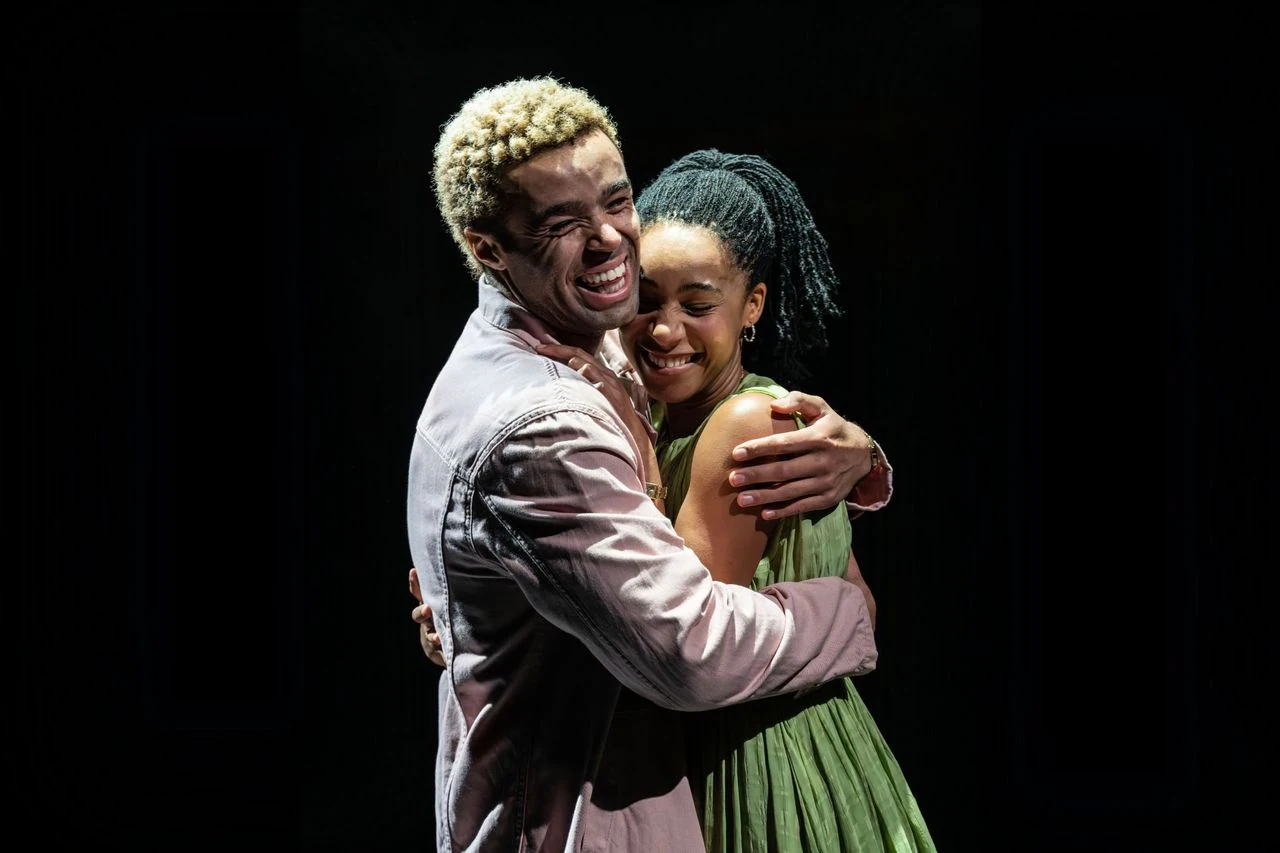
In Romeo and Juliet, a private love story unfolds inside a public feud. Shakespeare sets the play in Verona, where two young people from hostile families attempt to make a life together. Their secret marriage and the chain of violence that follows end in the deaths of both lovers; only then do the Montagues and Capulets recognise the cost of their enmity. The tragedy’s force lies not only in its romance, but in the speed with which inherited hostility and impulsive decisions close off every escape.
An English play set in Verona
William Shakespeare is the English playwright behind the tragedy, which is generally believed to have been written between 1591 and 1595. The existing account dates its first performance to 1597 and places early performances at The Theatre in Shoreditch, London, followed by performances at the Globe on the south bank of the Thames. Its precise first venue is described as uncertain, so those locations should be understood as part of the account of its early stage history rather than a definitive record of its premiere.
The play’s setting is Italian, but its place in English-language drama rests on Shakespeare’s writing and on its continuing life in performance. Its verse and dialogue give the lovers a language for a relationship that must remain hidden, while the feud around them repeatedly interrupts their attempts to act freely. In that contrast, the story connects intimate feeling with the consequences of family and civic conflict.
A feud gathers momentum
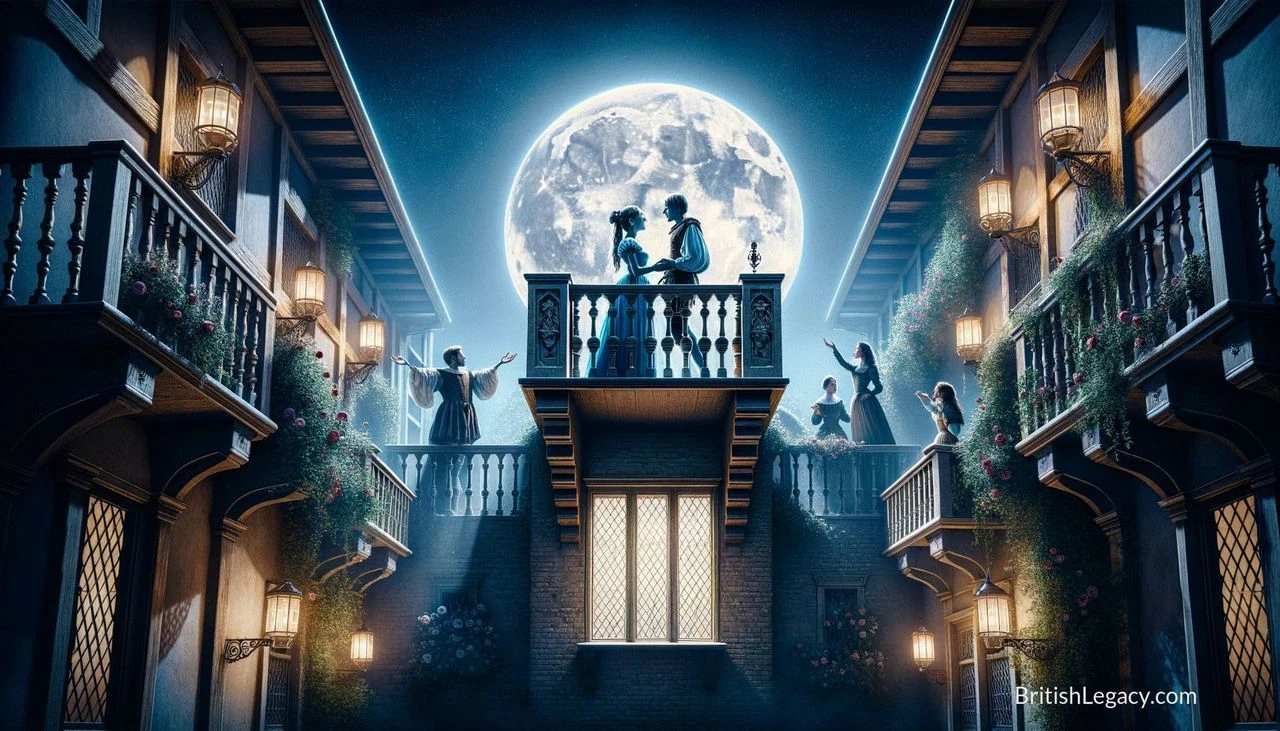
The action begins with a fight between the Montagues and Capulets. Romeo Montague is already distressed by unrequited love when he attends a Capulet masquerade and meets Juliet. Their attraction is immediate. In the celebrated balcony scene, they declare their love and decide to marry in secret. With help from Friar Laurence and Juliet’s Nurse, they make their marriage without the knowledge of their families.
The secrecy cannot keep violence at bay. Romeo kills Tybalt, Juliet’s cousin, in a duel and is banished from Verona. Friar Laurence devises a plan intended to bring the lovers together again: Juliet takes a potion that makes her appear dead, expecting Romeo to learn of the deception. He does not receive that message. Finding Juliet apparently lifeless, he kills himself; when she wakes and sees him dead, she takes her own life. The families’ reconciliation comes after the loss, too late to save either of their children.
That sequence gives the tragedy its close, compressed momentum. A feud precedes the lovers’ meeting; a secret marriage offers a brief answer to it; then violence, banishment and failed communication turn a plan of reunion into catastrophe. The ending does not make the families’ reconciliation a remedy. It makes their recognition of the cost arrive only after the damage is irreversible.
From stage tragedy to shared cultural story
The lovers have become a familiar image of forbidden love, and the balcony scene has become one of the play’s most recognisable moments. Phrases associated with the work, including “a rose by any other name” and “parting is such sweet sorrow”, have travelled beyond the play into everyday English. Their familiarity can obscure the dramatic context: both the idealised language of love and the bitter separation between the lovers belong to a tragedy shaped by family hostility.
The work’s afterlife extends across theatre and other art forms. The existing account describes many stage productions and adaptations, including film, opera and ballet, and notes that its themes have prompted discussion of fate, free will, love and conflict. It also identifies the 1996 film adaptation starring Leonardo DiCaprio and Claire Danes as a prominent modern screen version. These retellings carry the central conflict into different forms while returning audiences to the same question of what happens when private choices are constrained by a wider feud.
In Britain, the play’s significance is connected to Shakespeare’s place in English drama and to its continuing performance and study. The account describes its influence on British theatrical traditions, including approaches to staging romantic tragedy and portraying complex characters. Those claims are best understood as part of the work’s broad theatrical reception, rather than as a single, measurable effect. Its repeated presence on stage has given actors and audiences successive opportunities to interpret a story whose language is closely associated with English literature.
Why Romeo and Juliet deserves a place in British Legacy
Romeo and Juliet belongs in British Legacy because it brings together a recognisable British cultural connection and a story that has travelled far beyond its setting. Shakespeare wrote the tragedy in English, and its reported early performance history places it in London theatres. The play’s continuing place in British theatre gives that connection a practical dimension: it is not simply a work associated with an English writer, but a drama whose characters, language and conflicts have remained available to successive performers and audiences.
Its legacy also lies in how clearly its plot shows the human cost of entrenched hostility. The lovers’ attempts to build a shared future are defeated by violence, secrecy and a failure of communication; their deaths bring reconciliation, but cannot undo the loss. The balcony scene, familiar lines and many adaptations have helped keep that conflict in public memory. By linking the play’s English theatrical history to its wider cultural reach, British Legacy can recognise both Shakespeare’s contribution to drama and the continuing value of a tragedy that makes the consequences of hatred difficult to dismiss.