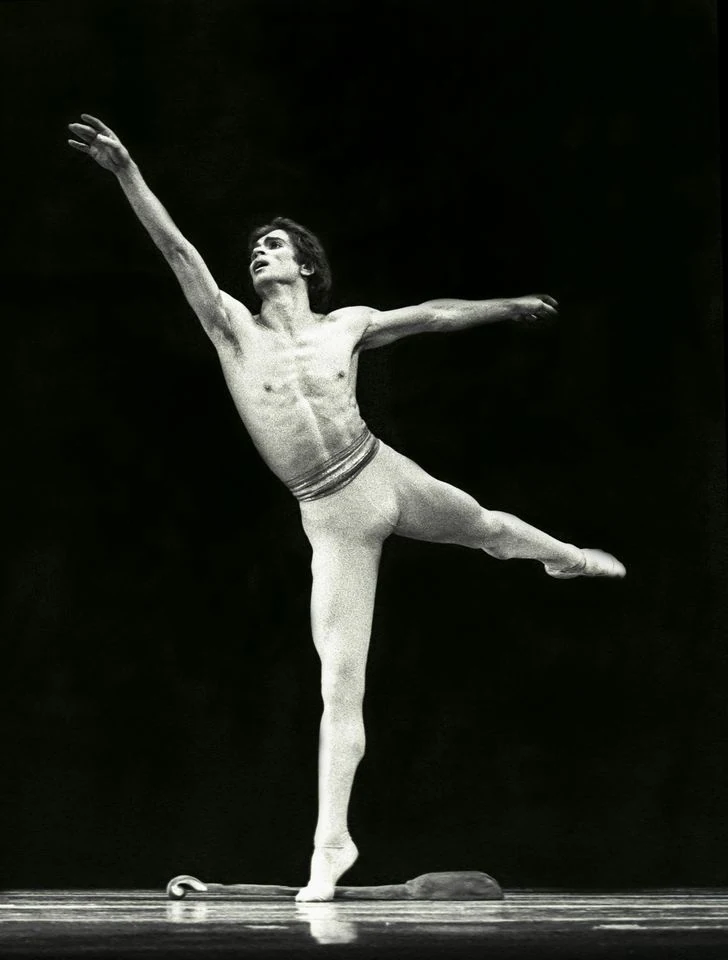
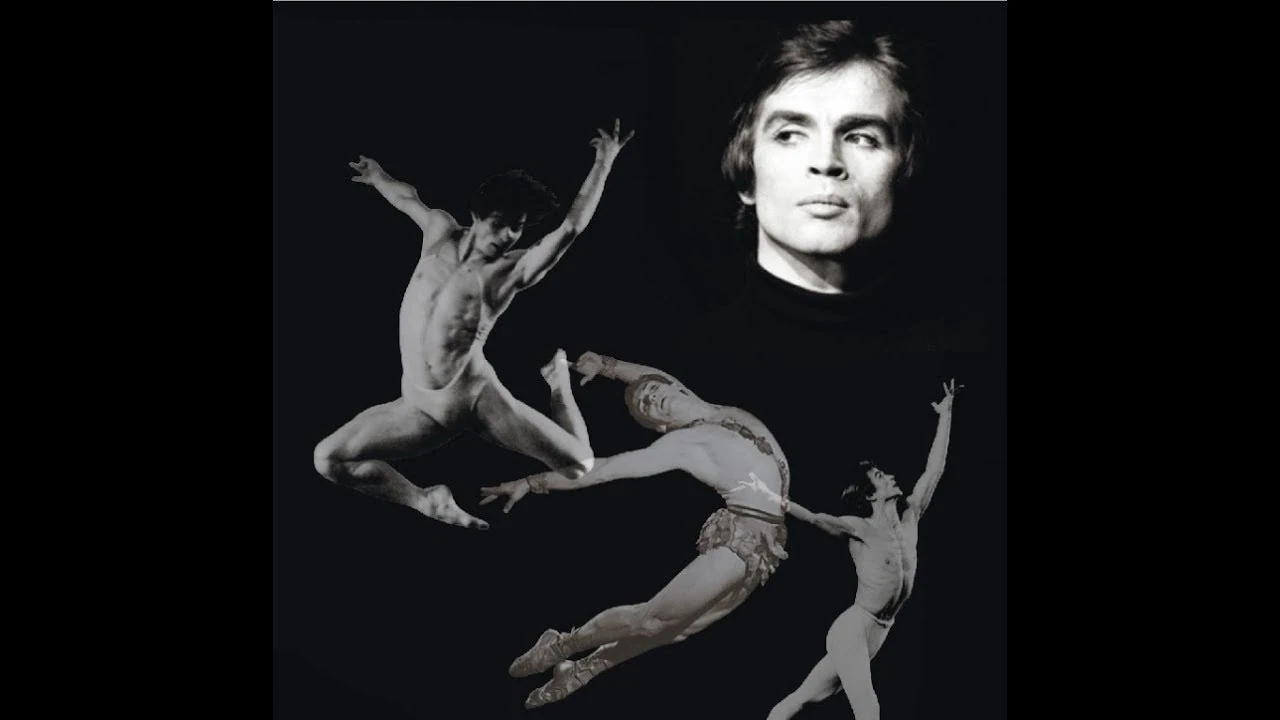
Rudolf Nureyev’s British story began not with a permanent move to London but with a defection, a celebrated guest appearance and a partnership that would become one of ballet’s defining collaborations. After leaving the Soviet Union in 1961, he danced with the Royal Ballet, where his forceful stage presence and technical ambition met the artistry of Margot Fonteyn. Their partnership brought renewed attention to the male dancer’s role and made their performances a landmark of British ballet.
From Siberia to the Kirov
Nureyev was born on 17 March 1938 aboard a Trans-Siberian train near Lake Baikal, as his mother travelled to Vladivostok. His family was Tatar and Bashkir, and he grew up with three older sisters. He encountered ballet as a child and was encouraged to pursue dance, but the disruption of Soviet cultural life during the Second World War delayed his formal training. At 17, he entered the Vaganova Academy of Russian Ballet in Leningrad, where the ballet master Alexander Pushkin took him under his professional care.
On graduating in 1958, Nureyev joined the Kirov Ballet, now the Mariinsky Ballet. He quickly moved beyond the corps de ballet into solo roles, and became one of the Soviet Union’s best-known dancers. He performed 15 roles during his three years with the company, often partnered by Ninel Kurgapkina. His difficult relationship with the Kirov’s artistic director, Konstantin Sergeyev, and his resistance to restrictions on his movements formed part of the tension around the company’s 1961 tour to the West.
Defection and a London debut
In Paris, Nureyev’s performances attracted strong attention. On 16 June 1961, at Le Bourget Airport, he was told to return to Moscow rather than continue with the company to London. Suspicious that he might not be allowed to travel freely again, he refused. With help from French police and Clara Saint, a friend in Paris, he escaped his Soviet minders and sought asylum. The defection created an international sensation; he remained in Paris and began an independent career in the West.
His first London appearance came later that year at a gala organised by Margot Fonteyn for the Royal Academy of Dance. He danced Frederick Ashton’s solo Poème Tragique and the Black Swan pas de deux from Swan Lake with Rosella Hightower. Ninette de Valois, director of the Royal Ballet, invited him to dance with Fonteyn the following season. Their first performance together was on 21 February 1962, when Nureyev joined the company as a guest performer. The reception led to a contract for several further months and his appointment as a principal dancer.
Fonteyn was 19 years older than Nureyev, but their contrasting qualities made a compelling partnership. Her poised authority met his restless energy and physical power. They premiered Frederick Ashton’s Marguerite and Armand, which became a signature work, and performed together in ballets including Giselle and Swan Lake. Their Romeo and Juliet, choreographed by Kenneth MacMillan, premiered with the company in 1965. The production was filmed in 1966; performances could bring more than 20 curtain calls, and admirers sometimes tore up their programmes to throw as confetti.
A career beyond one partnership
Nureyev remained with the Royal Ballet until 1970, when he became a principal guest artist and took on a growing schedule of international appearances. He continued to dance regularly with the company into the 1980s. His work with Fonteyn lasted beyond his departure: their last performance together was in Baroque Pas de Trois on 16 September 1988, with Carla Fracci. The partnership formed the most visible British chapter of an international career rather than its whole story.
In 1983, Nureyev became director of the Paris Opera Ballet, serving until 1989 as director and chief choreographer while continuing to dance. He mentored younger performers, including Sylvie Guillem and Manuel Legris, and staged new versions of classical works. His productions included Sleeping Beauty and La Bayadère; his own Romeo and Juliet also proved popular. In 1992, despite advanced illness, he appeared as a conductor in Kazan and fulfilled an invitation to conduct Prokofiev’s Romeo and Juliet in New York. His final public appearance was at the Paris Opera Ballet’s premiere of his La Bayadère in October that year.
Nureyev died in Levallois-Perret, France, on 6 January 1993, aged 54, from AIDS-related complications. His career crossed companies, countries and styles, but his performances with the Royal Ballet and Fonteyn remain the clearest account of his particular connection with Britain.
Why Rudolf Nureyev deserves a place in British Legacy
Nureyev belongs in British Legacy because his work with the Royal Ballet gave British audiences a vivid meeting of two distinctive artists. His partnership with Margot Fonteyn was not simply a famous pairing: it brought together her measured authority and his energetic, technically demanding approach in productions that became part of the company’s history. Their Romeo and Juliet, Marguerite and Armand, Giselle and Swan Lake show the range of that collaboration. Its long life, continuing after Nureyev ceased to be a Royal Ballet company dancer, underlines how much it meant to audiences and performers.
His importance also reaches beyond those shared performances. Nureyev helped make the male dancer’s role more prominent, combining athleticism with demanding classical technique and expressive character work. His career made the Royal Ballet a central setting for an artist who had left the Soviet Union and built a life across international stages. The benefit to British ballet was artistic as well as popular: the partnership placed a new intensity beside Fonteyn’s artistry, drew attention to the company’s performances and formed a lasting point of reference for ballet audiences. Nureyev’s British legacy is therefore specific: a transformative partnership, a sustained association with the Royal Ballet, and a contribution to the way male dancing was seen.
Sources
Rudolf Nureyev · Rudolf Nureyev
Adapted in part from Rudolf Nureyev by Wikipedia contributors, under CC BY-SA 4.0. Text has been edited and combined with the existing article; this adapted text is shared under the same licence. Contributor history.