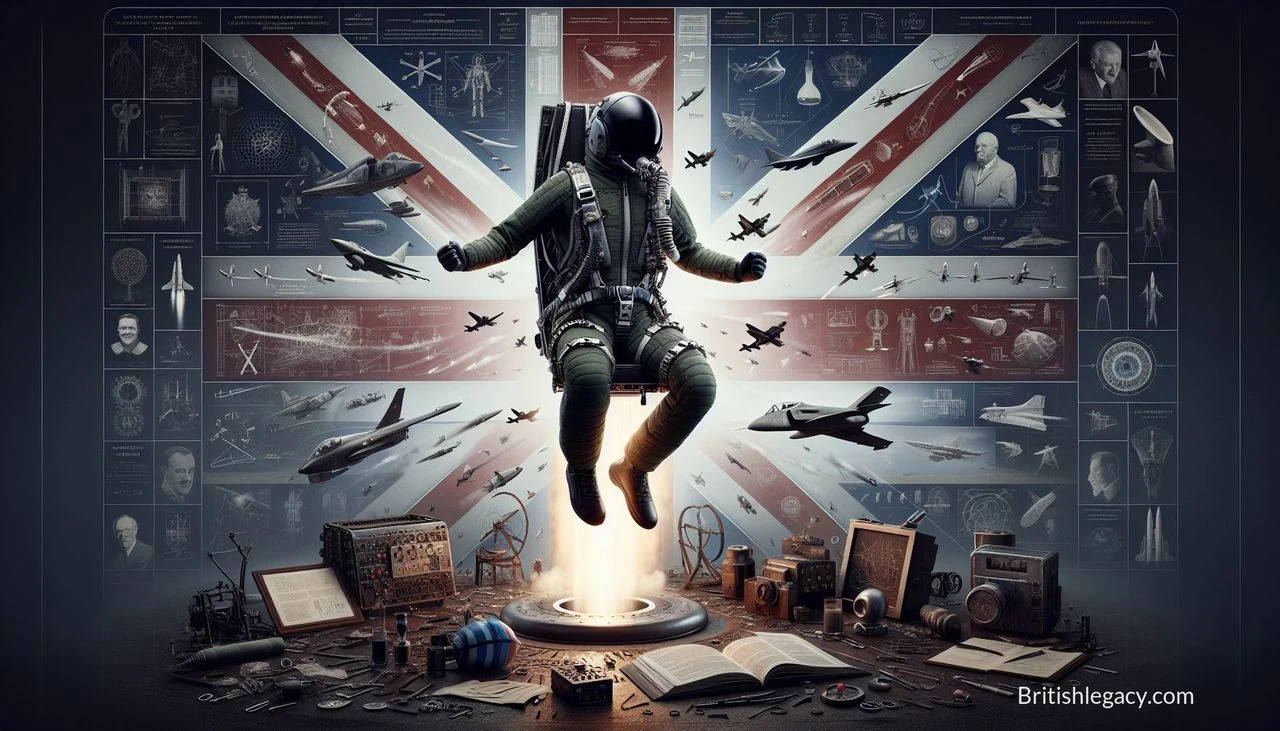
When an aircraft fails, a pilot may have only seconds to escape. As aircraft became faster, leaving a stricken machine by traditional means grew more dangerous. Sir James Martin made that problem the focus of his engineering. The ejection seat he helped develop gave aircrew a fast, deliberate means of leaving an aircraft in an emergency, turning escape from a matter of chance into a problem of design.
An engineer and an aircraft company
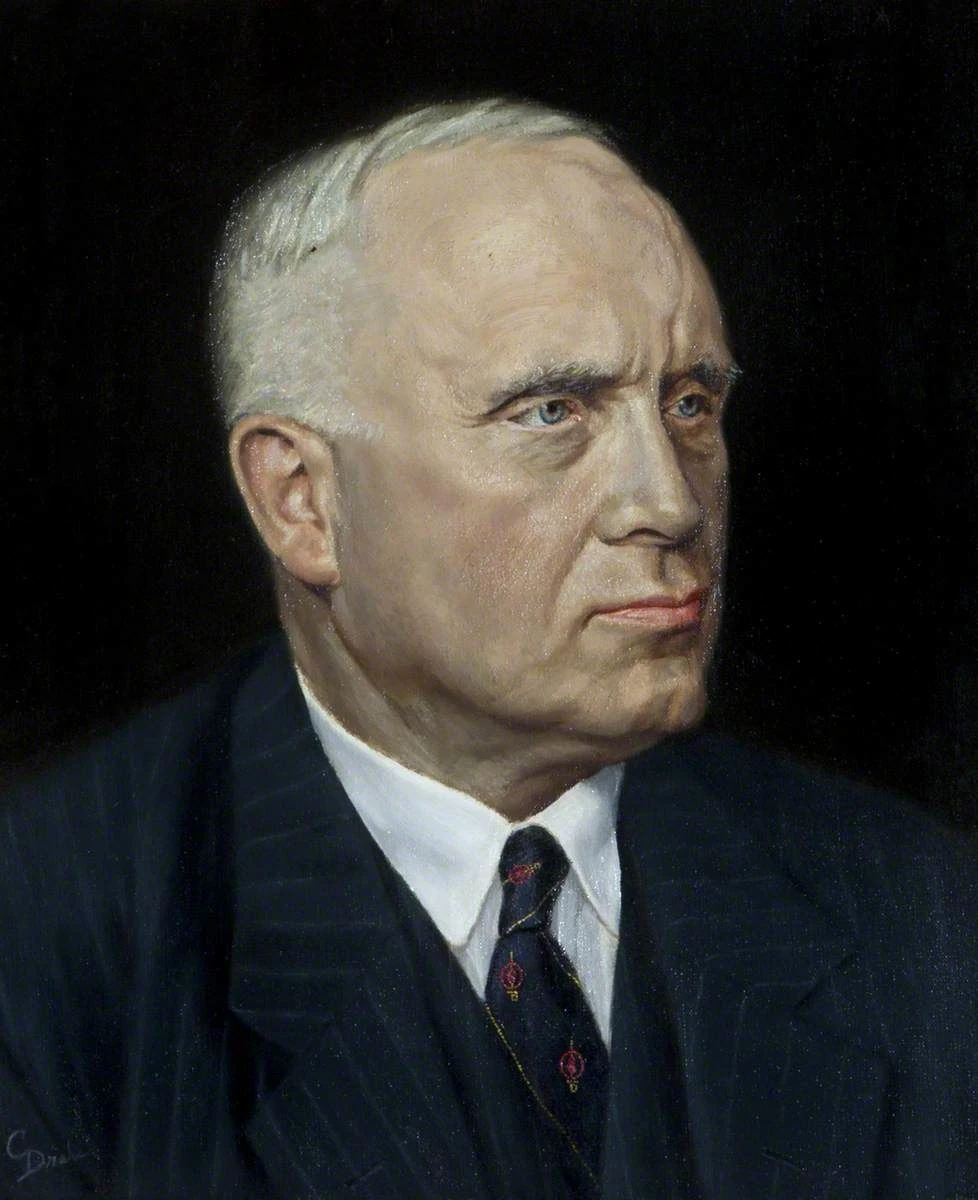
Martin was born on 11 September 1893 in Crossgar, County Down, Ireland. The supplied accounts describe his early education and apprenticeship as the beginning of a lasting interest in engineering and mechanics, but provide no further detail about those years. His work would become closely associated with aviation safety; it did not begin with the ejection seat. His first major undertaking was aircraft design and manufacture.
In 1934, Martin co-founded the Martin-Baker Aircraft Company with Captain Valentine Baker, a former Royal Air Force officer. Their partnership brought together Martin’s engineering interests and Baker’s flying experience. The company’s first aircraft, the M.B. 1, is described in the supplied material as an example of its innovative approach, with advanced features unusual for its time. Its early work was therefore more than a prelude to the ejection seat: it established a company engaged in designing and building aircraft of its own.
That practical experience gave Martin a setting in which to address the demands of aviation. Aircraft design required components and systems to work together, while the consequences of failure in flight could be severe. The later turn towards pilot escape changed the company’s direction, but it grew within a business already engaged with the engineering and manufacture of aircraft. Martin-Baker’s development from aircraft maker to aircrew-safety specialist connects those two phases of his career.
A fatal test and a new problem
In 1942, Baker died in a test-flight crash. The supplied accounts identify his death as the event that prompted Martin to concentrate on improving the chances of escape from a damaged aircraft. The loss gave the problem a personal and immediate force, but Martin’s response was practical: he set out to devise a fail-safe method for pilots to escape in emergencies. That was the aim of the work, rather than a guarantee that any system could succeed in every circumstance.
Traditional bail-out methods became increasingly dangerous as aircraft performance advanced. A pilot could not always count on having enough time, space or physical opportunity to leave an aircraft safely by older means. Higher speeds made escape more hazardous; at low altitude, there might be very little margin in which to act. The challenge was not simply to make leaving an aircraft possible. It was to devise a deliberate means of escape that could operate when the aircraft was in trouble and the pilot’s options were narrowing.
The ejection seat addressed that challenge by using an explosive charge to propel the seat out of the aircraft. Rather than relying on a pilot to climb out into the airflow, it provided a mechanism intended to move the pilot clear. The principle was direct, but a design for an emergency had to work in practice, not just sound promising on paper. Failure in such a test could have grave consequences; proving the system was an essential part of the work.
From experiment to service
The first successful test of the ejection seat took place in 1946. Bernard Lynch, identified in the supplied material as a volunteer test jumper, made the first live human ejection. His test demonstrated that the system could operate with a person in the seat, taking the concept beyond design and trials without a human participant. The chronology places this test four years after Baker’s death and marks it as proof that Martin’s proposed answer could work.
The Royal Air Force quickly recognised the invention’s significance. By the late 1940s, Martin-Baker ejection seats had become a standard feature in British military aircraft, according to the supplied article. Their adoption put the system into British military service before its use spread internationally. The invention’s British connection is therefore not only the location of the company’s work: it became part of the equipment of British military aviation and was subsequently adopted more widely.
An ejection seat could not remove the risks of military flying or guarantee survival in every emergency. Its importance was that it offered a designed route out when ordinary escape might be too dangerous or impractical. The seat made pilot survival a matter that aircraft engineering could address directly. Safety was no longer only a question of a pilot’s skill or judgement once a crisis began; the aircraft could be equipped in advance to provide another means of escape.
A safety system that continued to develop
The supplied article reports that Martin-Baker seats have been fitted in more than 90 aircraft types and that more than 7,600 lives have been saved. These are figures reported in the supplied material, describing the reach and claimed effect of the company’s work. They indicate how far the original idea travelled: from an answer to a particular danger in aircraft to a system used across many types of aircraft.
The ejection seat did not remain fixed at its first successful form. Martin-Baker continued to refine it, and the supplied account points to zero-zero ejection seats, described as capable of saving pilots when an aircraft is stationary or at very low altitude. This development extended the circumstances in which a seat might provide an escape. It also illustrates the continuing engineering task behind the headline invention: improving a safety system for situations in which time, height or movement offer little assistance.
The article attributes a drastic improvement in pilot survival rates in emergency situations to the introduction of the ejection seat, particularly in high-speed and high-altitude flight. That benefit was connected to the system’s use and development, rather than to a claim that risk disappeared. The move from a successful test in 1946 to standard use in British military aircraft, followed by international adoption and continued refinement, gives the invention a history of application as well as of design.
In 1965, Martin was knighted for his contributions to aviation safety. The honour recognised work whose importance lay less in spectacle than in its purpose: improving the chance of escape when a pilot faced an emergency. His story is not simply that of an engineer who devised a striking mechanism. It is also the story of a problem identified, a proposed solution tested with a human participant and a system brought into military service.
Why Sir James Martin deserves a place in British Legacy
Sir James Martin deserves a place in British Legacy because his work made pilot escape an explicit engineering concern in military aviation. He helped develop a system that gave pilots a deliberate means of leaving a stricken aircraft, rather than leaving them to depend solely on traditional bail-out methods as aircraft became faster. The chronology is clear in the supplied accounts: Martin and Baker founded their aircraft company in 1934; Baker died in a test-flight crash in 1942; a successful ejection-seat test followed in 1946; and, by the late 1940s, the Royal Air Force had made the seat a standard feature in British military aircraft. This is a specific British legacy: a technology developed by Martin-Baker entered British service and later spread internationally.
The original problem was severe, but the benefit was concrete. The supplied article reports that the seats have been fitted in more than 90 aircraft types and that more than 7,600 lives have been saved. It also describes a drastic improvement in survival rates in high-speed and high-altitude emergencies. Those reported figures give a sense of the work’s reach; they do not mean that every emergency had the same outcome. The system offered aircrew another chance when conventional escape could be dangerous or impractical.
Martin’s achievement also extended beyond the first successful test. Martin-Baker continued to refine the seat, with zero-zero systems described as capable of operating when an aircraft was stationary or at very low altitude. That continued development matters because a safety invention is judged not only by whether it works once, but by its usefulness in service and its capacity to address difficult conditions. Martin’s knighthood in 1965 recognised his contribution, but the enduring case for remembrance lies in the engineering itself: a deadly weakness identified, a means of escape designed and a system adopted to protect pilots.