The Yorkshire Dales are not simply a succession of valleys and hills. Their character comes from the way geology, settlement and work meet across the landscape: limestone forms cliffs and pavements; walls divide meadows; and reminders of mining sit alongside farms, villages and historic buildings. The national park covers 2,178 square kilometres, encompassing landscapes whose human and natural histories remain closely linked.
Limestone, valleys and water
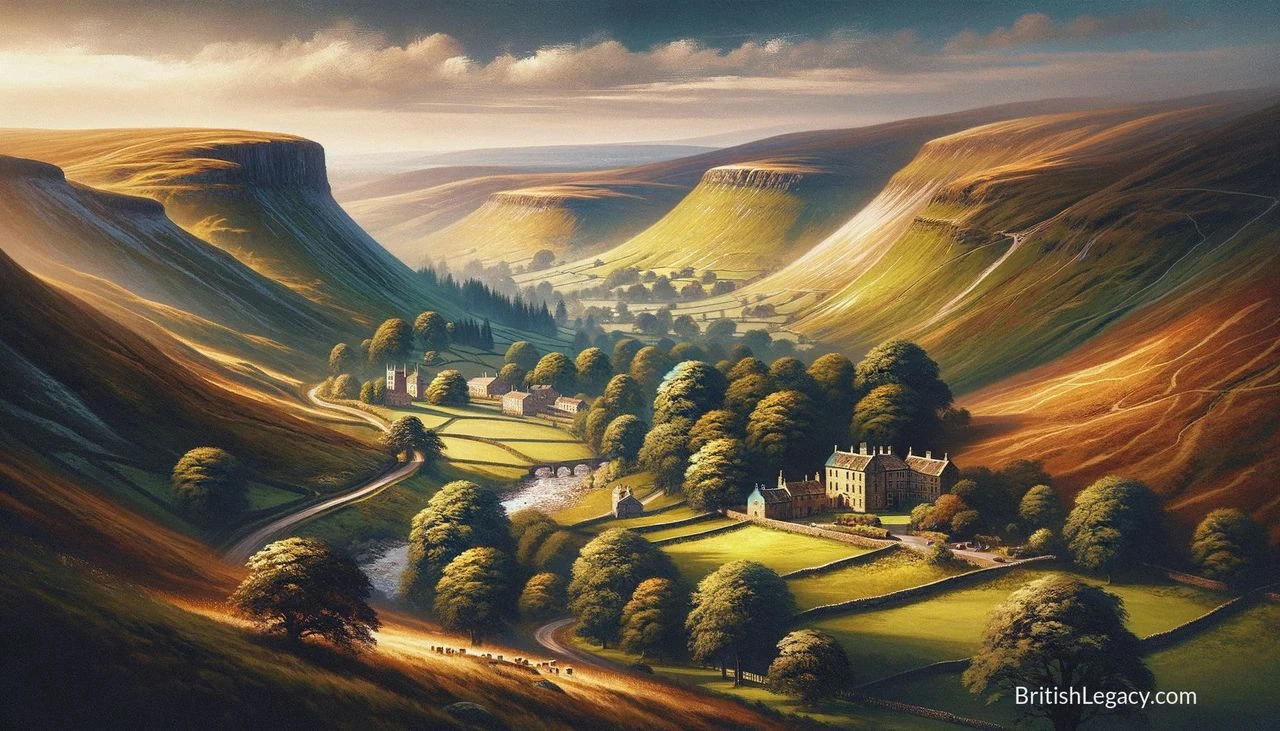
Carboniferous limestone is a defining feature of the region. It has shaped pavements, gorges and waterfalls, including the limestone amphitheatre of Malham Cove, the ravine at Gordale Scar and the Ingleton Waterfalls. These places give the Dales some of their most striking landforms, while also showing how water and rock have formed the landscape over long periods.
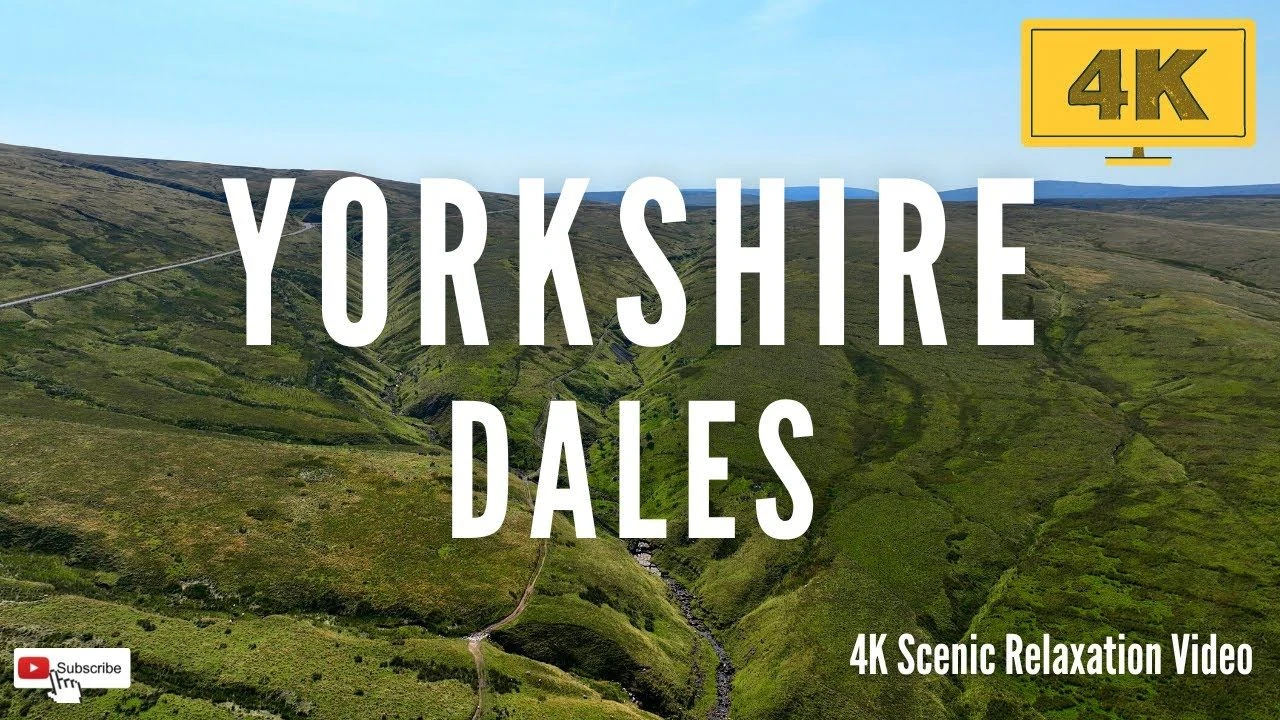
Wensleydale, Wharfedale and Swaledale are among the best-known valleys. Glacial and river processes helped shape them; today, their meadows, streams and dry stone walls make a distinctive pattern across the hillsides. The walls are practical divisions of the land as well as a familiar feature of the view. Together, these varied landscapes make the Dales more than a single scenic type: valleys, open hills, limestone features and watercourses each contribute to its identity.
Settlement and the traces of the past
Evidence of prehistoric settlement and standing stones points to human activity long before the villages and market towns familiar today. Place names and architectural remains are also associated with Viking and Norman influence. The past is visible not only in isolated archaeological features but in a wider landscape of buildings and settlements accumulated over centuries.
Bolton Castle, built in the fourteenth century, and the ruins of Jervaulx Abbey connect the area with its mediaeval history. Churches and other historic buildings sit alongside working communities. Hawes, Skipton and Grassington are among the towns and villages that give the Dales a settled, inhabited character. They are not merely backdrops to the scenery: their streets, markets and local life are part of the region's continuing story.
Farming, industry and local produce
Sheep farming has helped shape the Dales' economy and way of life over generations. Swaledale sheep, noted for their curved horns, have become a recognisable emblem of that pastoral tradition. Farming also helps explain the patchwork of meadows and boundaries that defines many views. Wensleydale cheese, made in the region, is another expression of a local food heritage that reaches beyond the valleys.
Agriculture was not the only source of work. Lead mining and quarrying became prominent during the eighteenth and nineteenth centuries, leaving traces of an industrial past in a landscape often associated chiefly with farming. The Grassington Lead Mining Trail offers a way to encounter that history on the ground. Together, farms, mines and quarries reveal an economy shaped by the resources and conditions of the Dales, and by the changing demands placed on them over time.
Wildlife, conservation and the outdoors
The range of habitats supports wildlife including otters and peregrine falcons; the red squirrel is also identified among the species found in the area. In spring and summer, meadows bring colour through flowers such as cowslips, lady's mantle and buttercups. Conservation work, including that associated with the Yorkshire Dales Millennium Trust, forms part of efforts to sustain this natural heritage. The landscape's value therefore lies not only in its appearance but in the habitats and living communities it supports.
Walking and cycling routes cross the national park, with the Pennine Way and Coast to Coast Walk among the named long-distance trails. Rivers and streams attract anglers, while open ground offers opportunities for horse riding and birdwatching. These activities depend on the same varied terrain that makes the Dales distinctive, and bring visitors into contact with a countryside that remains both a place of work and a place for recreation.
Why the Yorkshire Dales deserves a place in British Legacy
The Yorkshire Dales merits a place in British Legacy because its significance is grounded in a combination of natural form and human history. Limestone features such as Malham Cove and Gordale Scar are not separate from the wider valleys and meadows; they belong to a landscape also marked by dry stone walls, settlements and routes through the hills. Mediaeval buildings, prehistoric traces and the remains of lead mining add layers of history rather than replacing the working countryside around them.
The region's contribution is also practical and cultural. Sheep farming and Wensleydale cheese connect landscape with livelihoods and food, while mining and quarrying show how industry altered the local economy. Conservation initiatives and the network of walking routes reflect continuing attention to the area's natural and cultural value. Taken together, these details make the Dales more than a picturesque destination: they show how communities, work, wildlife and geology have shaped a recognisable part of northern England. That close relationship between land and life is the strongest reason to remember the Yorkshire Dales as part of Britain's shared heritage.