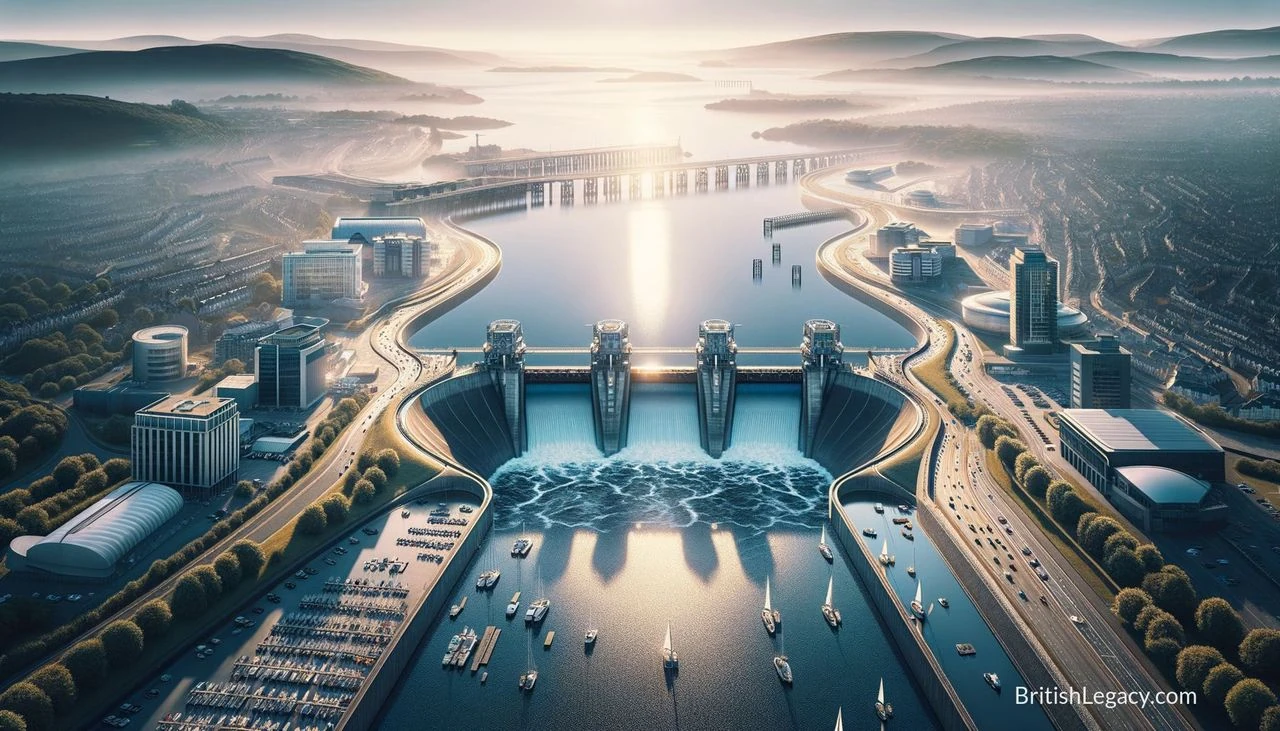
Cardiff Bay’s transformation was built around a change to the water itself. The Cardiff Bay Barrage impounded the tidal waters of the Rivers Taff and Ely, creating a freshwater lake where new leisure, business and residential development could take shape. Completed in 1999, the 1.1-kilometre structure was a major engineering project and a defining element of the city’s waterfront regeneration.
From declining docks to a new waterfront
By the late twentieth century, Cardiff’s docks were facing the consequences of industrial decline. The loss of coal and steel activity left an area that had once been busy in need of a new purpose. The proposed response was not simply to repair the existing waterfront: it was to alter its character, creating a freshwater lake and encouraging development around it.
The ambition was broad. Leisure, business and housing were all part of the vision for the regenerated area. The barrage would provide the physical change at its centre, while the surrounding development would make the waterfront a place to visit, work and live. That connection between infrastructure and urban planning is central to the project’s story: the structure was intended to enable a wider change, not to stand alone as an engineering work.
Building the barrage and creating the lake
Construction took five years, and the barrage was completed in 1999. It stretches for more than 1.1 kilometres and required over one million tonnes of material. Its principal purpose was to hold back the tidal waters of the Taff and Ely, forming a freshwater lake of about 200 hectares. These figures convey the scale of the undertaking, but the project’s significance lay in what the new water conditions were meant to make possible: a different setting for recreation and commercial activity.
The change also brought environmental concerns. The tidal mudflats had provided habitat for wading birds and fish, and critics raised questions about the effects of replacing that environment. The project’s safeguards included fish passes and wetlands, intended to support fish movement and birdlife. The design therefore involved a difficult balance between redevelopment and the wildlife associated with the former tidal landscape.
The lake also opened opportunities for watersports and other recreation. The earlier account describes the bay’s water as previously tidal and often polluted, and says conditions improved after the barrage. That change was presented as one reason the waterfront could support new leisure uses, alongside its commercial and residential development.
A changed Cardiff Bay
Cardiff Bay’s regenerated waterfront became home to the Millennium Centre, the Senedd, or Welsh Parliament, and Mermaid Quay, with its shops, restaurants and entertainment. Residential development added another dimension to the area’s new role. Together, these places give the regeneration a visible civic and public face: the bay is not described only as a destination for visitors, but as a district that also accommodates homes and businesses.
The project is also associated with employment, both during construction and through the later arrival of businesses and visitors. The earlier account links the waterfront’s change with renewed local pride and identity. Those effects are harder to reduce to a single structure: the barrage created the lake, while the character of the regenerated bay emerged through the attractions and development around it.
Why the Cardiff Bay Barrage deserves a place in British Legacy
The Cardiff Bay Barrage deserves a place in British Legacy because it connects an identifiable engineering intervention with a substantial change to a Welsh city’s waterfront. Its scale—more than 1.1 kilometres long and built using over a million tonnes of material—speaks to the ambition of the work. More important is its purpose: holding back the tidal waters of the Taff and Ely to create a freshwater lake that could anchor new leisure, business and residential uses. The barrage’s story is therefore about infrastructure as an instrument of urban change, not engineering considered in isolation.
That transformation also had competing demands. The new lake and opportunities for recreation came with concerns about mudflat habitats, fish and birdlife; fish passes and wetlands were included as safeguards. Recording both the intended renewal and the environmental questions makes the project’s legacy more instructive than a simple triumphal account. The Millennium Centre, the Senedd and Mermaid Quay illustrate the range of civic, cultural and commercial development associated with the regenerated bay. Together, the barrage and the waterfront around it show how a major public work became part of Cardiff’s changing identity.