When Christopher Boone finds his neighbour’s dog Wellington dead, he sets out to discover who killed it. The investigation becomes a journey through family secrets, unfamiliar places and the difficulty of making sense of other people. In 2012, playwright Simon Stephens and director Marianne Elliott brought Mark Haddon’s story to the National Theatre, where its combination of an intimate first-person narrative and inventive stagecraft launched a production that travelled from the South Bank to the West End and Broadway.
A novel becomes a stage story
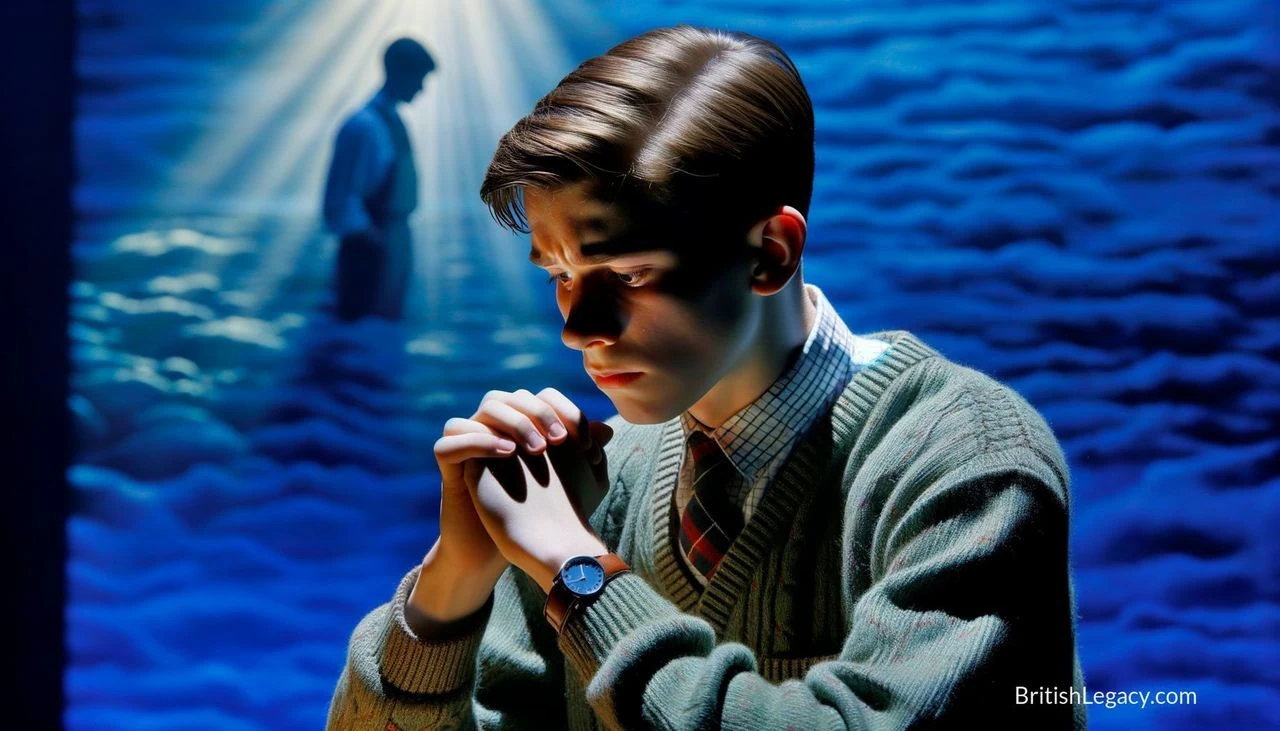
Haddon’s novel was published in 2003. Its narrator, Christopher John Francis Boone, is 15 and lives in Swindon. He is a keen mathematician who describes himself as having “some behavioural difficulties”; the novel does not state a diagnosis. Its blurb refers to Asperger syndrome, and some readers have placed Christopher on the autism spectrum, but Haddon has cautioned against treating the book as a story about one specific condition. He has described it instead as a novel about difference and seeing the world in a revealing way.
Stephens adapted the book for the stage, with Elliott directing. The production opened at the National Theatre on 2 August 2012 and ran until 27 October. Luke Treadaway played Christopher, alongside Nicola Walker as his mother, Judy, and Paul Ritter as his father, Ed. The original production was also broadcast to cinemas worldwide through National Theatre Live on 6 September 2012, extending its reach beyond people able to attend in London.
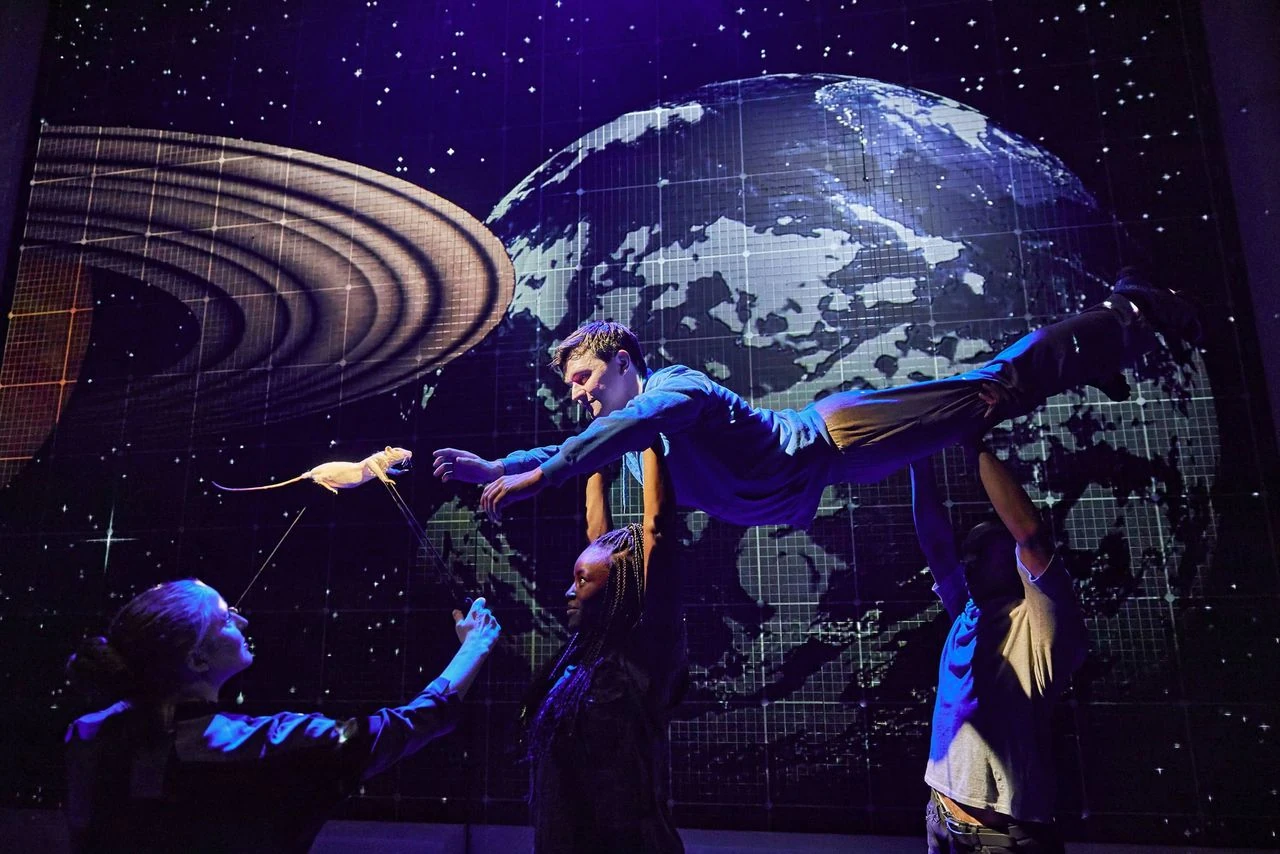
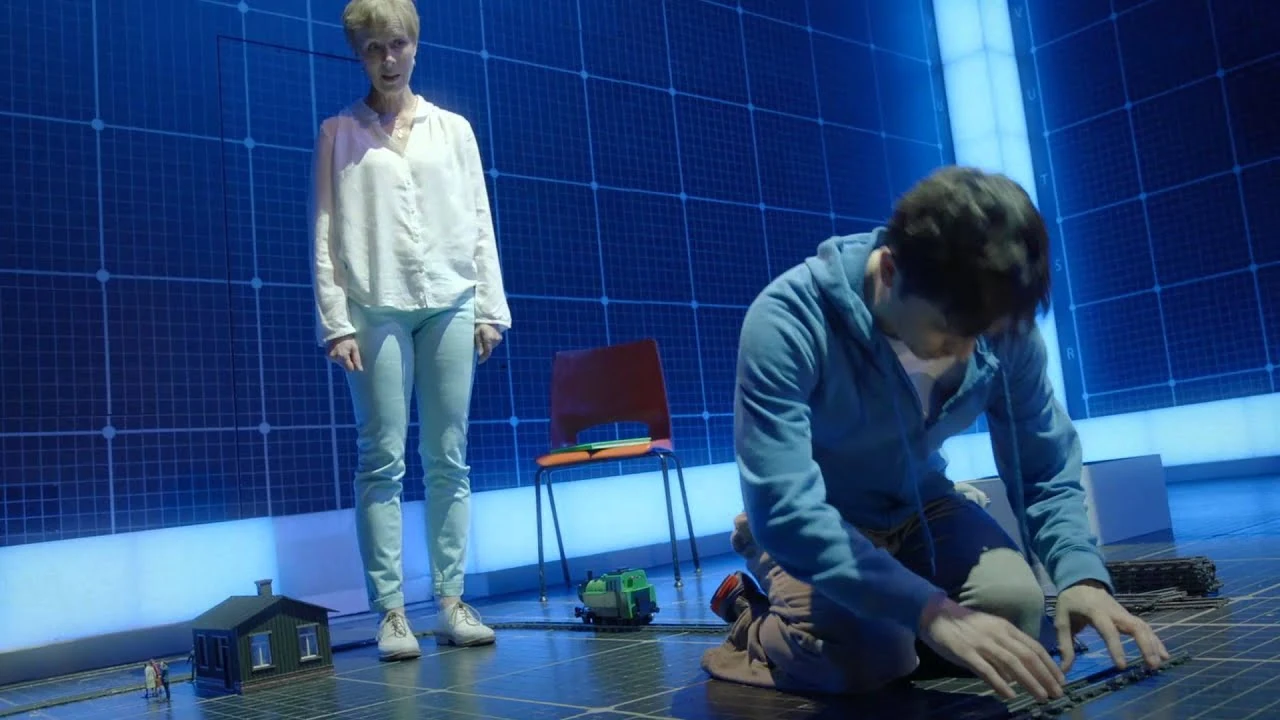
The adaptation had to make a written account of Christopher’s thoughts work in a shared theatre space. Its stage picture used a geometric grid and projections, while physical performance and multimedia helped give the story a visual language. Rather than simply illustrating the mystery, these choices made the audience’s experience of the action part of the storytelling. The production’s formal inventiveness sat alongside a recognisable domestic drama: Christopher’s investigation brings him into conflict with his father and leads him to uncover information about his mother.
From Wellington’s death to London
Christopher finds Wellington, a poodle belonging to his neighbour, speared with a garden fork. When a police officer tries to take hold of him, Christopher panics and hits the officer. He is arrested for assault and then released with a caution. Despite Ed’s objections, he decides to investigate the dog’s death and record what he discovers in a book.
The search begins in Swindon, where Christopher speaks to neighbours and tries to establish what happened. Mrs Alexander tells him that his mother, Judy, had been having an affair with Roger Shears, the husband of Wellington’s owner. Then Christopher finds letters from Judy, dated after the time Ed said she had died. Ed admits that he lied about her death and confesses that he killed Wellington during an angry argument with Eileen Shears.
Frightened by what he has learnt, Christopher sets out for London to find Judy. The journey exposes him to trains, crowds and a city far beyond the familiar routines of home. He eventually reaches his mother, but living with her and Roger does not settle the family’s difficulties: Roger is reluctant to accept Christopher, and the couple later separate. Judy returns with Christopher to Swindon. Ed begins trying to regain his son’s trust through short daily visits and gives him a puppy, Sandy. Christopher’s story ends with his ambitions still in view: he takes his mathematics A-level, earns top grades and looks towards further study.
A West End and international journey
After its National Theatre run, the production transferred to the Apollo Theatre in Shaftesbury Avenue in March 2013. On 19 December that year, part of the theatre’s ceiling fell during a performance, injuring around 80 of the more than 700 people inside. The show later reopened at the Gielgud Theatre on 24 June 2014. That move followed a serious incident at the Apollo; it was not simply a transfer prompted by the production’s success.
The stage adaptation also reached Broadway, beginning performances at the Ethel Barrymore Theatre in 2014. It won seven Olivier Awards and five Tony Awards. Its travels were not confined to English-language productions: translations and adaptations were staged in Mexico City, Tel Aviv, Paris, Liège and Odense. The production began a tenth-anniversary UK and Ireland tour at Troubadour Wembley Park Theatre on 20 November 2021.
Christopher’s part has also prompted discussion about who gets to play a character understood by many audiences as autistic. Mickey Rowe became the first openly autistic actor to play Christopher in the production, and later wrote about that experience in Fearlessly Different: An Autistic Actor’s Journey to Broadway’s Biggest Stage. That milestone adds a significant perspective to the play’s performance history, without making one casting choice stand for every autistic person or experience.
The story beyond the stage
The play’s source novel was itself unusual in how it presented its narrator. Haddon said he imagined Christopher as an individual rather than trying to write a definitive account of autism or Asperger syndrome. His remarks provide useful context for the adaptation: the character’s particular rules, interests and ways of reading the world belong to Christopher, not to a supposed template for everyone who is neurodivergent.
The novel’s form also gives the theatrical adaptation material to work with. Christopher numbers its chapters using prime numbers, and the book includes maps, diagrams and other visual elements as part of his narration. In a theatre, a story that depends on a character’s ordered way of describing events can be expressed through design and performance as well as spoken words. The grid and projections described in accounts of the stage production offered one means of making that perspective visible.
There is a further tension at the heart of the story. Christopher approaches the dog’s death as a problem to solve, but the investigation uncovers betrayals and emotional realities that cannot be neatly arranged like evidence. His journey to London, his discovery of the letters and his return to Swindon change his understanding of his family without removing his need for order or independence. The mystery supplies momentum; the relationships give the search its consequences.
Why The Curious Incident of the Dog in the Night-Time deserves a place in British Legacy
The production’s British significance is rooted in its specific theatrical history. Adapted by Simon Stephens and directed by Marianne Elliott, it began at the National Theatre in London, transferred to two West End theatres and later crossed to Broadway. National Theatre Live carried the original production to cinema audiences around the world. Its awards and international adaptations show how a work made in British theatre could travel widely without losing the Swindon and London journey at the centre of Haddon’s story.
Its achievement is also one of form. The production took a first-person novel, with a narrator whose account is organised by his own patterns and interests, and made that perspective legible through a combination of acting, projection and stage design. This was not merely a mystery presented onstage: the means of telling it helped audiences follow Christopher’s experience as the plot moved beyond the apparent crime. The production’s long journey, including its tenth-anniversary UK and Ireland tour, demonstrates the continuing life of that theatrical approach.
The play’s legacy also benefits from keeping its subject in proportion. Christopher is a particular character, not a claim to represent all autistic people; Haddon himself resisted presenting the novel as an account of a single diagnosis. Rowe’s casting as the first openly autistic actor to play Christopher adds an important fact to the stage history, while leaving room for a wider range of experiences and interpretations. Taken together, the production’s British origins, craft, reach and evolving performance history make it a notable chapter in contemporary British theatre.
Sources
The Curious Incident of the Dog in the Night-Time (revision 1377211057)
Adapted in part from The Curious Incident of the Dog in the Night-Time by Wikipedia contributors, under CC BY-SA 4.0. Text has been edited and combined with the existing article; this adapted text is shared under the same licence. Contributor history.