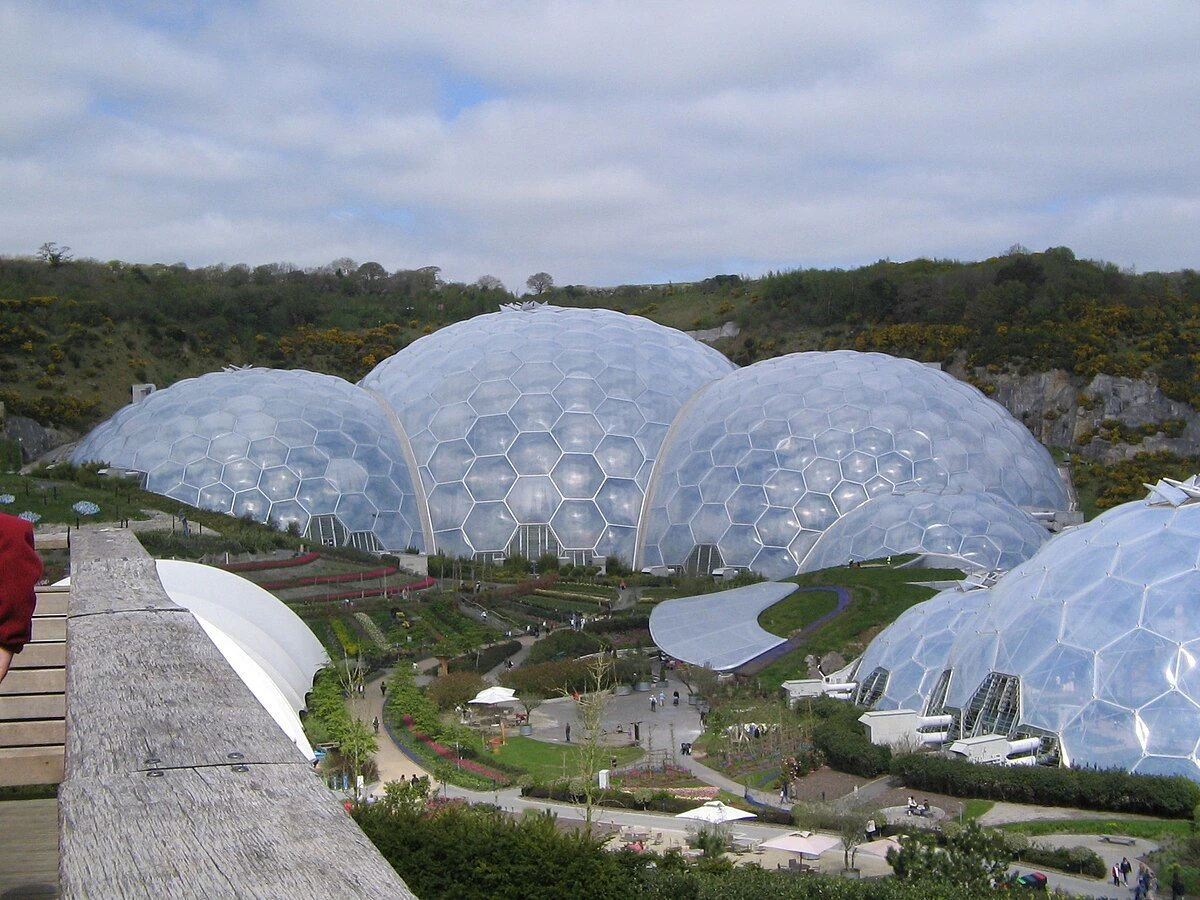
In Cornwall, the Eden Project made a former clay pit the setting for a garden with an educational purpose. Opened in March 2001, it was conceived as a place where visitors could encounter plants from different parts of the world and learn about the natural systems on which people depend. Its large biomes bring distinct climate themes into view; its programmes, exhibitions and displays extend that experience beyond the plants themselves.
A garden formed from a clay pit
The project was developed by Sir Tim Smit with a team of engineers and horticulturists. Its setting is integral to its story: a former clay pit became the home of a public attraction designed to connect people with the natural world. The ambition was to create a garden that could educate and inspire as well as display plants. That combination gives the Eden Project a particular role in Cornwall: it is both a visitor destination and a place for learning about ecological questions.
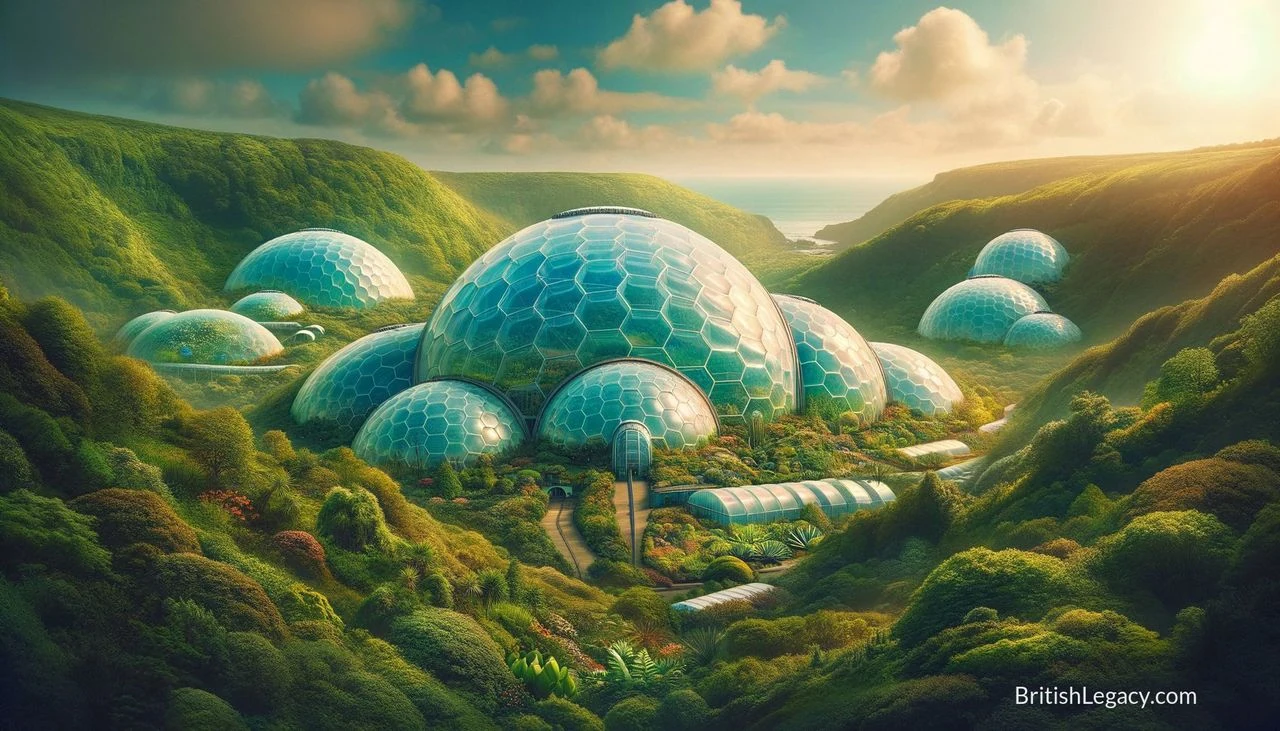
At its centre are large domed structures, known as biomes, which house plants associated with different climates. Their contrasting environments allow the project to show plant life from far beyond Cornwall in a single site. Instead of presenting one landscape, the biomes invite visitors to consider how plants relate to the places and conditions in which they grow. The garden’s design and its teaching purpose are therefore closely connected: the displays provide a starting point for exploring wider ideas about nature and human life.
Rainforest and Mediterranean worlds
The Rainforest Biome takes its theme from tropical regions, including South America and Asia. Its displays include towering trees and orchids, with waterfalls among the features described in the garden. The biome also provides a setting for explaining the role of rainforests and the importance of conserving them. Bringing these plants together indoors makes a tropical environment visible to visitors in Cornwall, while linking the experience of the display to a conservation message.
The Mediterranean Biome presents plants associated with Mediterranean climates, including examples from California and South Africa. Flowering plants, aromatic herbs and olive trees feature in its displays. Set alongside the rainforest environment, it offers a contrast in plant life and growing conditions. The two biomes help make the project’s wider subject tangible: plants are part of different environments, and human cultivation is one way people interact with those environments.
Education, events and sustainability
Education is a central part of the Eden Project’s stated purpose. Its programmes include visits for schools and workshops for adults, addressing ecological issues and sustainable living. Exhibitions and interactive displays explore connections between people and nature, while seasonal events and art installations provide further ways to engage with the site. Taken together, these activities make the project more than a collection of indoor plant displays: they offer visitors different routes into subjects raised by the gardens.
The project also presents sustainability as part of its work. Its stated areas of activity include renewable energy, water conservation and reducing waste. The Rainforest Canopy Walkway and an expansion into geothermal energy are identified as projects connected with that wider aim. These initiatives sit alongside the biomes and educational programmes, extending the site’s focus from displaying nature to considering how resources may be used more responsibly. They also give the project a practical dimension: environmental ideas are presented not only through plant collections, but through named projects and themes associated with the site.
Why the Eden Project deserves a place in British Legacy
The Eden Project’s place in British Legacy rests on a distinctive achievement in Cornwall: turning a former clay pit into a public garden built around learning as well as display. The biomes bring plants associated with tropical and Mediterranean climates into view, and their contrast gives visitors a way to think about the conditions in which different plants grow. The project’s origins in a collaboration involving Sir Tim Smit, engineers and horticulturists also show how different kinds of expertise were brought together to create a public-facing garden with an educational purpose.
Its significance lies in connecting an encounter with plants to questions about conservation and sustainable living. Rainforest displays sit alongside a message about conserving rainforests; school visits, adult workshops, exhibitions and interactive displays provide further opportunities to engage with ecological subjects. The project also identifies renewable energy, water conservation and waste reduction among its sustainability themes. Rooted in Cornwall, it offers visitors a way to encounter the beauty and variety of nature while reflecting on the shared responsibility to cherish and protect the web of life on Earth. That invitation to learn and care is part of the Eden Project’s enduring contribution.