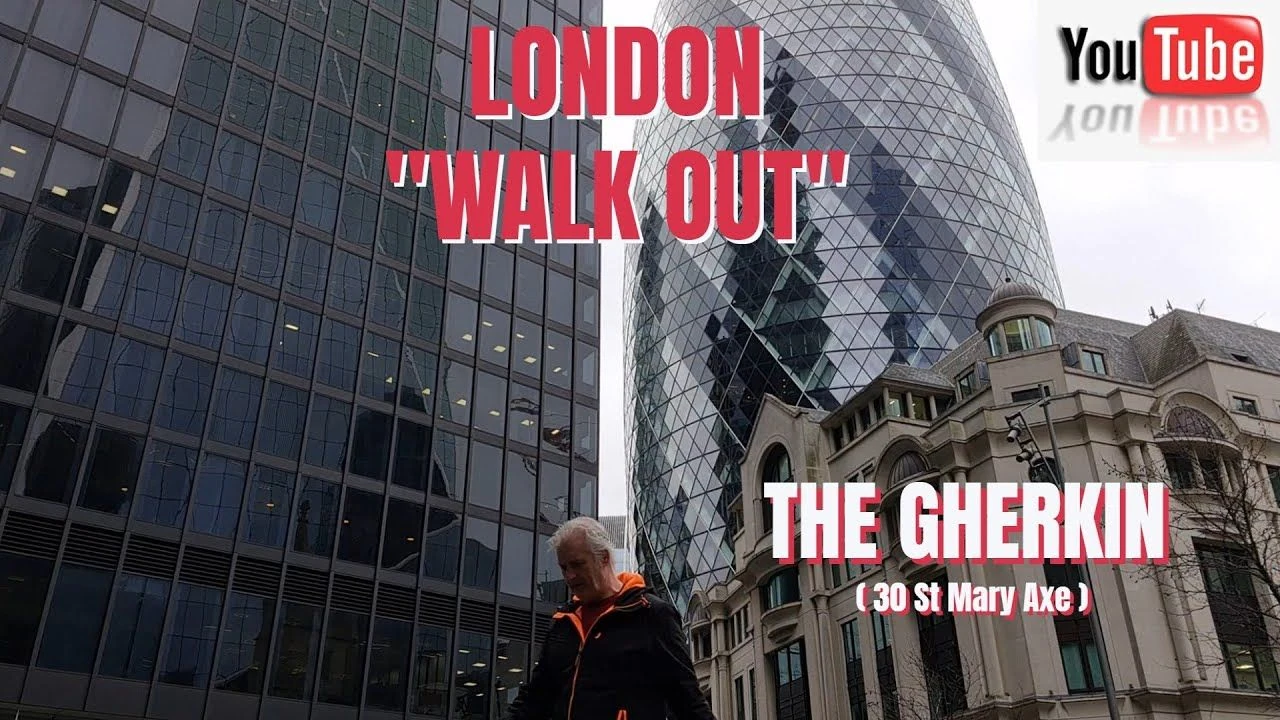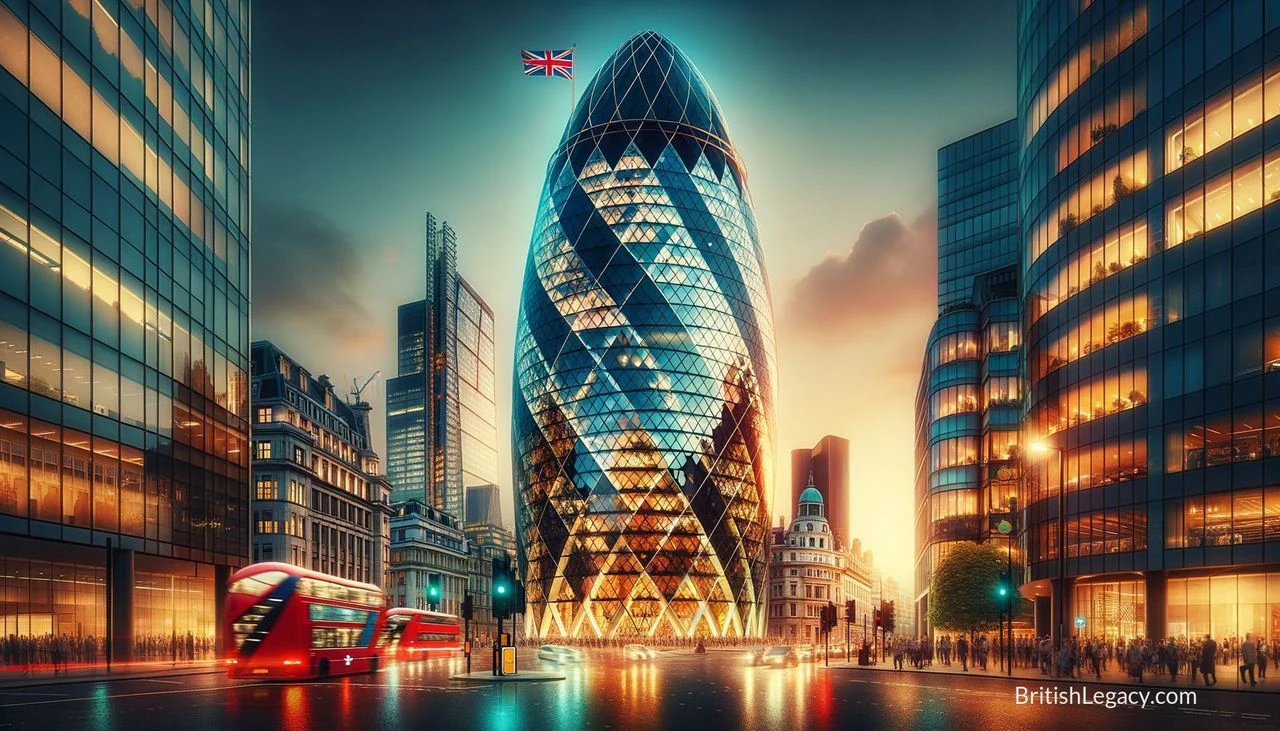
At 180 metres, 30 St Mary Axe rises above the streets of London’s financial district with a silhouette unlike the surrounding buildings. Its curved outline earned it the nickname The Gherkin; its underlying design brings together a steel-and-glass structure, spiralling open spaces and features intended to make use of daylight and natural ventilation. Designed by Norman Foster’s practice, Foster and Partners, the tower opened in April 2004 and became one of the most recognisable additions to the capital’s skyline.
A recognisable shape, a considered structure
The building’s profile is its most immediate distinction. Its elliptical form narrows towards the top, while the glass exterior gives the structure a changing appearance against the city. The nickname “The Gherkin” draws on its resemblance to a cucumber. In an area of London associated with neo-Gothic and Edwardian architecture, that modern outline makes a clear contrast.
Behind the exterior is a helical lattice of steel and glass. The design incorporates open spaces, described in the original account as courtyards, which spiral upwards through the building. These spaces and the light wells bring daylight further into the interior. The arrangement is not simply a visual feature: the account also describes it as part of the building’s approach to ventilation.
Light, air and the working building
The Gherkin’s design uses a double-glazed façade intended to reduce heat gain and, in turn, the need for air conditioning. Its open spaces and light wells assist natural ventilation, offering another way to reduce reliance on artificial climate control. These are specific design features rather than a reason to treat the building as a general emblem of environmental progress. The account describes the tower as an example of sustainable design, but gives no measurements or comparative evidence for its overall environmental performance.
The tower was conceived for a working part of London, not as a detached monument. Its setting in the financial district connects its striking form with the everyday function of offices. The original article says it houses companies and financial services, but does not identify tenants or detail the building’s economic effect on the district. Its contribution that can be described with confidence here is more visible: it adds a distinctive modern landmark to the City’s built landscape.
A presence in the London skyline
From its upper floors, the building offers views across London, including towards the River Thames, parks and other parts of the city. The original article also mentions events held inside and appearances in films and television, though it gives no examples. Those claims are not needed to understand the tower’s significance: its unusual profile and prominent location already make it an easily recognised feature of modern London.
The Gherkin’s design brings together a strong external identity and practical considerations within the building. Its curved form sets it apart, while the lattice, light wells and open spaces shape the experience of the interior. The combination helps explain why 30 St Mary Axe is discussed not only as an office tower, but also as a notable work of contemporary architecture.
Why The Gherkin deserves a place in British Legacy
The Gherkin deserves a place in British Legacy as a significant modern addition to London’s architecture. Designed by Norman Foster’s practice and opened in 2004, it gives the City a landmark whose identity is inseparable from its form: the elliptical outline, glass exterior and spiralling steel lattice make 30 St Mary Axe distinctive among the buildings around it. Its place in the financial district also matters. This is a working tower in the heart of London, not a structure separated from the city’s commercial life.
Its design merits attention beyond the outline. The double-glazed façade, light wells and open spaces were intended to address heat gain, daylight and ventilation within a tall office building. These features offer a concrete account of how architectural choices can respond to the practical conditions of a building’s use. The available account does not establish the tower’s wider environmental or economic impact, so its legacy is best stated without grand claims: it is an identifiable British architectural achievement that combines a memorable silhouette with considered structural and interior design.