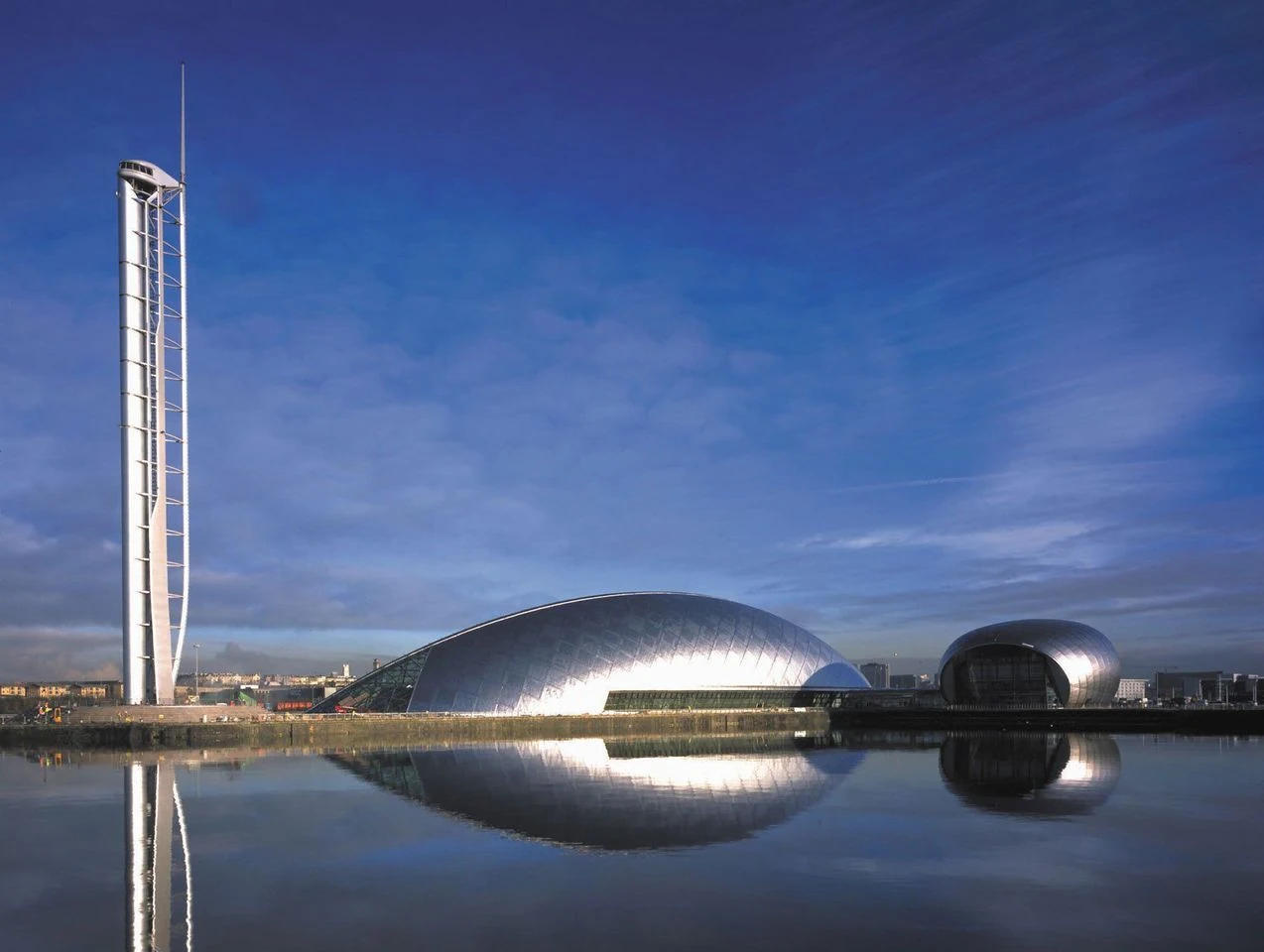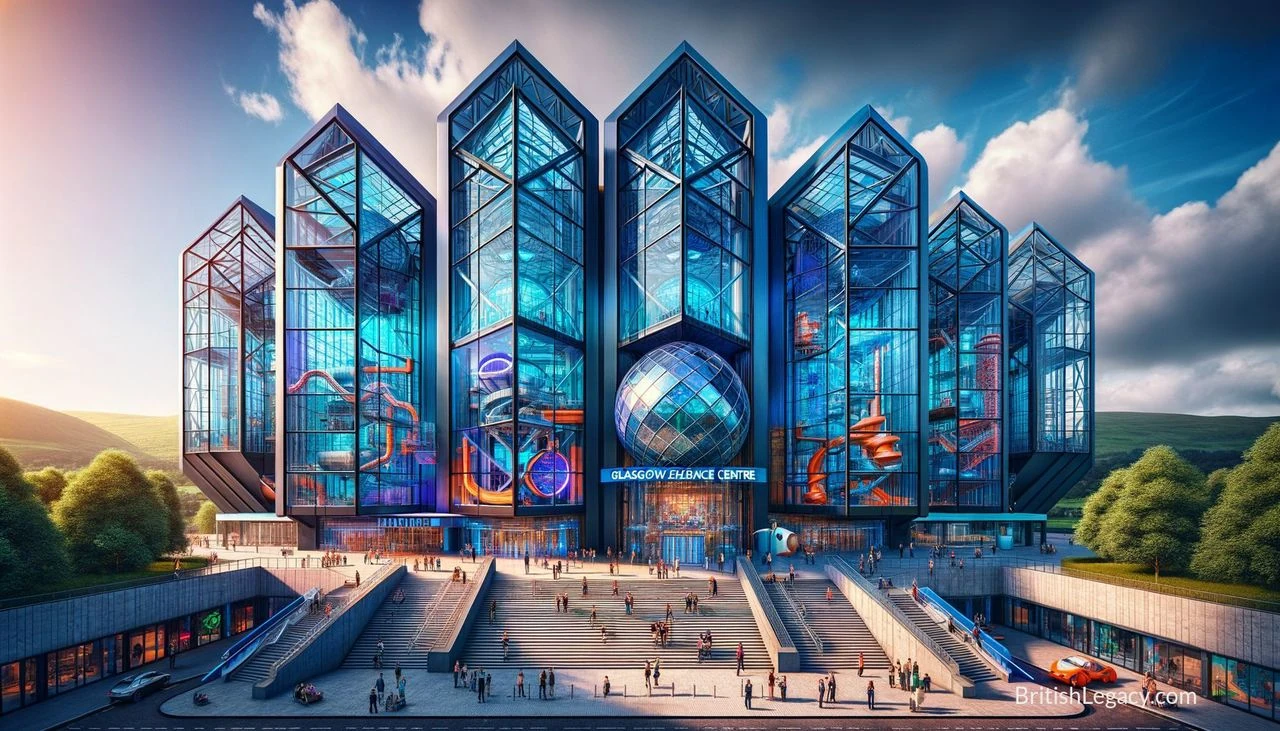
On the Clyde waterfront, Glasgow Science Centre invites visitors to encounter science through hands-on exhibits, demonstrations and film. Opened in 2001, the centre brings together the Science Mall, Glasgow Tower and an IMAX cinema. Its public-facing approach runs from interactive displays about the human body to demonstrations staged beyond the museum walls.
Hands-on discovery in the Science Mall
The Science Mall is the centre’s principal exhibition space. Across three floors, visitors can explore activities covering subjects from basic physics to space travel. BodyWorks, one of the named exhibits, focuses on human anatomy through interactive displays. The variety gives families and other visitors different ways to engage with scientific ideas, whether by trying an activity or exploring a particular subject in more detail.
The Science Mall is one part of a wider group of attractions. The centre’s three named buildings and facilities are the mall, Glasgow Tower and the IMAX cinema; the original description characterises the buildings as titanium-clad. Together, they offer a mix of exhibition space, a tower attraction and large-screen films, placing different forms of public engagement with science within the same waterfront destination.
Education beyond the galleries
The centre’s educational work extends to programmes involving schools, colleges and universities. Its outreach initiatives are described as providing resources and opportunities for communities to take part in scientific exploration. These activities broaden the centre’s role beyond a museum visit, connecting its subject matter with educational settings and audiences outside the galleries.
Science Busking takes demonstrations into public spaces, where experiments can introduce scientific ideas in an informal setting. Workshops, talks and temporary exhibitions provide further opportunities to explore current scientific challenges and innovations. These different formats—demonstration, discussion and display—make up a varied programme alongside the permanent hands-on exhibits.
The tower and the IMAX cinema
Glasgow Tower is another part of the visitor offer, alongside the Science Mall. The centre’s original description associates the tower with views over Glasgow, but its specific height and world-record claims are not repeated here. The tower nevertheless forms a distinct attraction within a venue whose other activities focus on exhibitions and learning.
The IMAX cinema brings film into that mix. Its programmes are described as ranging across subjects from the ocean to space, using large-screen presentation to explore the natural world. The cinema, tower, exhibitions and public activities provide visitors with several ways to encounter scientific themes, rather than relying on a single gallery format.
Why Glasgow Science Centre deserves a place in British Legacy
Glasgow Science Centre deserves a place in British Legacy for its practical contribution to public learning in Scotland. The Science Mall makes scientific subjects available through hands-on activities, with BodyWorks offering a specific example of an interactive approach to human anatomy. The centre’s educational programmes and outreach add another dimension: its work is described as involving schools, colleges and universities, while Science Busking takes demonstrations into public spaces. These activities show how science can be presented to people in different settings, not only through formal lessons or specialist institutions.
The centre also brings exhibitions together with talks, workshops, temporary displays and an IMAX cinema, giving visitors several routes into scientific subjects. Its importance here rests on those tangible features and its stated educational purpose, rather than broad claims about national or global influence. As a Glasgow institution on the Clyde, it provides a place where visitors can explore science directly and where educational engagement can extend beyond the building. That combination of public access, varied presentation and outreach makes it a distinctive part of Scotland’s cultural and educational landscape.