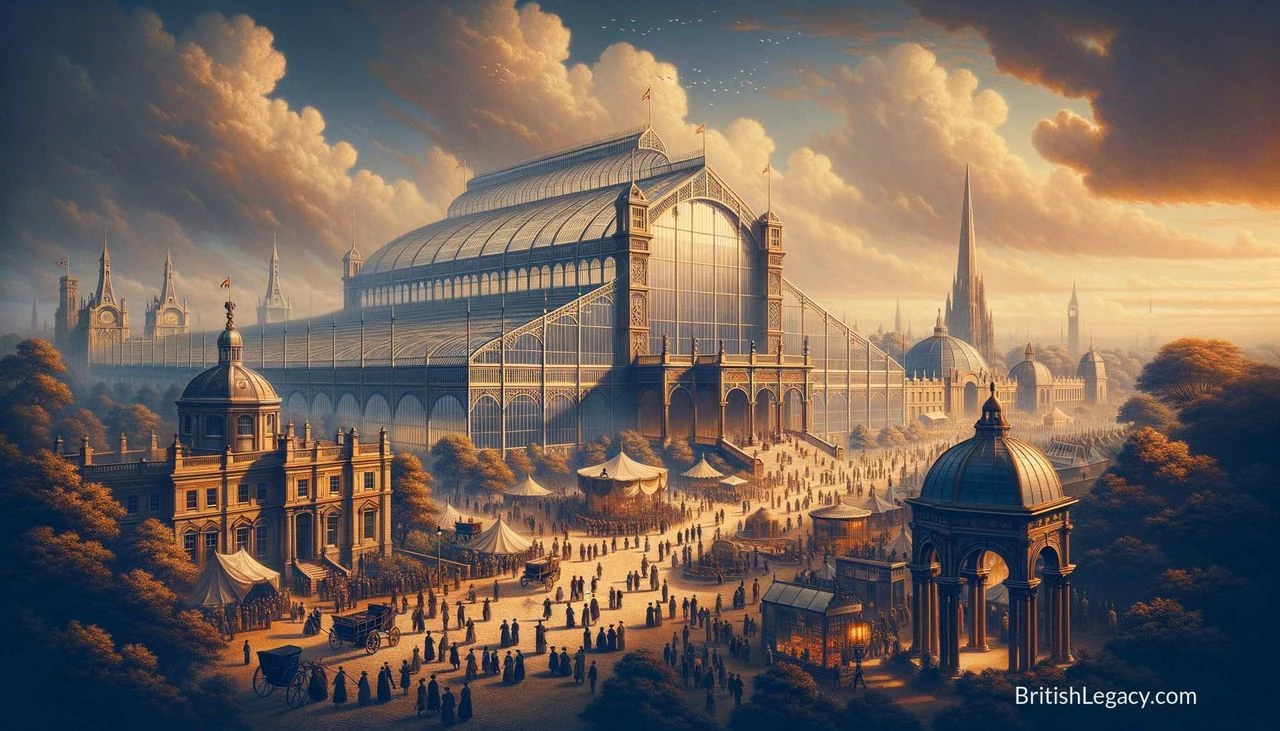
On 1 May 1851, the Crystal Palace opened in Hyde Park to visitors arriving for the Great Exhibition. Inside, machinery, works of art and objects from across the world were gathered under one roof. More than six million people visited during the exhibition’s five months, making it both a showcase for industrial production and a major public event in Victorian Britain.
A building designed for the exhibition
The Crystal Palace was conceived by Joseph Paxton. Built from iron and glass, it covered 19 acres and used modular, prefabricated components. The structure was more than a container for the exhibits: its scale and construction made it a prominent example of the engineering and design on display.
The exhibition itself was associated with Prince Albert, the consort of Queen Victoria. Its stated aims included presenting Britain’s industrial strength, encouraging international economic and cultural cooperation, and promoting free trade and technological progress. The event brought those ambitions into a public setting, where visitors could encounter manufactured goods and artistic works together.
Machinery, art and objects from around the world
Exhibitors from countries including France, the United States and India contributed more than 100,000 objects. The displays ranged from industrial equipment to sculpture and precious stones. British machinery connected with textiles, transport and manufacturing featured prominently, while other exhibits drew attention for their size, materials or cultural significance.
Among the objects named in accounts of the exhibition were the Cadeby Victoria, a hydraulic press capable of shaping large pieces of iron, and the Koh-i-Noor diamond. Hiram Powers’s sculpture The Greek Slave represented the artistic side of the display. Together, such exhibits gave visitors a view of the range of goods and works brought into the Palace, rather than a single, narrowly defined account of progress.
Visitors, proceeds and the exhibition’s reach
More than six million people visited over five months. The attendance made the Great Exhibition a remarkable gathering by the standards described in accounts of the event, although the figure alone cannot explain what visitors made of what they saw. Its scale also gave the exhibition a public presence beyond the individual exhibits: a large audience encountered an international display of industry and art in London.
The exhibition generated proceeds that contributed to the development of London museums, including the Victoria and Albert Museum, the Science Museum and the Natural History Museum. The connection between the event’s proceeds and these institutions is part of its lasting significance, linking a temporary exhibition to the later preservation and presentation of collections. The Great Exhibition is also commonly associated with the development of international expositions, though claims that it alone originated the modern World’s Fair tradition are too broad to state as fact here.
Why the Great Exhibition deserves a place in British Legacy
The Great Exhibition deserves a place in British Legacy because it brought together several defining aspects of Victorian public life: industrial ambition, international exchange and popular access to displays of art and manufacture. Its setting was a striking structure in Hyde Park, but its importance rested on more than architecture. The 19-acre Crystal Palace housed over 100,000 objects, and more than six million people visited during the five months it was open. Those figures convey the unusual scale of an event that made industrial and artistic displays a public experience.
Its effects also extended beyond the exhibition itself. Proceeds contributed to the foundations of major London museums, including the Victoria and Albert Museum, the Science Museum and the Natural History Museum. That link between a temporary event and enduring institutions gives the exhibition a concrete British legacy: it helped support places where collections could be preserved and encountered by later generations. The event’s international participation matters too. Exhibitors from France, the United States and India appeared alongside British displays, making the Palace a meeting place for objects and ideas from different countries. Its legacy is therefore best understood as a significant British-hosted exhibition with a lasting institutional connection, rather than as an uncomplicated triumph or the sole origin of later world fairs.