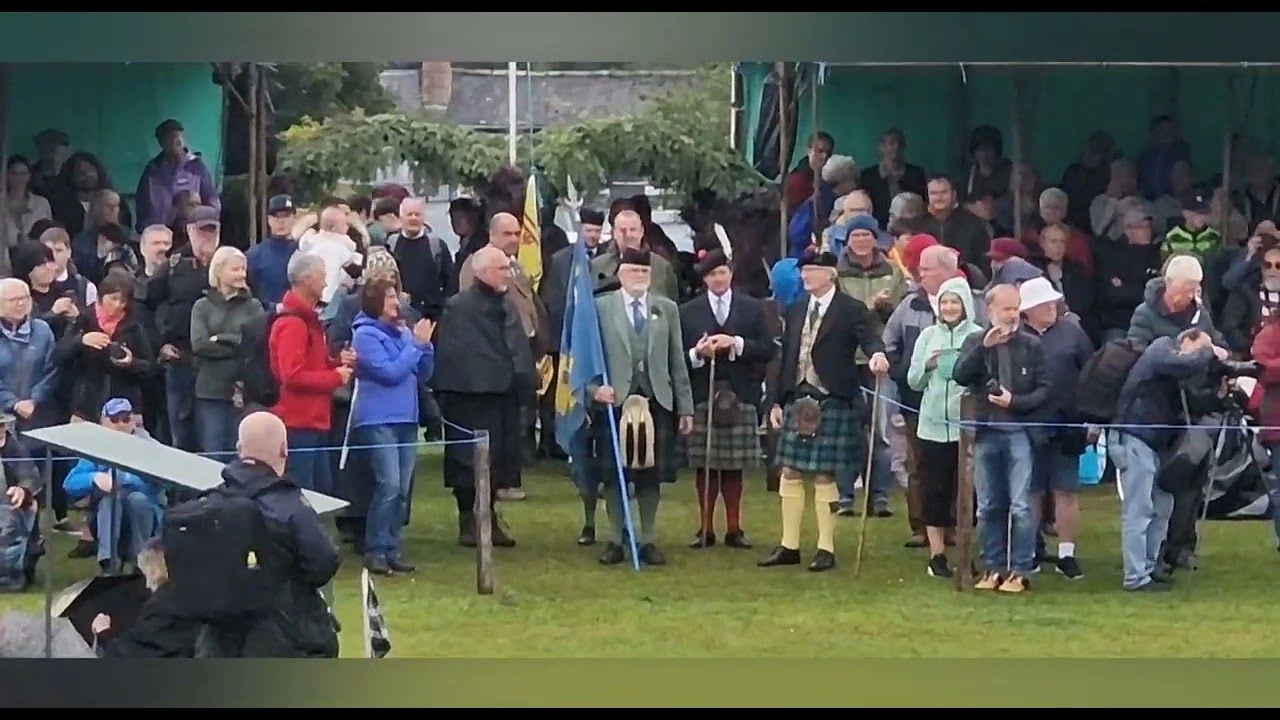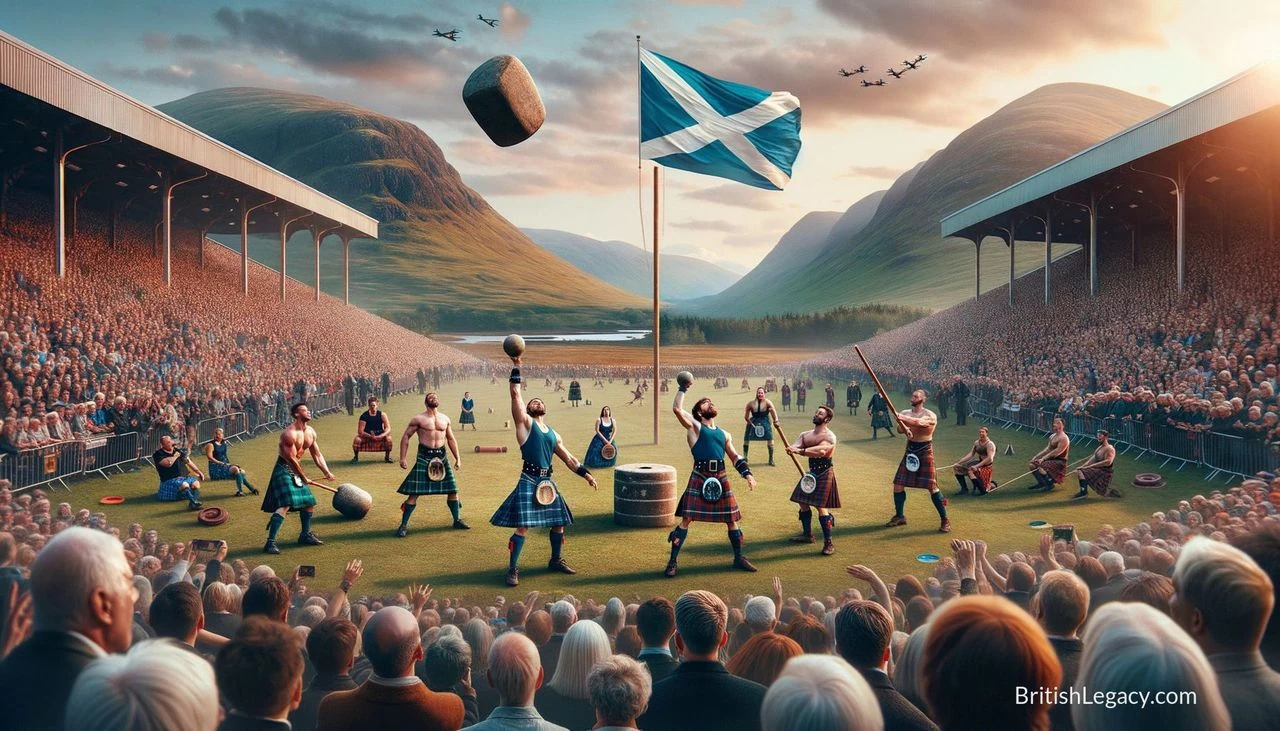
The Highland Games bring strength, skill and Scottish cultural traditions into the same arena. Athletic contests such as the caber toss sit alongside Highland dancing and piping competitions, making the Games more than a sporting programme. Their roots are often linked to stories about Scotland’s medieval kings, but the precise beginnings are uncertain. The organised form of the Games developed in the nineteenth century, and the tradition has since travelled well beyond Scotland.
Origins: history and legend
Accounts of the Games sometimes trace them as far back as the eleventh century. One familiar story says that King Malcolm III called men to race up Craig Choinnich, near Braemar, to find the fastest runners for service as royal messengers. The story gives the Games a striking origin, but their exact beginnings remain uncertain.
The clearer point in their history is their development into organised events during the nineteenth century. They became a setting for athletic competition and displays of Scottish culture, bringing those elements together in a form that continues to be recognised as the Highland Games.
Strength, technique and competition
The caber toss is among the best-known contests. A competitor lifts and carries a large wooden pole, or caber, before tossing it so that it turns end over end. The aim is not simply to throw it as far as possible: the direction in which it lands matters, with an ideal throw described as landing at twelve o’clock relative to the direction of the run-up.
Other traditional strength events include the hammer throw and weight for height. In the hammer, competitors swing a heavy implement before releasing it for distance. In weight for height, they throw a weight over a raised bar. Each tests strength and technique differently: one rewards distance, the other the ability to clear a height.
These contests share a programme with Highland dancing, including the Sword Dance and the Highland Fling. Their intricate footwork and expressive movement make dance a prominent part of the Games alongside the physical tests of the heavy events.
Music, community and an international reach
Piping competitions add another distinct element. Bagpipers perform traditional tunes, while pipe bands bring music to the event in coordinated performances. Athletic contests, dance and piping together give the Games their character as a cultural gathering as well as a sporting occasion.
The tradition is rooted in Scotland, but Highland Games are also held overseas. Communities and enthusiasts in places including North America and Oceania have continued the practice. In the United States, Grandfather Mountain in North Carolina and Pleasanton in California are named as hosts of large events. These gatherings carry the Games beyond their Scottish setting while keeping their association with Scottish heritage in view.
Why the Highland Games deserve a place in British Legacy
The Highland Games deserve a place in British Legacy because they bring sporting skill and cultural practice together in a recognisable Scottish tradition. The caber toss, hammer throw and weight for height each test strength in a different way, while dancing and piping make clear that the event is not limited to athletic competition. Its distinctive character comes from the combination: contests, music and performance share the same gathering.
The Games also show how a tradition rooted in Scotland can be carried by communities elsewhere. Overseas events, including those in the United States, extend their reach without erasing their Scottish association. That connection matters to British Legacy: Scotland is part of the United Kingdom, and the Games offer a specific example of Scottish culture contributing to the wider story of Britain. Their enduring appeal lies not in a claim to represent every part of that story, but in the way they bring Scottish sporting and cultural traditions together for participants and spectators.