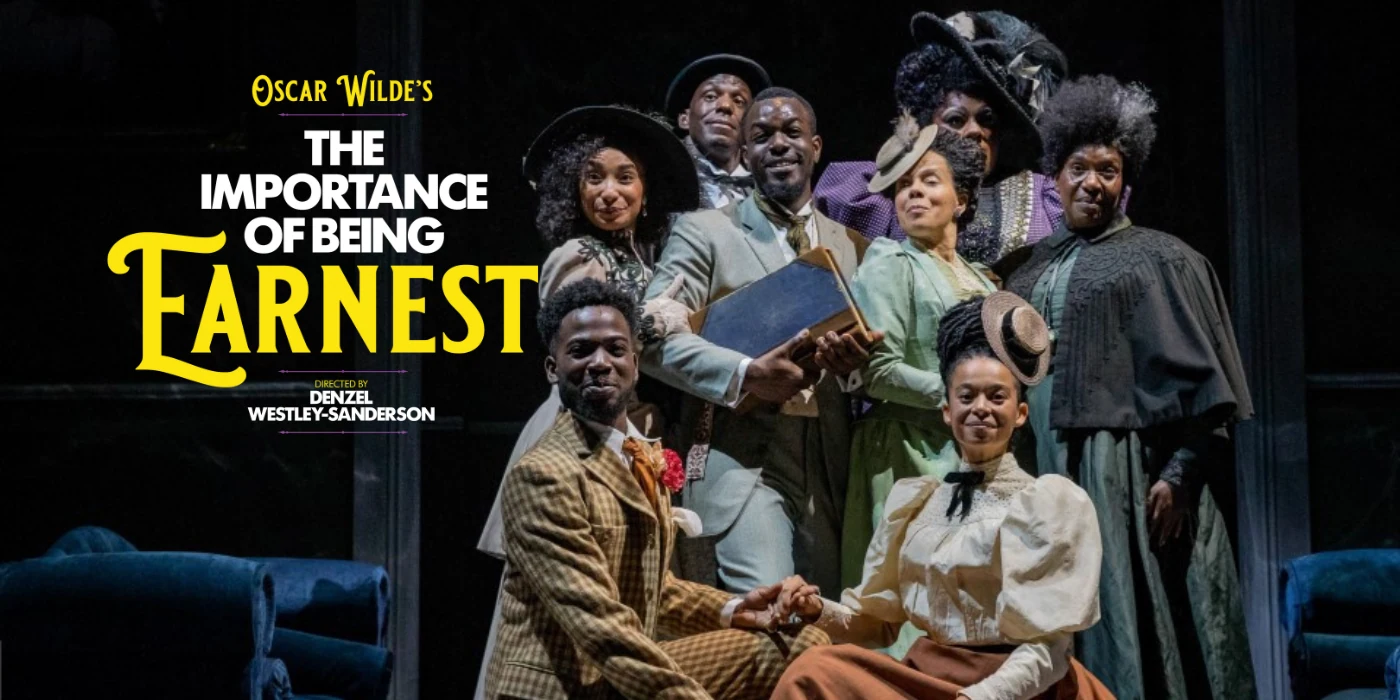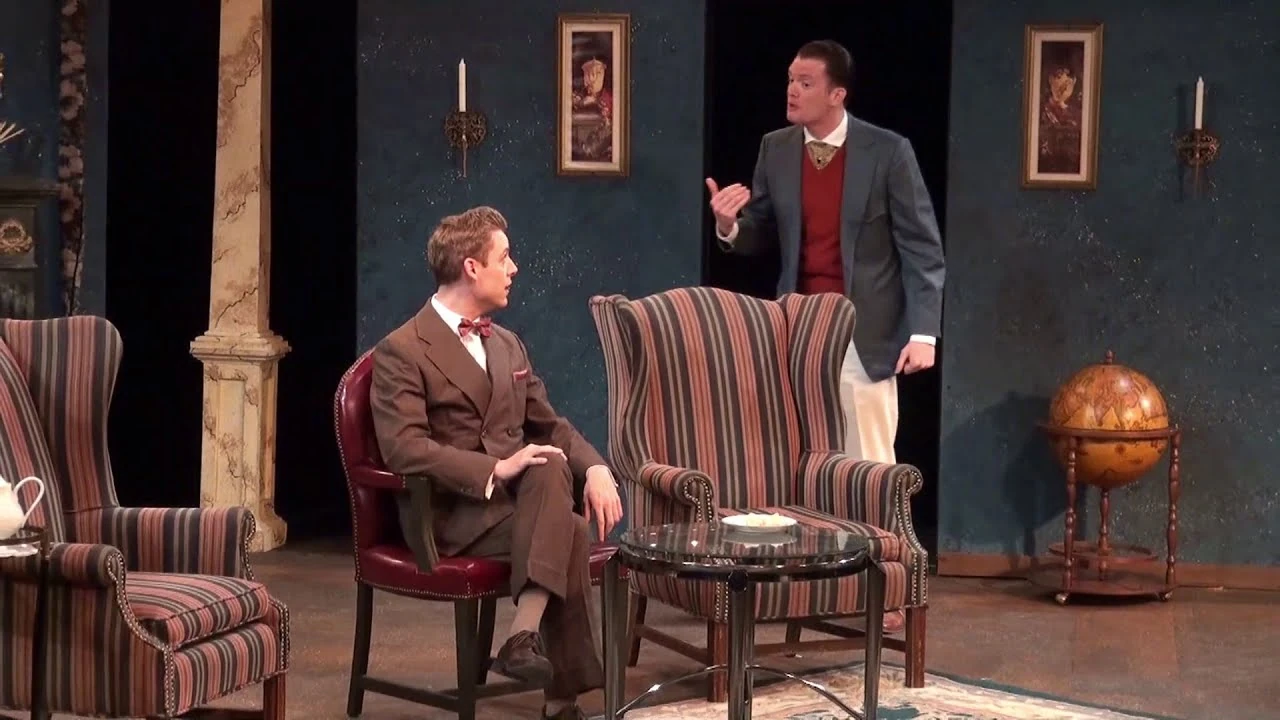
Two young men invent excuses to escape their social obligations; both use the name Ernest, and both find that the women they wish to marry care greatly about it. In The Importance of Being Earnest, Oscar Wilde makes identity and respectability the machinery of a sharply constructed farce. Its comedy depends on more than mistaken names: the characters take etiquette, marriage and appearances seriously in ways that expose how arbitrary their rules can be.
A London opening and a rapid reversal
Wilde’s play, subtitled A Trivial Comedy for Serious People, premiered at the St James’s Theatre in London on 14 February 1895. It was the last of his four drawing-room plays, after Lady Windermere’s Fan, A Woman of No Importance and An Ideal Husband. The opening was a major theatrical success. Contemporary reviews praised its humour, though some critics questioned whether a comedy so light in plot had a serious social message.
The success was soon overtaken by events in Wilde’s private life. The Marquess of Queensberry, father of Wilde’s lover Lord Alfred Douglas, had planned to disrupt the opening night; the attempt was prevented. Wilde later brought a private prosecution against Queensberry for criminal libel. The ensuing trials ended in Wilde’s conviction and imprisonment for homosexual acts. As public opinion turned against him and receipts fell, the production closed in May 1895.
The play’s subsequent history was shaped by that fall from favour. Wilde went into exile in Paris after his release from prison and published the play in 1898. He continued to revise the text and supplied detailed instructions for its printed presentation, but wrote no more comic or dramatic works. Its London production had brought his career to a climax; the scandal that followed made the play’s early success inseparable from the story of its author’s disgrace.
Two Ernests and a handbag
Jack Worthing lives a double life. In the country, where he is guardian to Cecily Cardew, he presents himself as responsible Jack and invents a dissolute brother called Ernest. In London, he assumes that brother’s name. His friend Algernon Moncrieff has invented a similar escape route: he uses an imaginary invalid, Bunbury, as an excuse to avoid unwelcome engagements. When Algernon discovers Jack’s deception, he uses it to visit Jack’s country home under the name Ernest.
Both men’s stories become harder to sustain when they court women who want to marry a man called Ernest. Gwendolen Fairfax, Algernon’s cousin, accepts Jack’s proposal but insists that his name matters. Cecily, already fascinated by the absent brother Ernest, falls for Algernon in his assumed identity. Their meeting initially brings the two women together; the discovery that each believes herself engaged to Ernest turns that confidence into rivalry.
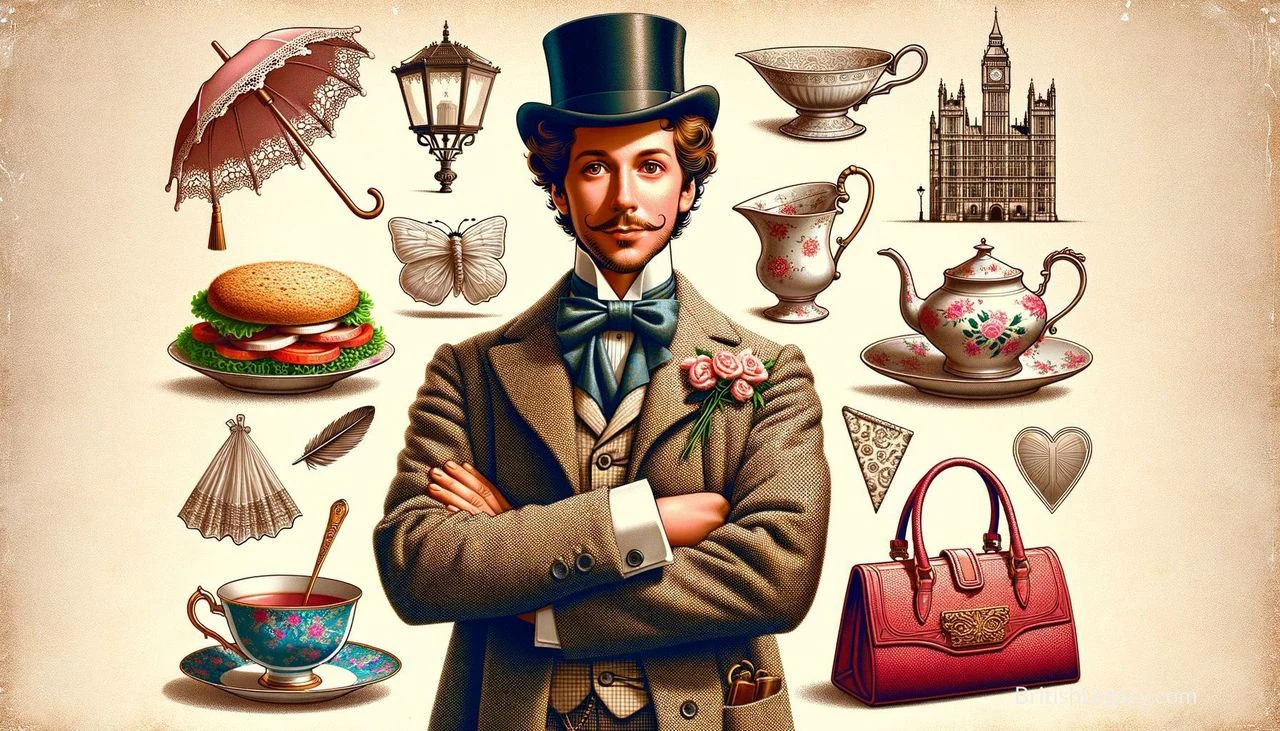
The misunderstandings gather around Jack’s unknown origins. As a baby, he was found in a handbag left at Victoria Station and adopted by the man who became his guardian. The handbag returns to the story when Miss Prism, Cecily’s governess, is recognised as the nursemaid who lost him. Her explanation reveals that she had accidentally placed a manuscript in the perambulator and the baby in the handbag. Jack is identified as Algernon’s elder brother. The final turn makes his assumed name his birth name too: he learns that his father was called Ernest.
Farce with a precise social edge
The plot borrows the speed and reversals of farce, but its most pointed comedy comes from the characters’ own standards. Jack and Algernon deceive others to evade social duties, while Gwendolen and Cecily invest a forename with unusual importance. Lady Bracknell, examining Jack as a possible husband for her daughter, treats his origins and address as matters of social qualification. The discovery that he was found in a handbag is, to her, a more serious obstacle than the play’s accumulating lies.
Wilde makes the contrast between trivial and serious run through the dialogue as well as the action. The characters speak with confidence about meals, names and courtship while treating truth and deception as flexible conveniences. The title and subtitle invite that reversal: a comedy about being earnest is also a joke about the solemnity with which society assigns value. Rather than delivering a direct programme of reform, the play lets its rules undo themselves in conversation and comic coincidence.
Wilde revised an initially longer draft before the London production. The version usually staged combines elements of his original four-act text into three acts. Its world includes not only the two young couples but also Lady Bracknell, the governess Miss Prism and the clergyman Canon Chasuble, whose particular habits give the comic pattern a broader range of characters and social voices.
After the first production
Once Wilde’s name became associated with scandal, the play was performed in Britain by touring companies while he was imprisoned and in exile. It returned to London after his death, first at the Coronet in 1901 and then at the St James’s in 1902. George Alexander, who had played Jack in the original production, presented the latter revival. In 1909 he and Allan Aynesworth, the original Algernon, returned to their roles in another St James’s revival.
Later productions helped establish the play in the British theatrical repertory. John Gielgud played Jack in 1930 and later directed and starred in a celebrated 1939 production at the Globe Theatre, now the Gielgud Theatre. Edith Evans played Lady Bracknell in that production. The play continued to return to London stages, including Peter Hall’s National Theatre production in 1982, with Judi Dench as Lady Bracknell, and later West End revivals.
Its reach has extended well beyond the stage. The play has been adapted for British radio and television, and for cinema, including Anthony Asquith’s 1952 film and Oliver Parker’s 2002 version. It has also inspired operas, musicals and stage works that revisit its characters or structure. The title’s pun presents a particular challenge in translation: Ernest is both a given name and a word associated with seriousness, so translators have sometimes sought an equivalent name-and-virtue wordplay in another language.
Why The Importance of Being Earnest deserves a place in British Legacy
The Importance of Being Earnest deserves a place in British Legacy because it joins an unmistakably specific theatrical craft to a durable comic idea. Wilde builds the action around mistaken identities, invented excuses and the accidental recovery of Jack’s origins, then uses that farce to unsettle Victorian expectations about marriage, class and respectable behaviour. Its humour does not depend on a lecture: the audience sees the absurdity in the characters’ own words and priorities. The tension between the supposedly serious and the supposedly trivial gives the play its particular force.
Its British legacy is also visible in the stages that have kept it alive. From its London premiere and early revivals to Gielgud’s productions and later National Theatre and West End performances, it has remained part of the country’s theatrical repertoire. Radio, television, film and musical adaptations have carried its language and comic situations into other forms, while translation has tested how far its central wordplay can travel. The play’s British importance therefore lies not simply in its Victorian setting or its author’s reputation, but in the way generations of performers and audiences have repeatedly made its precise, mischievous comedy their own.
Sources
The Importance of Being Earnest — revision 1377853463
Adapted in part from The Importance of Being Earnest by Wikipedia contributors, under CC BY-SA 4.0. Text has been edited and combined with the existing article; this adapted text is shared under the same licence. Contributor history.