The Millennium Dome was built for a moment: the turn of the millennium. Its exhibition closed at the end of 2000, but the structure did not disappear with the celebrations. Converted into The O2, it became a venue for concerts, sport and other events. The building’s history is therefore also a story of reuse: a national exhibition site found a second purpose in London’s cultural life.
A structure for the new millennium
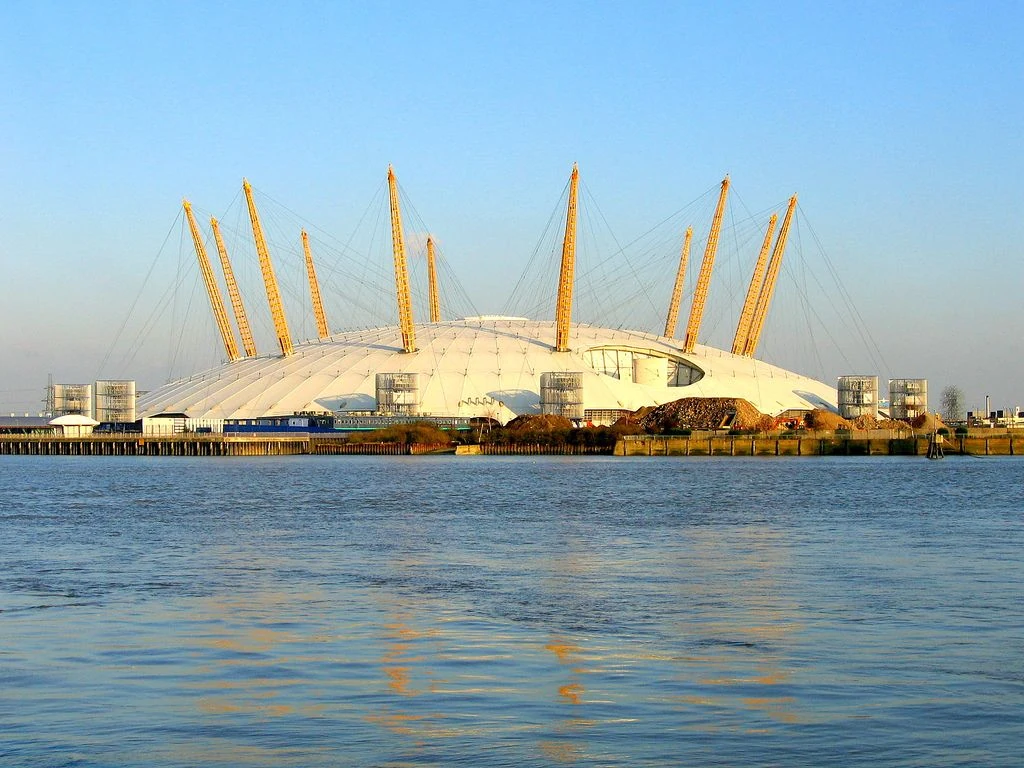
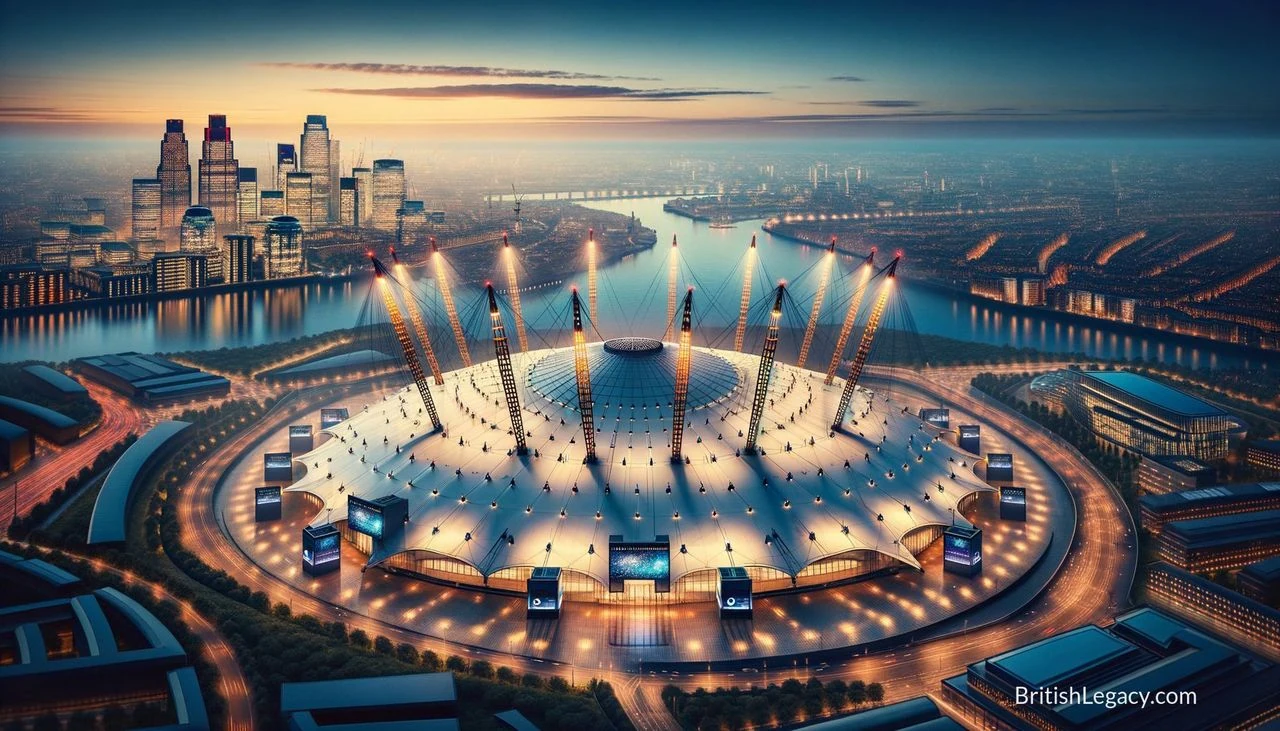
The Dome was conceived under Prime Minister John Major and realised during Tony Blair’s administration as a showcase for Britain’s past achievements, present innovation and future aspirations. Its architect was Richard Rogers, later known as Lord Rogers of Riverside. The design’s most distinctive feature was a vast tensile-fabric roof supported by twelve steel masts. The masts were intended to represent the twelve months of the year and the twelve hours on a clock face, linking the building’s form to the approach of the new millennium. Its diameter exceeded 320 metres.
The interior was organised into themed zones intended to engage visitors with different subjects. The Body Zone explored human anatomy, while the Mind Zone addressed human consciousness. Together, these exhibits gave the Dome an educational as well as celebratory purpose: visitors encountered a series of themed spaces within a structure designed to mark a particular point in time.
From exhibition to live events
The Dome’s initial run as an exhibition space ended in December 2000. In 2005, AEG (Anschutz Entertainment Group) took on its conversion into an entertainment venue with a new identity: The O2. At the centre of the redesigned space was a multipurpose arena capable of seating up to 20,000 spectators.
The O2 has hosted live music and sporting events. Performers named in accounts of its programme include Madonna, Beyoncé and the Rolling Stones; sporting events have included the ATP World Tour Finals and NBA basketball games. During the 2012 London Olympics, it hosted gymnastics and basketball.
The change was more than a new name. The Dome had been made for a single, bounded exhibition, while The O2 was designed to accommodate a continuing programme of performances and events. Its original association with the millennium remained part of the building’s story even as its function changed. The result is a site with two distinct public roles: first as a setting for a national celebration, then as a venue for entertainment and sport.
Why The Millennium Dome deserves a place in British Legacy
The Millennium Dome deserves a place in British Legacy because it records both the ambition of a major public project and the practical challenge of giving such a building a lasting use. Conceived as a showcase for the millennium, it brought together an immense tensile roof, twelve supporting masts and themed exhibition spaces. The Body Zone and Mind Zone gave the interior an educational dimension, while the building’s scale made it a prominent setting for the event it was created to mark.
Its subsequent life as The O2 extends that story. The conversion turned a temporary exhibition site into a venue for concerts and sport, and its role in hosting gymnastics and basketball during the 2012 London Olympics links the building to another major public occasion. This passage from millennium exhibition to working London venue is a specific British legacy: a structure created for one moment was adapted to serve audiences and events beyond it. Remembering both phases makes the Dome more than a monument to the year 2000; it makes its changing use central to its history.