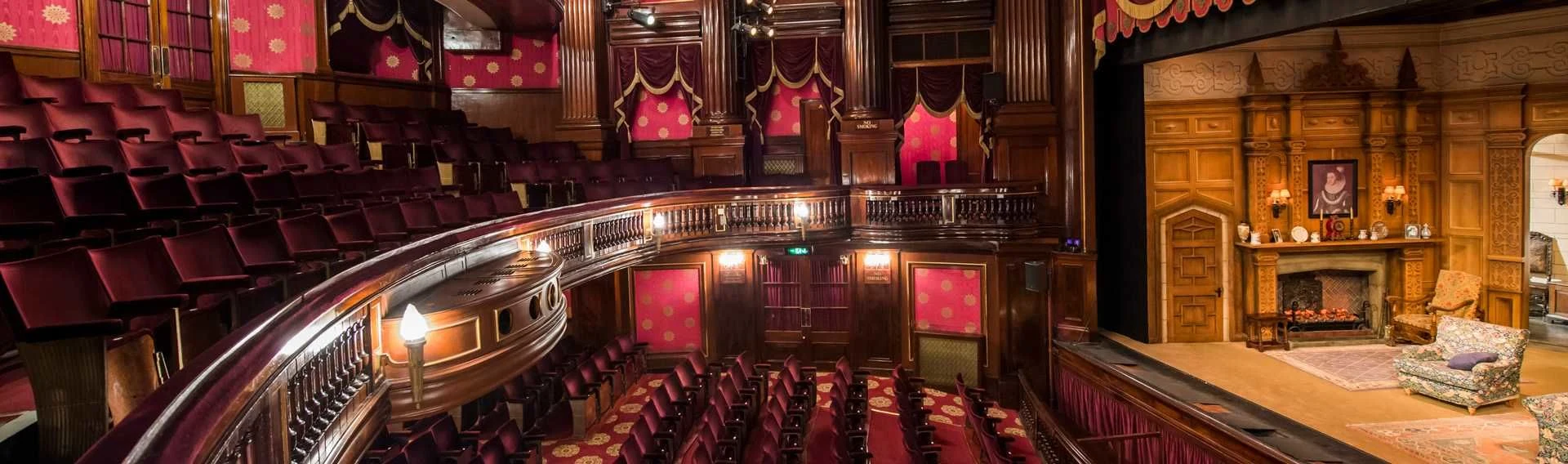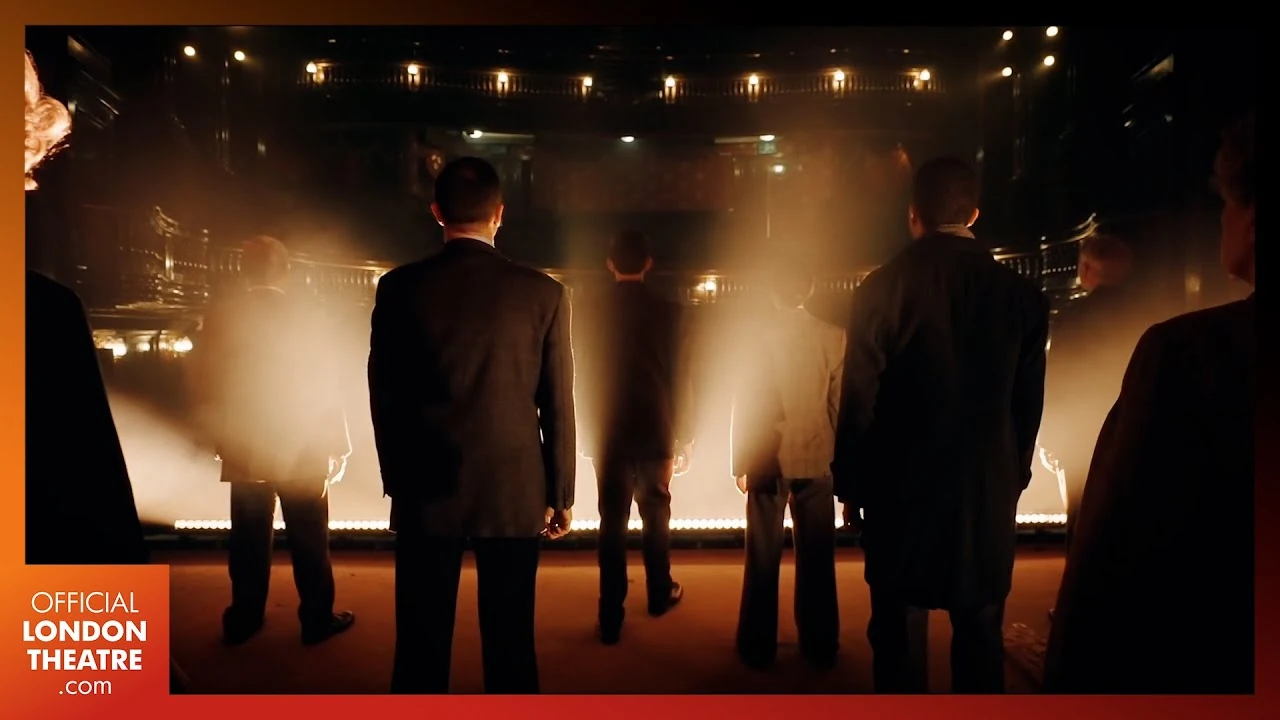
For generations of theatregoers, a performance of The Mousetrap ends with a small request: keep the killer’s identity secret. That appeal is part of the play’s unusual bond with its audience, but the mystery itself is only one reason the production has endured. Agatha Christie’s tightly confined story has outlasted changing casts, a move between West End theatres and a pandemic closure, becoming the longest-running West End show and a striking example of British theatre’s capacity to make an event of a repeat visit.
A radio story becomes a stage mystery
Christie first wrote the story as a radio play called Three Blind Mice, broadcast on 30 May 1947 as a birthday present for Queen Mary. Its starting point was the real-life case of Dennis O’Neill, who died after he and his brother suffered extreme abuse in foster care in Shropshire. Christie later made a short story from the radio play and adapted the material for the stage. She asked that the short story not be published in the United Kingdom while the play continued its West End run; it has appeared in the United States.
The stage play opened first at the Theatre Royal, Nottingham, on 6 October 1952, directed by Peter Cotes. A pre-West End tour took it to theatres including Oxford, Manchester, Liverpool, Newcastle, Leeds and Birmingham. On 25 November it began its London run at the Ambassadors Theatre. The name changed from Three Blind Mice after producer Emile Littler objected that he had previously produced a West End play with that title. Christie’s son-in-law, Anthony Hicks, suggested The Mousetrap.
Its first London reception was not uniformly celebratory. Reviews ranged from reservations about coincidence and familiar character types to praise for the plot’s construction and atmosphere of suspense. The play’s eventual record, then, did not rest on universal acclaim at its opening. Its appeal proved more durable than any single critical judgement.
One house, a storm and a circle of suspects
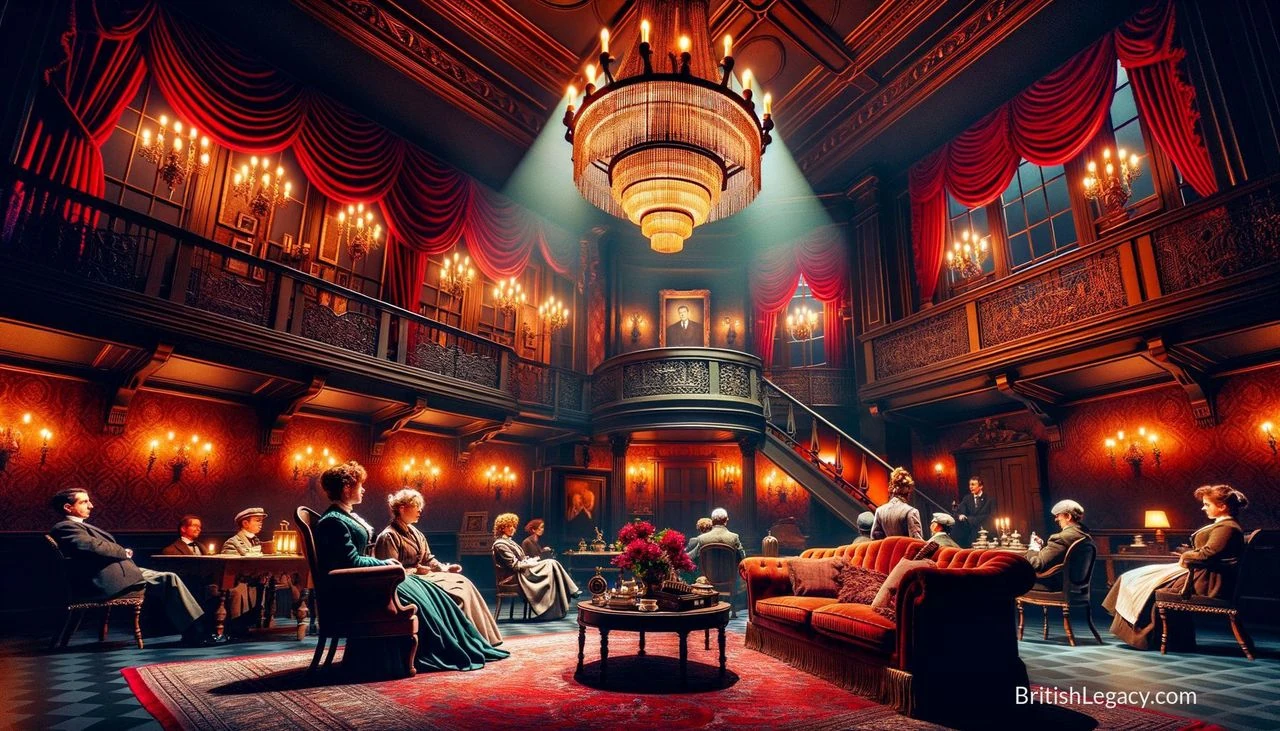
The action takes place in the Great Hall of Monkswell Manor, a country guesthouse in Berkshire, in winter. Its young proprietors, Mollie and Giles Ralston, are cut off with their guests by heavy snow. The arrivals include Christopher Wren, Mrs Boyle, Major Metcalf and Miss Casewell; Mr Paravicini turns up after his car overturns in a snowdrift. The enclosed setting makes the house itself part of the suspense: there is nowhere easy to go, and each new detail changes how the people inside it appear.
A report of a woman’s murder in London leads Detective Sergeant Trotter to the guesthouse. He arrives on skis to question its occupants, while the telephone has stopped working and the snow keeps the household isolated. A connection between the murder and a case of cruelty to foster children gives the investigation a history beyond the immediate gathering. The play builds its tension through concealed pasts, uneasy explanations and competing suspicions, rather than relying on a change of scene.
Christie’s famous ending unsettles the usual expectations of a detective story. Its identity is disclosed late in the play, and audiences are traditionally asked not to reveal it outside the theatre. That custom does not need to be enforced as a formal rule to work: it turns the ending into a shared responsibility between the production and the people who have seen it, and gives each new audience the chance to encounter the mystery unspoiled.
From the Ambassadors to St Martin’s
In March 1974, after more than two decades at the Ambassadors, the production transferred next door to the larger St Martin’s Theatre. It reopened there on 25 March, preserving the continuity of the London run. The show has passed milestones that once seemed improbable: it broke the West End record for the longest run of a straight play in 1957, reached 20,000 performances in 2000 and marked its 25,000th in 2012. Its 30,000th performance came on 19 March 2025. A Guinness World Records certificate recognising its theatrical run followed that year.
The run has not been literally uninterrupted. Performances stopped in March 2020 during the COVID-19 pandemic and resumed on 17 May 2021, after 14 months. The distinction matters: the show’s achievement is not an unbroken sequence of nightly performances, but the longevity of a production that returned after closure and continued its place in the West End.
The continuity belongs to a production as well as a play. The cast is usually changed annually, a practice initiated by original producer Peter Saunders. More than 400 actors had played the roles by 2012. One piece of stage business has lasted across decades: a recording of Deryck Guyler can still be heard reading the radio bulletin. Although the set was changed in 1965 and 1999, the clock on the fireplace mantelpiece survives from the original opening.
A London institution with a wider reach
The play’s home has helped make its longevity visible. Its London run has drawn more than 10 million people, including visitors from around the world, while the production’s anniversary milestones have become occasions in their own right. For its 50th anniversary in 2002, Queen Elizabeth II and Prince Philip attended a special performance. In 2012, a charity performance featuring Hugh Bonneville, Patrick Stewart, Julie Walters and Miranda Hart marked both the 25,000th performance and the production’s 60th year; funds went to Mousetrap Theatre Projects.
The play has also travelled beyond its original London home. A Toronto production that opened in 1977 ran for 26 years and more than 9,000 performances. A UK regional tour began during the production’s 60th anniversary year while the London run continued. These stagings extend the play’s reach without diminishing the particular character of the West End production: the London run remains its defining home and the benchmark against which its record is measured.
That connection has also supported work beyond the stage. In 1997, producer Stephen Waley-Cohen initiated Mousetrap Theatre Projects, a charity that helps young people experience London theatre. Royalties from the play also have a charitable route: Christie gave its rights to her grandson, Mathew Prichard, and he established the Colwinston Charitable Trust in 1995 to support charities for the arts, mainly in Wales. These are distinct legacies of a production whose long life has generated both audiences and resources for cultural activity.
Why The Mousetrap deserves a place in British Legacy
The Mousetrap deserves a place in British Legacy because its significance is both artistic and practical. Christie transformed a radio story rooted in a real case into a stage mystery whose compact setting, ensemble of suspects and carefully protected ending have kept audiences engaged across generations. The chronology of its run is unusually concrete: it opened in London at the Ambassadors in 1952, transferred to St Martin’s in 1974, passed 30,000 performances in 2025 and returned after the pandemic closure. Those details show not simply that the play is famous, but how a long-running production can adapt and persist within a changing cultural life.
Its British connection is grounded in its actual theatrical history: a tour through British cities, a West End home in London and regional performances alongside that continuing run. The play has also helped create opportunities beyond its own stage. Mousetrap Theatre Projects works to bring young people into London theatre, while income associated with the rights has supported arts charities, particularly in Wales. Its audience tradition, asking people not to give away the ending, gives each performance a small communal ritual; its record gives that ritual an unusually long history. Together, these are specific contributions to British theatre: a durable piece of repertory, a distinctive relationship with audiences and support for access to the arts.
Sources
The Mousetrap — Wikipedia revision
Adapted in part from The Mousetrap by Wikipedia contributors, under CC BY-SA 4.0. Text has been edited and combined with the existing article; this adapted text is shared under the same licence. Contributor history.