The New Forest is a landscape shaped by both nature and people. In south-western Hampshire, ancient woodland and open heathland sit alongside villages, historic buildings and ponies that roam freely. Its story reaches back to the Norman period, but the forest is not simply a remnant of the past: it remains a place for walking, cycling and riding, as well as a landscape valued for its natural and cultural heritage.
A royal forest with medieval roots
The forest’s history is associated with William the Conqueror, who is said to have designated the area as a royal hunting ground in 1079. The name recorded in the account is Nova Foresta, or New Forest. The designation gave the land a royal purpose and began a history in which human use and the character of the landscape have remained closely connected.
It is tempting to describe this early protection as conservation in the modern sense, but the two ideas should not be treated as interchangeable. The New Forest’s older history is better understood as one part of a long relationship between people and land: a royal hunting ground, a place of commoning, and, in the present day, a landscape recognised for its natural and historical value.
Woodland, heath and wildlife
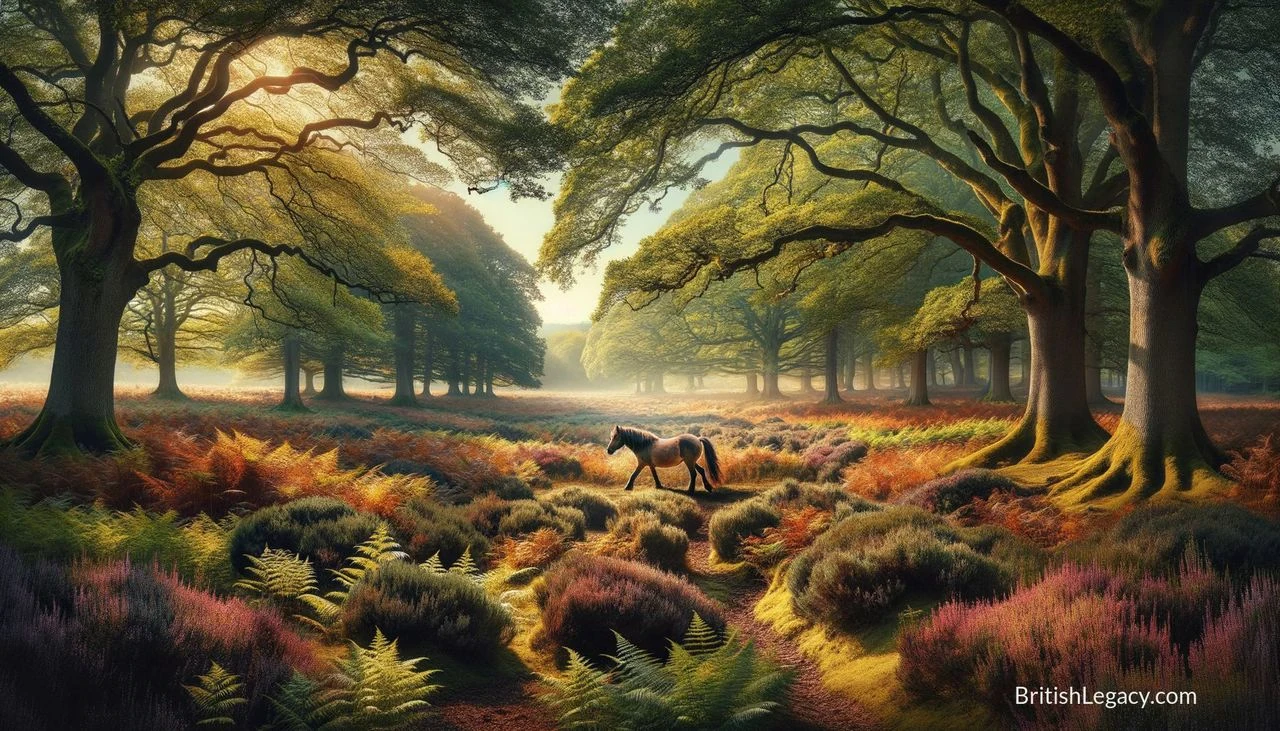
The area described here covers about 566 square kilometres, or 219 square miles, in south-western Hampshire. Its habitats include ancient woodland and extensive heathland. Beech, oak and yew are among the trees named in accounts of the woodland, while the heath supports a range of plant and animal life, including rare insects, birds and reptiles.
The New Forest is recognised as a Site of Special Scientific Interest and is included in the Natura 2000 network of conservation sites. Those designations reflect the importance attributed to its varied habitats. The woodland and heath are not simply a scenic backdrop: their different conditions support wildlife, and the management and enjoyment of the landscape are bound up with the need to protect that natural value.
Ponies and commoning
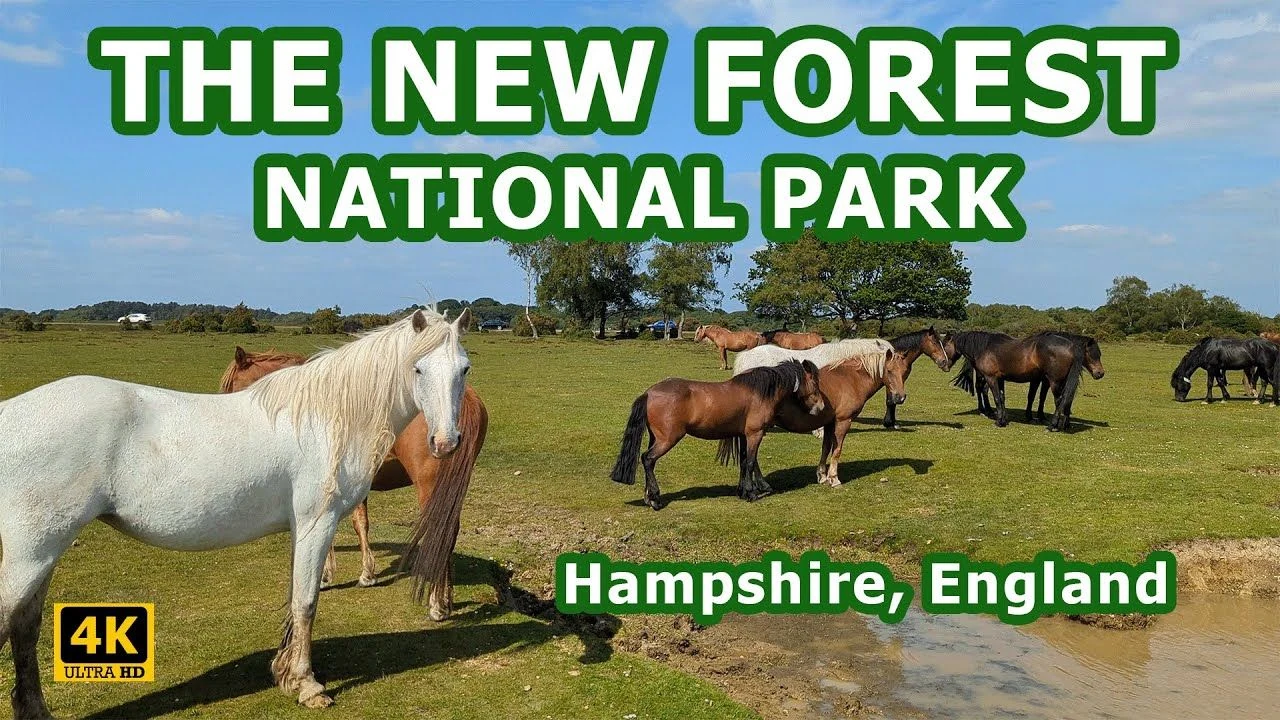
New Forest ponies are among the landscape’s most familiar sights. Described as hardy and semi-wild, they have roamed the area for more than a thousand years. Their presence is part of the forest’s identity, but it also points to a continuing relationship between animals, land and local people.
The ponies are managed by New Forest Commoners. Their grazing helps manage vegetation and supports biodiversity, linking a longstanding local practice with the ecology of the heath and woodland. Rather than presenting the forest as untouched wilderness, this shared landscape makes visible the role of human stewardship and customary use in its continuing character.
Buildings, villages and visiting
The forest’s heritage extends beyond its natural environment. Villages and parish churches form part of its rural landscape, while Beaulieu Abbey, founded in 1204, and nearby Palace House offer a glimpse of monastic and aristocratic history. Palace House is identified with the Montagu family, adding another strand to the area’s history of settlement and landholding.
At Beaulieu, the National Motor Museum presents a different history: that of motoring. Its presence adds an industrial and technological dimension to a region often associated with woodland and rural life. Together, these places show how the New Forest’s appeal includes built heritage and collections as well as open country.
Trails and paths draw walkers, cyclists and horse riders into the landscape. Visitor centres and educational programmes also introduce people to the forest and its environment. Recreation, however, takes place in a valued natural setting: the challenge is to make the area accessible while keeping its habitats and heritage in view. That balance is central to how the New Forest is experienced today.
Why The New Forest deserves a place in British Legacy
The New Forest deserves a place in British Legacy because its importance lies in the connections between its natural and human histories. The royal forest associated with William the Conqueror, the traditions of commoning and the ponies managed by local commoners all speak to different ways people have used and cared for this landscape. Its woodland and heathland also support varied wildlife, and its recognition as a Site of Special Scientific Interest and inclusion in the Natura 2000 network mark its conservation significance.
Its heritage is not confined to one era or one kind of landmark. Beaulieu Abbey and Palace House represent religious and aristocratic histories; the National Motor Museum brings motoring history into the picture; villages and churches preserve a sense of rural place. Today, paths, riding routes and visitor centres bring people into contact with this layered landscape. The British connection is specific: a Hampshire forest whose identity has grown from royal history, common rights, local stewardship, wildlife and public enjoyment. Preserving that combination matters because the New Forest is both a living environment and part of the country’s shared heritage.