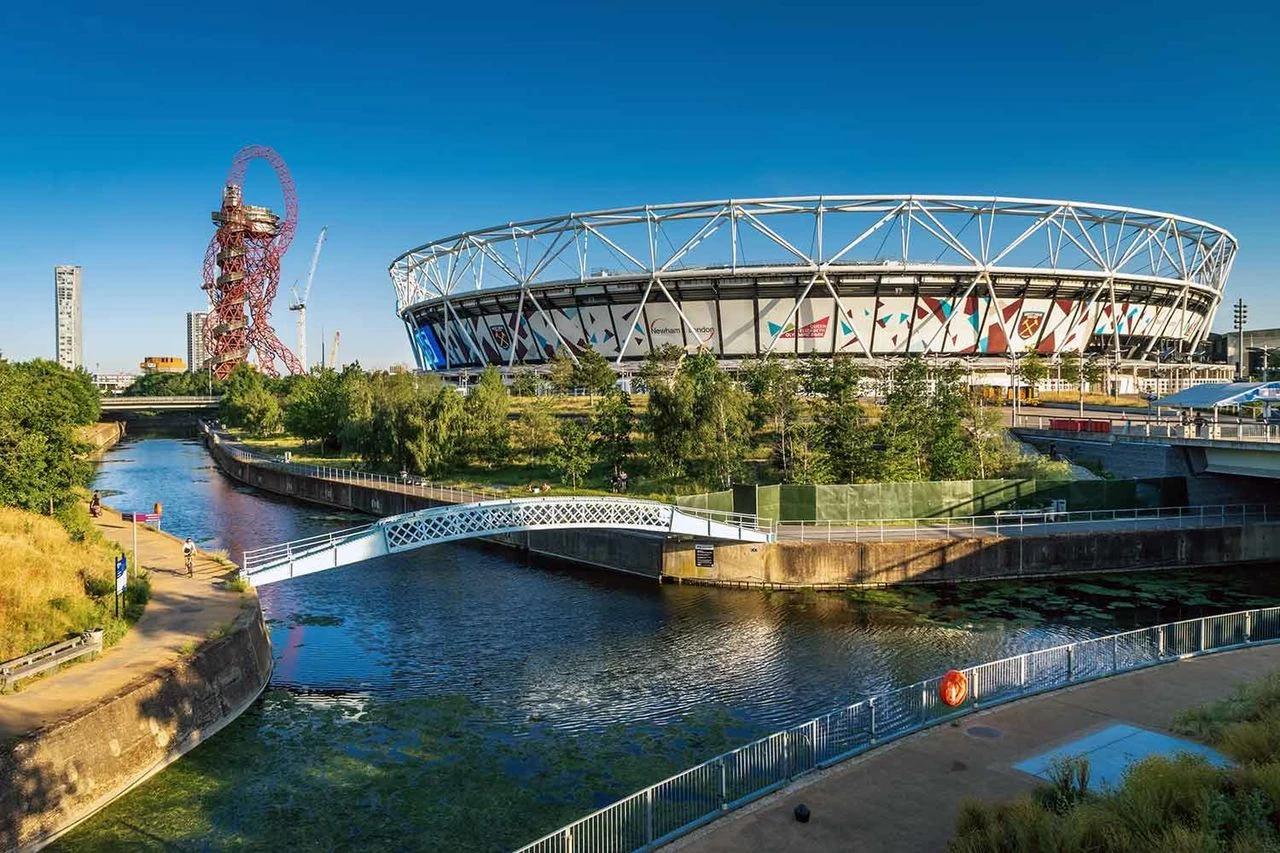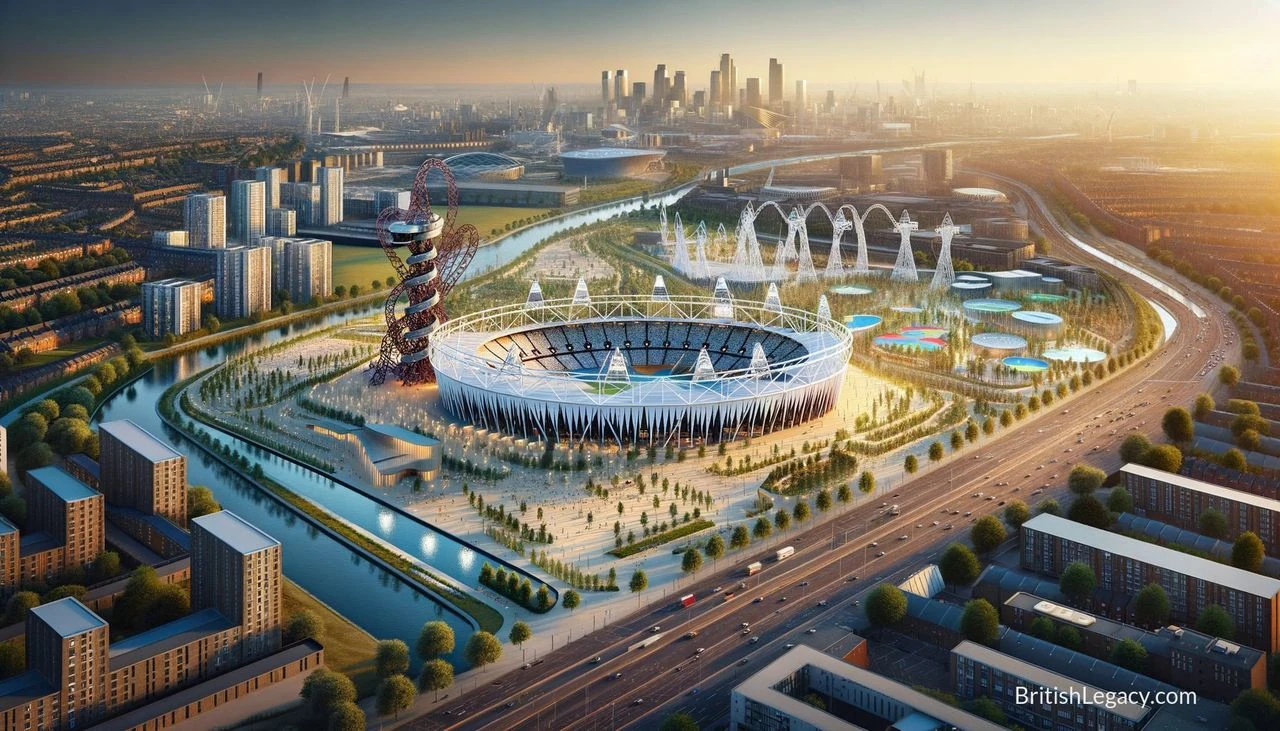
The Olympic Park in East London was built to host the London 2012 Olympic and Paralympic Games. Its purpose was not limited to staging sport: the project also set out to transform an industrial area into a place for recreation, housing and community life. The resulting venues, parkland and neighbouring developments are part of the event’s continuing footprint in Stratford.
From Olympic site to public park
The site, described in the earlier account as covering 560 acres, was formerly a mix of disused industrial land and contaminated ground. Preparing it for the Games meant turning that area into a setting for competition as well as a district intended for use beyond the event. The Olympic Village first housed athletes and was subsequently converted into residential housing.
The park’s sporting infrastructure includes the London Stadium, originally built for athletics and the opening and closing ceremonies, and the Aquatics Centre, designed by Zaha Hadid. Swimming, diving and synchronised swimming took place at the Aquatics Centre during the Games. Both venues were conceived as part of a wider collection rather than as isolated Olympic stages.
The Velodrome hosted cycling events; its distinctive shape earned it the nickname “The Pringle”. Alongside it, Lee Valley VeloPark, the Copper Box Arena and Eton Manor formed part of the site’s sporting provision. Together, these places gave the Games venues for different disciplines and provided facilities that the original account says continue to support community sport and recreation.
Green space and a changing neighbourhood
Sport is only one part of the park’s post-Games identity. The area now known as Queen Elizabeth Olympic Park includes parkland, gardens and ecological habitats. Wetlands, woodlands and meadows sit within the broader landscape, while waterways provide routes for walks and boating. These features offer a different kind of public use from the ticketed competitions that first brought international attention to the site.
The wider legacy also reaches into housing and community provision. The former Olympic Village became residential housing, while the earlier account describes the development of homes, schools and community facilities as part of the regeneration programme. These changes connect the Games’ purpose to everyday life in the area: the park is surrounded not only by venues and open space but by places where people live and access local facilities.
Stratford’s commercial and cultural offer has also grown. Westfield Stratford City is a major shopping centre in the neighbourhood, which the original account also describes as having theatres, restaurants and cultural spaces. These changes place the park within a broader urban district, rather than treating it as a self-contained sports complex. The regeneration story therefore includes the relationship between the Olympic site and the surrounding neighbourhood, as well as the venues themselves.
What remains after the Games
The Olympic Park’s continuing use gives the 2012 project a life beyond the competition period. Its facilities serve sport and recreation, its green spaces provide room for outdoor activity, and housing and community facilities form part of the wider transformation. The balance matters: an Olympic site can attract worldwide attention for a few weeks, but its longer value depends on what remains accessible and useful afterwards.
The transformation has been presented as a model for future city planning and major events. That is an aspiration rather than a guarantee of results elsewhere. In London, the project’s legacy is visible in the combination of venues, open space and redevelopment around Stratford. Its effects should be understood as a continuing change to an urban area, not as a single completed achievement that can be measured only by the success of the Games.
Why The Olympic Park deserves a place in British Legacy
The Olympic Park deserves a place in British Legacy because it records a British public project whose intended reach extended beyond sport. Built for London 2012, it brought together competition venues and an ambitious programme of change in East London. The London Stadium, Aquatics Centre and Velodrome made the site a stage for Olympic events; their subsequent place within a wider group of sporting facilities gives the story a practical afterlife. The park’s pathways, waterways and green habitats add another public dimension, making recreation and access to open space part of the site’s identity.
Its significance also lies in the connection between a major international event and the surrounding city. The conversion of the Olympic Village to housing, the creation of community facilities and the growth of Stratford’s commercial and cultural offer show how the Games were tied to a broader urban vision. This account does not make every promised benefit a proven outcome. It does, however, preserve the distinctive British connection: London used the Olympics as an occasion to build venues and reshape a part of its East End for continuing use. The park’s legacy is found in that combination of sporting infrastructure, public landscape and neighbourhood change.