Orkney’s islands hold some of the best-known traces of prehistoric life in Britain. The Ring of Brodgar and the settlement at Skara Brae are among the archipelago’s most distinctive sites: one a great stone circle set between two lochs, the other a group of stone houses that preserves evidence of everyday domestic life. Together with later Norse influences, Kirkwall’s St Magnus Cathedral and the islands’ living culture, they make Orkney’s heritage more than a story of ancient monuments.
An island landscape shaped by history
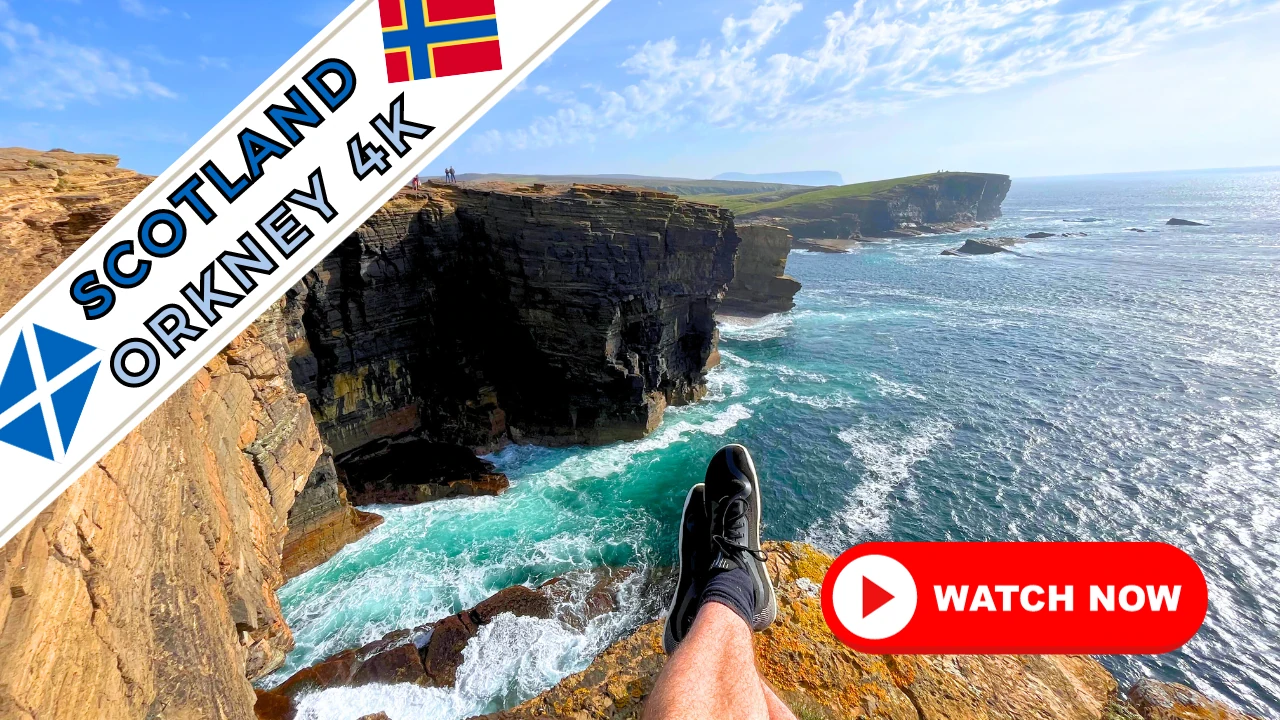
More than 70 islands make up the Orkney archipelago, with around 20 inhabited. Lying off Scotland’s northern coast, the islands are known for rugged cliffs, sandy beaches and green landscapes as well as their archaeological sites. The account of Orkney’s history stretches back more than 5,000 years, and its surviving places show how people have made their lives and left their mark here across very different periods.
The islands’ heritage includes the influence of Norse settlers, reflected in place names and historical sagas. In Kirkwall, St Magnus Cathedral is a prominent later landmark, founded in the 12th century and described as an example of Romanesque architecture. These strands sit alongside the much older remains: Orkney’s history is not confined to a single period or to the prehistoric past.
The Ring of Brodgar and its setting
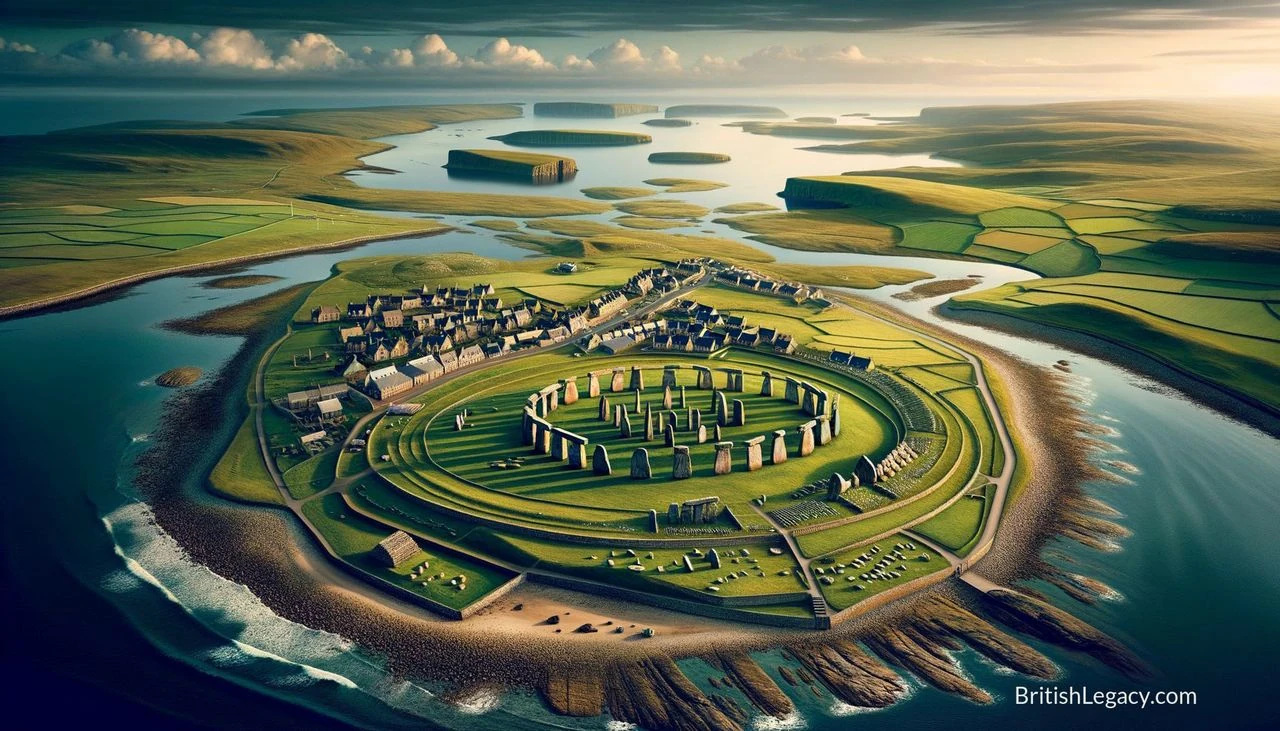
The Ring of Brodgar stands on a narrow isthmus between the lochs of Stenness and Harray. Part of the Heart of Neolithic Orkney World Heritage Site, it is dated in the article to around 2500–2000 BC. The circle is said originally to have contained 60 stones, of which 27 remain standing. Their differing shapes and weathered surfaces make the monument a striking presence in the landscape.
The Ring’s purpose is less certain than its physical form. It has been interpreted as a place for ceremonies and gatherings, but the precise practices of its builders cannot be read directly from the stones. Its circular layout and position between the lochs have helped sustain interest in how the monument related to the landscape and the lives of the people who made it. It remains both an archaeological site and a place that prompts questions about prehistoric communities.
Daily life at Skara Brae
Skara Brae is one of Western Europe’s best-preserved Neolithic settlements. A storm exposed the site in 1850; the village is dated in the article to around 3180 BC. Its stone houses are linked by passages and retain features including hearths, beds and storage spaces. Stone tools, pottery and decorative objects add material evidence of the people who lived there.
These remains offer a view of domestic life rather than only monumental construction. The layout of the houses and their shared connections invite questions about how residents organised their homes and community, although the evidence should not be made to say more than it can. Skara Brae’s age places it before Stonehenge and the Great Pyramids of Giza, while its preservation makes the settlement especially valuable for understanding prehistoric life.
Nature, culture and continuing influence
Orkney’s natural heritage forms another part of its identity. Cliffs, beaches and greener ground provide habitats for wildlife including puffins and seals; the Scottish primrose is also identified as part of the islands’ distinctive flora. The range of landscapes and species gives the archipelago an appeal beyond its archaeological sites, and links the protection of its natural setting with the care of its cultural heritage.
The islands have also inspired artists, writers and musicians. The work of George Mackay Brown, a native of Orkney, is associated with a strong sense of place, while Norse sagas preserve another strand of the islands’ cultural memory. Study and preservation of the ancient sites contribute to archaeological knowledge of prehistoric societies, although broad claims about lessons in sustainability or influence across the world need to be treated cautiously. Orkney’s clearest contribution is the evidence its sites preserve and the continuing cultural life shaped by them.
Why The Orkney Islands deserve a place in British Legacy
Orkney deserves a place in British Legacy because its archaeological sites make distant periods of human history tangible. At the Ring of Brodgar, the scale and setting of a stone circle show the work involved in shaping a shared landscape. At Skara Brae, connected stone houses, hearths, beds and storage spaces preserve details of ordinary domestic life. These are different kinds of evidence, and together they offer a richer account than monuments alone: they bring into view both collective activity and the practical arrangements of a settlement.
The islands’ significance also reaches beyond prehistory. Norse influence, St Magnus Cathedral, the writing of George Mackay Brown and Orkney’s wildlife all form part of a continuing local inheritance. That combination gives the archipelago a specific place in Scotland’s and Britain’s heritage: it connects ancient communities with later histories and with a lived landscape. Remembering Orkney means valuing not just famous stones, but also the archaeological study, natural habitats and cultural expression that keep the islands’ history present.