The Royal Albert Hall was conceived as part of a South Kensington district devoted to education and the arts. Opened by Queen Victoria in 1871 and named in memory of Prince Albert, it has since become closely associated with the BBC Proms. Its story, however, extends beyond one celebrated concert series: its architecture, public speeches and performances across musical genres have all shaped its place in British cultural life.
A cultural ambition carried forward
Prince Albert, an advocate of the arts and sciences, envisaged a venue within the district known as Albertopolis, an area intended to bring education and enlightenment together. He died in 1861, before the hall was completed. Queen Victoria named the building in his honour, connecting its identity with the cultural ambitions he had promoted.
The hall opened on 29 March 1871. Its founding purpose and South Kensington setting gave it a place in a wider cultural project, while its use as a venue allowed that purpose to take practical form. It was not limited to a single kind of event: concerts and public gatherings became part of its history. That range is reflected in the different traditions and performers associated with its stage.
A building shaped for public performance
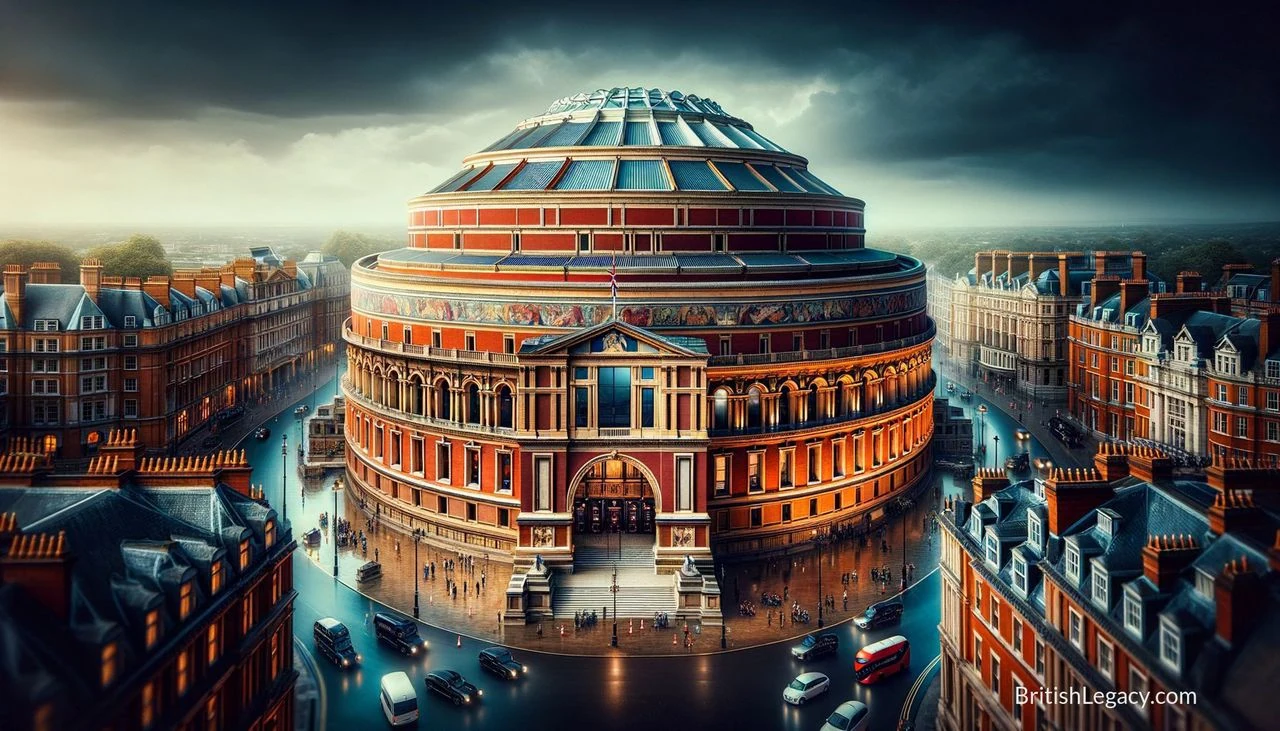
Captain Francis Fowke and Major-General Henry Y. D. Scott designed the hall in a Victorian Italianate style. Its dome gives the building a distinctive profile, and the mosaics on its façade depict “The Triumph of Arts and Sciences”. Together, these features give the exterior a clear connection to the educational and cultural ideals behind the project.
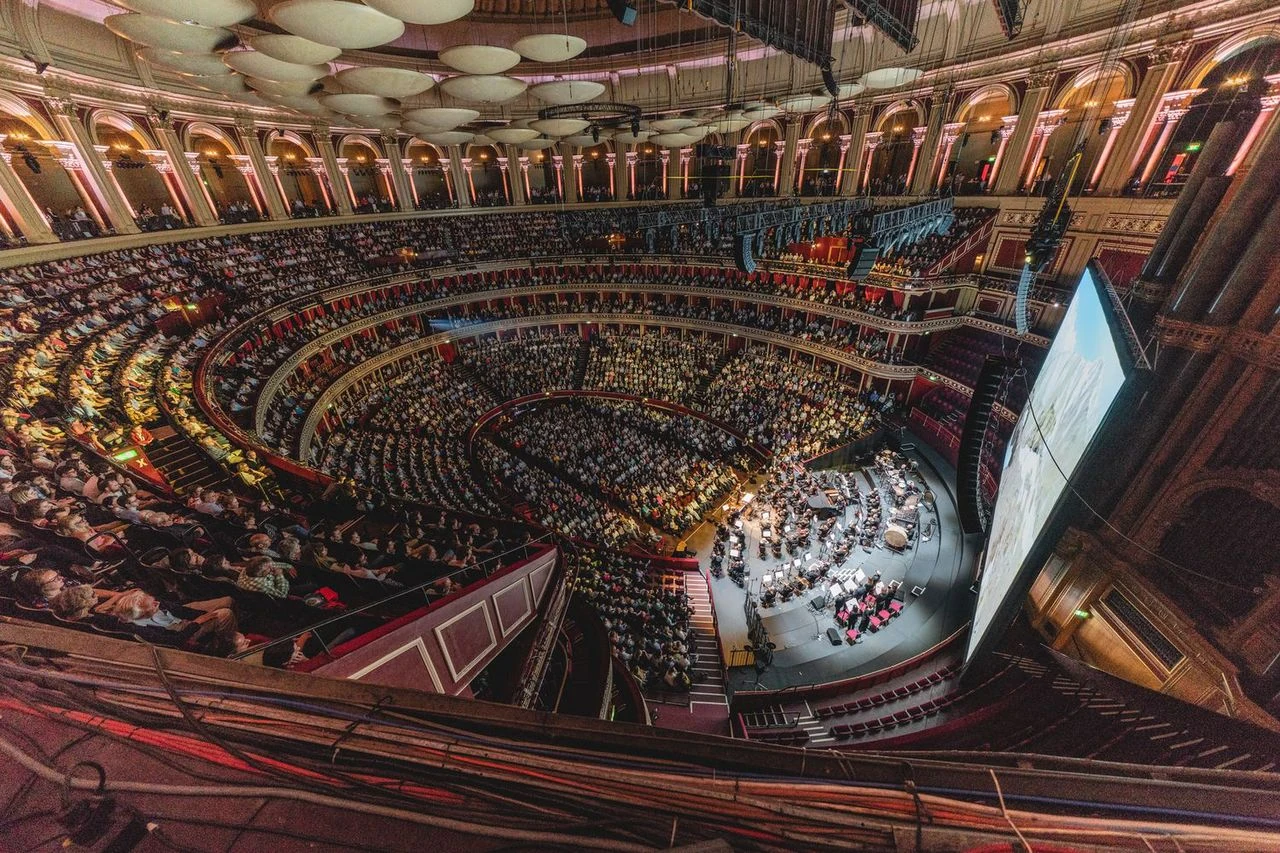
The hall’s architectural identity is bound up with its role as a place for audiences and performers. Its design combines a prominent exterior with an auditorium used for music and other events. The original account identifies acoustic design as a feature of the venue, though it offers no technical detail. The building can therefore be described through the elements specified: its dome, its mosaics and its continuing use as a performance space.
The Proms and a varied stage
Established in 1895, the BBC Proms became one of the hall’s best-known annual traditions. The concert series culminates in the Last Night of the Proms, associated with patriotic anthems and communal celebration. Its recurring presence at the hall connects the building with classical music, while the series’ public profile has helped make the venue familiar to audiences beyond a specialist concert-going public.
The hall’s programme has also included events beyond classical music. The Beatles, Frank Sinatra and Adele are among the performers named in the article; suffragettes used the venue for speeches. These examples span musical styles and forms of public address. They show how the same stage has served as a setting for entertainment and for the communication of political ideas, rather than being defined by a single tradition.
A working hall in the present
The Royal Albert Hall remains an active venue, not simply a monument to Victorian London. The article describes more than 390 events a year, audiences from Britain and abroad, and educational outreach and community initiatives. It does not specify the scale or detail of those programmes, but its account presents the hall as a place with activity beyond performances alone.
It also describes the use of audiovisual systems and acoustic improvements as part of the hall’s contemporary operation, without giving dates or technical particulars. The broad point is that a historic building continues to host modern events while retaining the architectural features that distinguish it. Its continuing programme keeps the hall in use as well as preserving its place in the city’s cultural landscape.
Why the Royal Albert Hall deserves a place in British Legacy
The Royal Albert Hall deserves a place in British Legacy because it gives lasting form to a particular Victorian cultural ambition. Prince Albert envisaged a venue within a district devoted to education and the arts; after his death, Queen Victoria’s naming of the hall carried that connection into its public identity. Its opening in 1871, Victorian Italianate design, dome and façade mosaics make the ambition legible in both the building and its history. This is a specifically British legacy rooted in a London institution and the people and purposes associated with it.
The hall’s importance also lies in its continued use. The BBC Proms bring classical music back to the venue each year, while the named performers and suffragette speeches illustrate a wider role for its stage. Its programme has encompassed music, public address and, according to the account, educational and community activity. In bringing different kinds of events and audiences into one historic space, the hall connects architectural heritage with active cultural life. Its story is therefore not only about preserving a landmark, but about the ways a public venue can keep an older cultural purpose present in contemporary Britain.