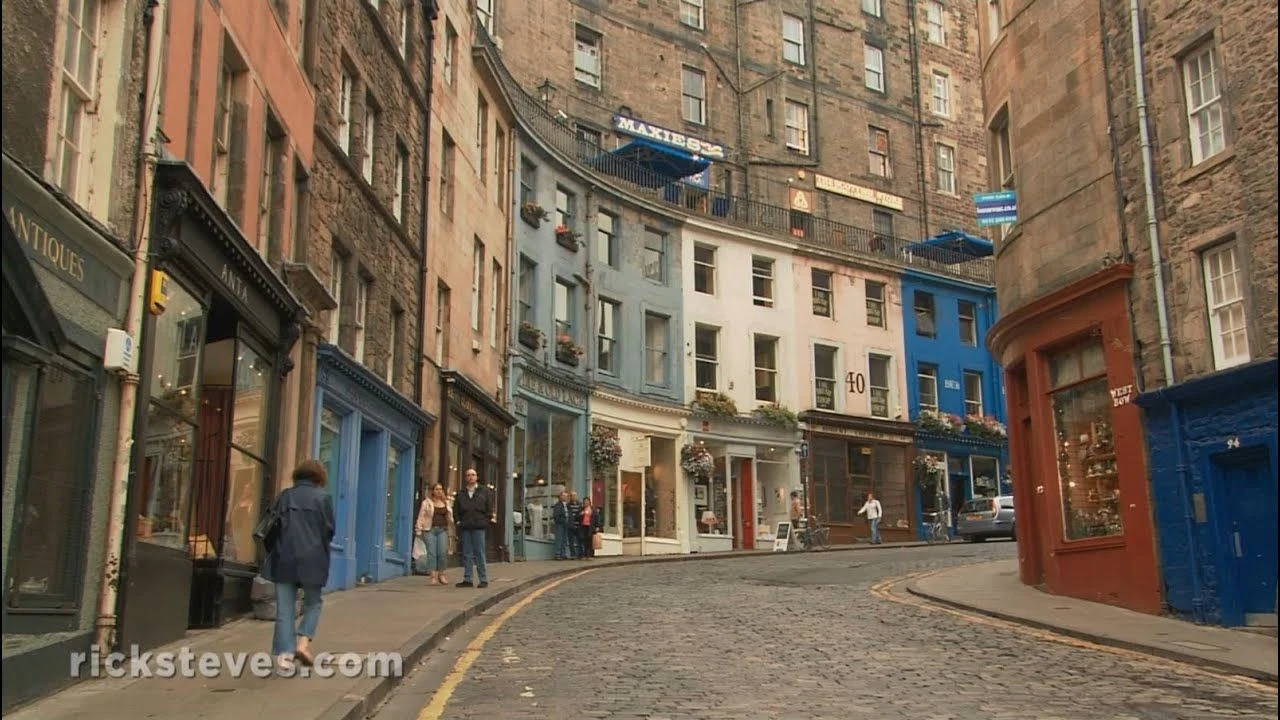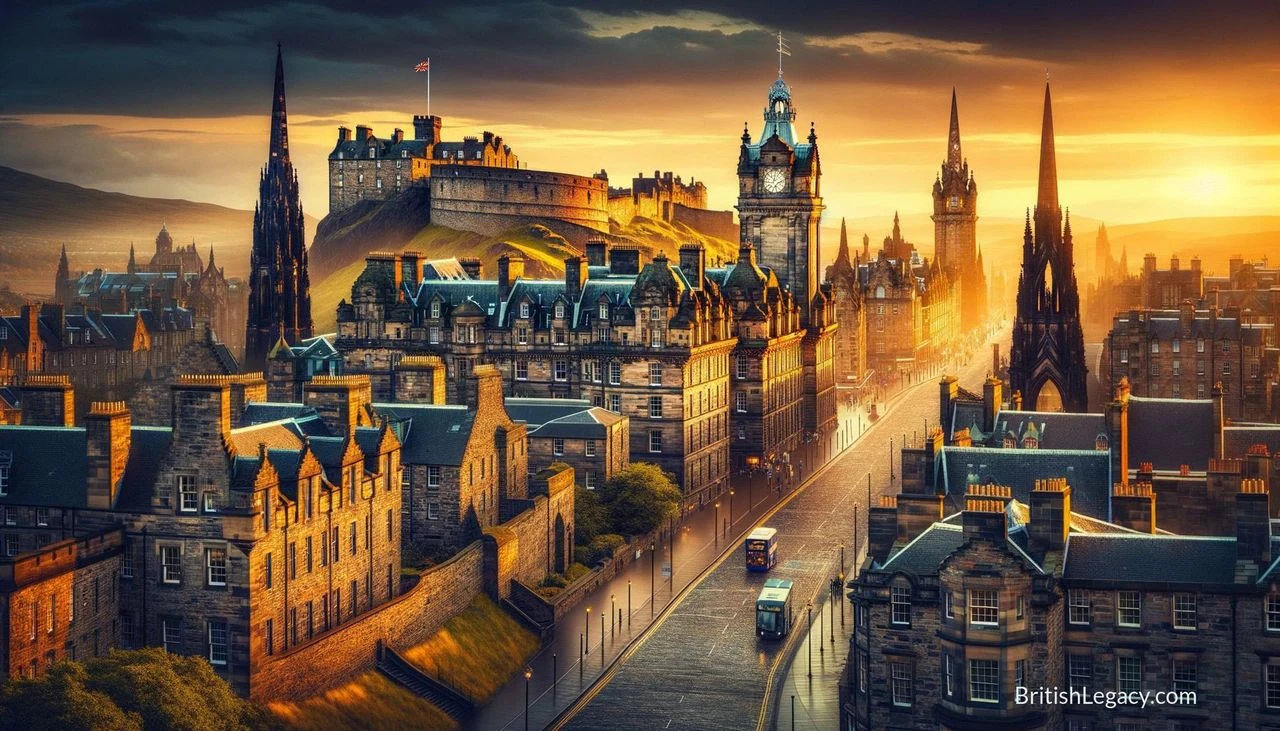
Running downhill through the heart of Edinburgh, the Royal Mile links two of Scotland’s most recognisable landmarks: Edinburgh Castle and the Palace of Holyroodhouse. Its route passes the Lawnmarket, High Street and Canongate, where civic buildings, churches and museums stand close together. The street is more than a convenient way between castle and palace. Its varied landmarks make Scottish history visible along a single route, from the monarchy and religious change to the institutions of present-day Scotland.
From Castle Rock into the Old Town
At the western end, Edinburgh Castle stands on Castle Rock. The fortress has been central to Scottish history for more than a thousand years, according to the traditional account of the site, and is associated with events including the Wars of Scottish Independence and the Union of the Crowns. The latter brought James VI of Scotland to the English throne as James I. Inside the castle are the Crown Jewels of Scotland and the Stone of Destiny, used in the coronations of Scottish monarchs.
Leaving the castle, the route descends through the Old Town’s cobbled streets and narrow closes: the alleys that open off the main thoroughfare. The Lawnmarket and High Street formed its upper sections and were centres of trade and craftsmanship. The Old Parliament House is among the civic landmarks here; it housed the Scottish Parliament before the institution was dissolved in 1707. Together, the castle and the street’s historic commercial and political buildings give the upper mile its distinctive concentration of power and public life.
Church, civic life and Canongate
St Giles’ Cathedral, with its distinctive crown steeple, is one of the most prominent buildings on the High Street. Dedicated to St Giles, Edinburgh’s patron saint, it has served as a place of worship for more than 900 years. John Knox, a leading figure in the Scottish Reformation, preached there. The cathedral therefore connects the street’s architectural character with a period of profound religious change in Scotland.
Further east, the Royal Mile enters Canongate, where historic buildings sit alongside more recent development. The People’s Story Museum and the Museum of Edinburgh present aspects of the city’s social history. Canongate Kirk is another landmark on this stretch. The Scottish Parliament Building stands nearby, its contemporary design by Spanish architect Enric Miralles set against the older architecture of the route. Its presence gives the Royal Mile a continuing civic dimension: the street is not only a record of earlier institutions but also a setting for Scotland’s current political life.
At the palace gates
The Royal Mile ends at the Palace of Holyroodhouse, the monarch’s official residence in Scotland. The baroque palace has been an important royal residence since the sixteenth century and was home to Mary, Queen of Scots. Its State Apartments contain tapestries and paintings. Beside the palace, the ruins of Holyrood Abbey recall a religious foundation dating to the twelfth century.
The route’s changing character is part of its interest. A visitor moving east encounters a fortress, trading streets, a cathedral, museums, a parliament and a royal residence, with the old abbey close to the final stop. These places belong to different periods and serve different purposes, yet their proximity makes the Royal Mile an unusually legible way to encounter Edinburgh’s past and present.
Why the Royal Mile deserves a place in British Legacy
The Royal Mile deserves a place in British Legacy because its landmarks make Scotland’s history and institutions accessible through one continuous urban route. Edinburgh Castle, the Old Parliament House, St Giles’ Cathedral and the Palace of Holyroodhouse each represent a different source of authority and public life: monarchy, government, religion and royal residence. The route also places the Scottish Parliament Building among these older sites, connecting historic architecture with Scotland’s present political identity.
Its importance is specifically Scottish, and that is central to its wider British significance. The Royal Mile’s story includes the Scottish Crown, the Reformation, the former Scottish Parliament and the Union of the Crowns; it cannot be reduced to a generic account of British heritage. The People’s Story Museum and Museum of Edinburgh add social history to the political and royal landmarks, while Canongate and the Old Town’s closes show how those histories occupy a lived city. The street earns its place not through grand claims, but through the range of evidence its buildings and institutions bring together.