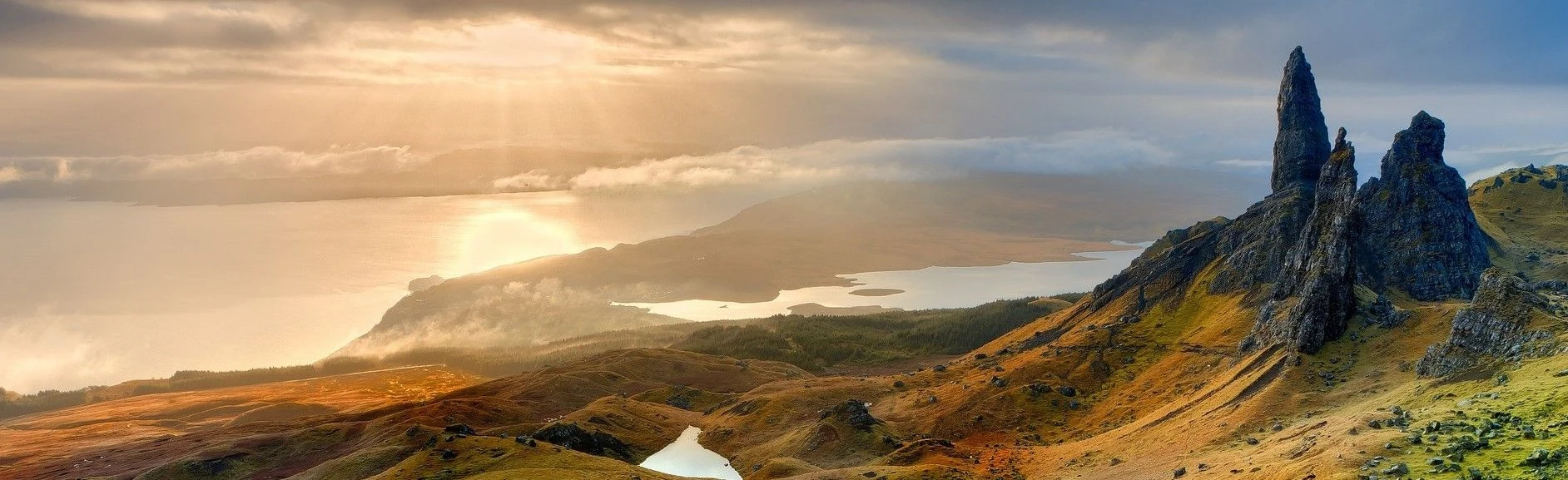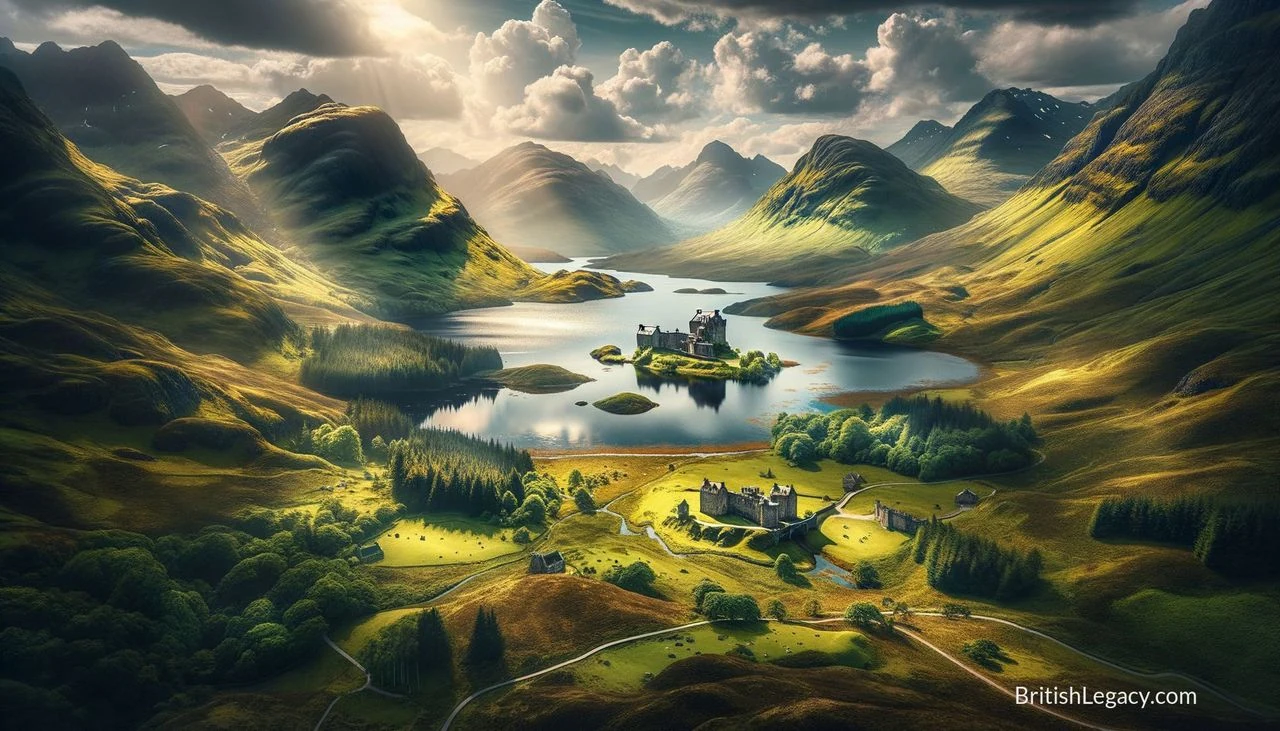
The Scottish Highlands are a region of mountains, lochs, moorland and glens whose physical scale is matched by the range of histories and traditions associated with them. Ben Nevis, at 1,345 metres, is the highest peak named in this account; Loch Ness and Glen Coe are among the best-known landscapes. Castles, clan histories, outdoor routes and cultural practices give the region a significance that reaches beyond its scenery.
Mountains, lochs and glens
The Highlands’ dramatic terrain is linked in the existing account to the Caledonian Orogeny, a series of geological events said to have shaped the region millions of years ago. Its landscape includes rugged peaks, expansive lochs, moorlands and sheltered glens. Ben Nevis rises to 1,345 metres (4,413 feet), while Loch Ness is particularly associated with the legend of Nessie. The loch attracts visitors, some drawn by the story of the monster as well as by the setting itself.
Glen Coe combines striking scenery with a difficult historical memory. The account links its name, sometimes rendered as the “Glen of Weeping”, to the 1692 massacre of members of the MacDonald clan. Today the valley is also a destination for walkers and climbers. These places show how landscape and history meet in the Highlands: the same valleys and shorelines that draw visitors are also part of a past shaped by conflict and local memory.
Castles, clans and conflict
Eilean Donan Castle stands on an islet, while Urquhart Castle occupies a position on the banks of Loch Ness. Both are presented as landmarks through which visitors can encounter the region’s past. Their settings are part of their appeal, but the wider story is not only architectural: the Highlands’ history is also associated with clans, alliances and disputes.
MacDonald, Campbell and MacLeod are among the clan names closely connected with Scottish identity. Clans formed a social structure that extended beyond family ties, shaping aspects of Highland life. The source account describes their relationships in terms of loyalty and independence, alongside alliances and violent disputes. It also connects Highland participation in the Jacobite Risings of the seventeenth and eighteenth centuries with support for the Stuart claim to the British throne. These histories deserve a more careful telling than romantic images of an unchanging, uniformly united Highland society allow; the account offers a broad outline rather than a detailed history of individual clans or campaigns.
Routes, sport and conservation
Outdoor activity is a prominent part of the region’s present-day appeal. The West Highland Way offers a long-distance walking route, while climbers tackle the Munros and visitors kayak on lochs or ski in the Cairngorms. These activities place the landscape at the centre of a visit, whether the aim is to cross a glen on foot, climb a peak or spend time on the water. The Highland Games add another kind of gathering, combining athletic events with music and dance.
Conservation is also part of the picture. Cairngorms National Park is identified as one means of protecting the region’s ecosystems, while local communities are described as valuing their home and heritage. These points matter alongside tourism: the Highlands are not simply a scenic backdrop or an outdoor playground, but a lived-in region whose natural environment and cultural traditions are both important.
Culture beyond Scotland
The Highlands’ cultural associations have travelled widely. The account connects the region with the novels of Sir Walter Scott and with later popular writing, and notes that its landscapes have appeared in screen productions including Braveheart and Outlander. Such portrayals have helped give Highland scenery an international profile, though they are not a substitute for the region’s fuller history.
Bagpipes, Highland dancing and the Gaelic language are among the cultural forms associated with Highland heritage. Diaspora communities have carried aspects of that heritage overseas, while Tartan Day celebrations in the United States and Canada offer a further example of its international reach. The result is a cultural presence that connects place, language and performance with communities far from the Highlands themselves.
Why the Scottish Highlands deserve a place in British Legacy
The Scottish Highlands deserve a place in British Legacy because their significance is not reducible to a single view or landmark. Ben Nevis, Loch Ness and Glen Coe make the region’s varied landscapes immediately recognisable, but the places also hold histories: Glen Coe is associated with the 1692 massacre, while Urquhart and Eilean Donan castles recall the importance of fortified sites. Clan histories and the Jacobite Risings further connect the region to the political and social history of Scotland and the wider British Isles. Together, these specific features make the Highlands a subject of lasting historical and cultural interest.
The region’s continuing importance also lies in the ways people encounter and sustain it. Walking the West Highland Way, climbing the Munros, kayaking, skiing and attending Highland Games bring visitors into contact with its landscape and traditions. Conservation efforts, including the role attributed to Cairngorms National Park, point to the value of protecting the natural environment, while Gaelic, music and dance remain part of the heritage associated with the region. Highland culture has also travelled internationally through diaspora communities and events such as Tartan Day. This combination of place, history, living culture and conservation gives the Highlands a distinctive and well-evidenced connection to Scotland’s contribution to British heritage.