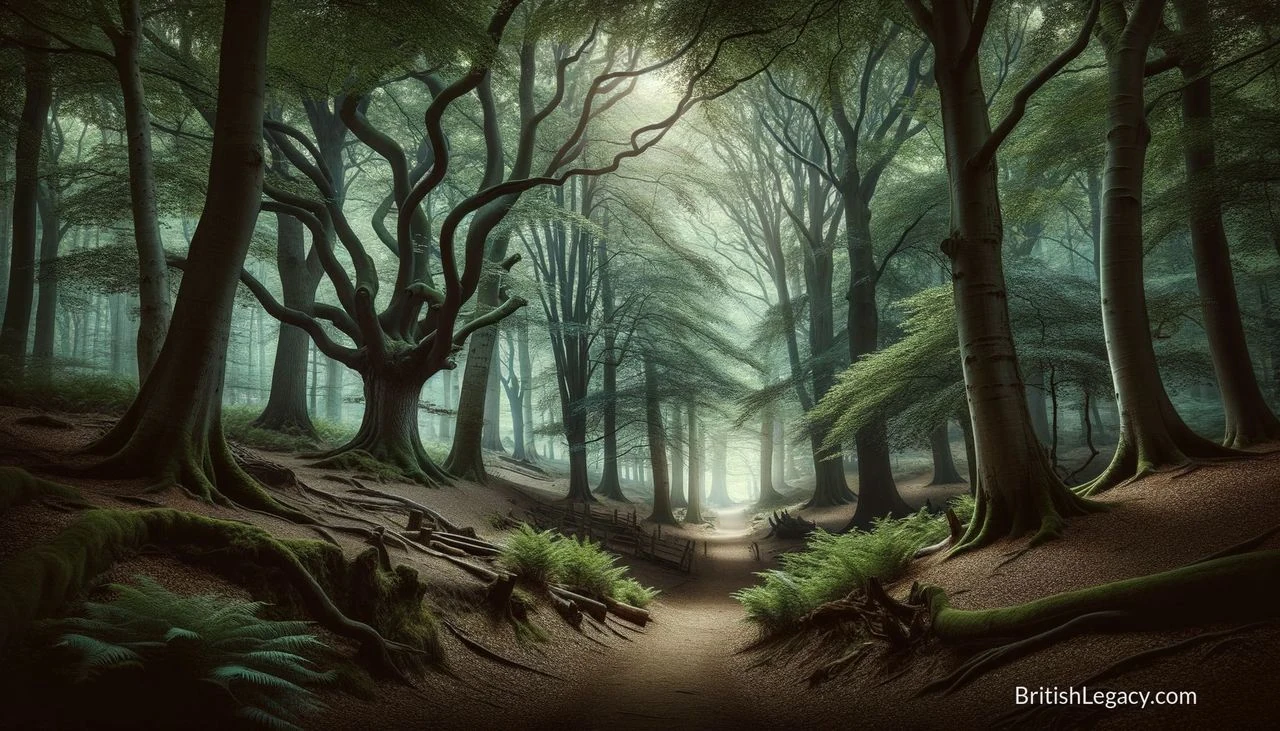
Sherwood Forest’s name carries two histories at once: that of a Nottinghamshire woodland associated with royal hunting and forest law, and that of Robin Hood, the legendary outlaw whose stories made this greenwood famous. The distinction matters. The forest is a real landscape; the familiar adventures of Robin and his companions belong to folklore, not a verified account of events.
A woodland with royal roots
Sherwood is described as having been a royal forest, used as a hunting ground by Norman kings and the English monarchy. Forest law regulated woodland and game under royal authority. The original account gives an estimate of 100,000 acres for the forest’s earlier extent, but that figure is not necessary to understand its history and is not repeated here as an established measurement.
The woodland is also known for its ancient oaks, especially the Major Oak. Local tradition connects the tree with Robin Hood, sometimes casting it as his hideout; that association belongs to the legend. The forest’s natural interest is not confined to its trees: the account also describes wildlife including birds, bats and insects, and notes the importance of protecting the habitat.
Robin Hood’s greenwood
Robin Hood is traditionally presented as an outlaw who resisted injustice, with the familiar motif of taking from the rich to give to the poor. Little John, Maid Marian and Friar Tuck are among the companions commonly attached to the stories. Historical evidence for the legendary character’s life remains elusive, so these details are best understood as elements of a long-lived folk tradition.
Ballads, books, stage productions and films have carried the tales beyond Nottinghamshire. Sherwood gives them a recognisable setting: a woodland beyond the reach of ordinary authority, where an outlaw can evade capture and challenge those in power. The stories have helped make the forest culturally familiar, while the real landscape lends the legend a particular place and atmosphere.
Nature, conservation and visitors
The Sherwood Forest National Nature Reserve is associated with trails, guided walks and exhibits that bring visitors into contact with the area’s natural and historical heritage. The account also describes a Robin Hood Festival featuring medieval-themed activities, including jousting, archery and music. These experiences draw on both aspects of Sherwood’s appeal: its woodland and wildlife, and the tales attached to its name.
Conservation is part of that story because the forest is both a natural habitat and a landscape through which people encounter local history and folklore. The Major Oak brings those interests together particularly clearly: it is a notable ancient tree, while its supposed role in Robin Hood’s adventures remains a matter of tradition rather than established fact.
Why Sherwood Forest deserves a place in British Legacy
Sherwood Forest deserves a place in British Legacy because it shows how a specific landscape can become inseparable from a national storytelling tradition. Robin Hood’s adventures have travelled through ballads, books, theatre and film, and their association with Sherwood gives the legend a distinctive English setting. The connection is culturally important without requiring the stories to be treated as a factual biography: the forest’s place in the imagination is itself part of its history.
There is also a material heritage beyond the legend. Sherwood’s royal-forest past, ancient oaks, wildlife and nature reserve make it a landscape with historical and natural significance. Its visitor trails and festival activities offer ways to encounter those interests, while conservation helps keep attention on the living woodland rather than folklore alone. The enduring value of Sherwood lies in that combination: a real Nottinghamshire forest, a recognised natural environment and a body of stories that has made its name familiar far beyond the county.