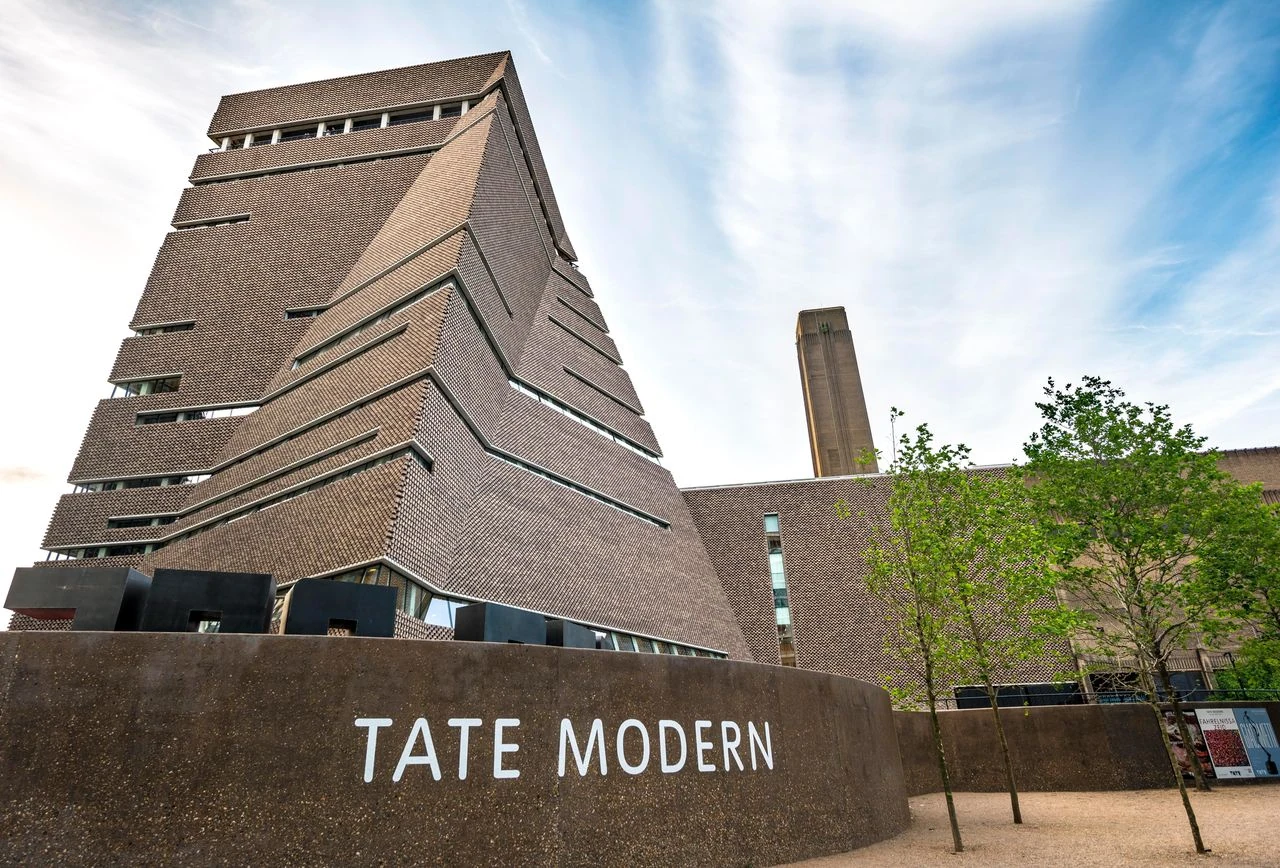
On London’s Bankside, a former power station has become one of the city’s most recognisable art galleries. Tate Modern opened in May 2000 in the Bankside Power Station, adapting a large industrial building for modern and contemporary art. Its story brings together the reuse of a major London landmark, an international collection and a public gallery that has continued to expand.
From power station to art gallery
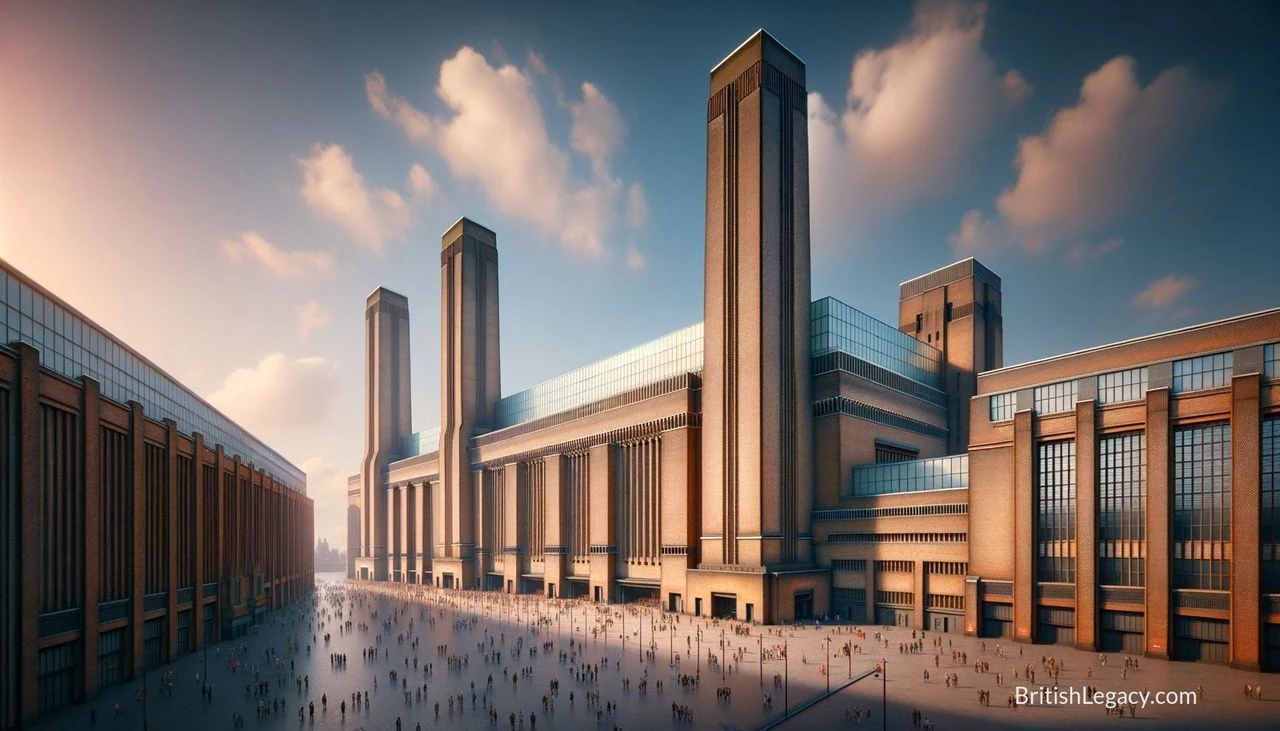
The building was designed by Sir Giles Gilbert Scott, also known for designing the red telephone box. Bankside Power Station was completed in 1963 and decommissioned in 1981. Its industrial scale and central chimney remained defining features when the building found a new purpose as a museum.
In the late 1990s, Swiss architects Herzog & de Meuron adapted the former power station for Tate Modern. The project retained the building’s imposing character and made the Turbine Hall a striking central space for visitors and exhibitions. Rather than erase the site’s industrial history, the conversion made that history part of the gallery experience.
The museum opened in May 2000. In 2016, the addition of the Blavatnik Building expanded its gallery space. The new building increased capacity for display, extending a project that had already given a substantial former industrial site a continuing civic and cultural use.
Art from Britain and beyond
Tate Modern’s collection ranges from the early twentieth century to the present. It includes work by Pablo Picasso, Salvador Dalí, Mark Rothko and Andy Warhol, alongside British artists including David Hockney, Francis Bacon and Tracey Emin. Bringing these artists into the same public institution makes the gallery a place to encounter both international modern art and important strands of British practice.
The collection is only one part of the visitor experience. Changing exhibitions and installations in the Turbine Hall have made the building a venue for large-scale contemporary work. The gallery has also presented international collaborations and travelling exhibitions. The Unilever Series, in which artists created site-specific installations for the Turbine Hall, offered a prominent example of how the space could be used for works shaped by the building itself.
A public institution in an industrial landmark
Tate Modern presents itself not only as a place to view art but as a public-facing cultural institution. Its educational activity has included workshops, lectures and interactive tours for audiences of different ages and backgrounds. These programmes sit alongside its changing displays, giving visitors more than a single route into the art on show.
The gallery’s location on Bankside links that work to the reuse of a prominent riverside building. Its conversion connected an industrial structure with public access to modern and contemporary art, while later expansion allowed more gallery space to be made available. The former power station’s Turbine Hall also gives exhibitions a setting whose scale and industrial origins are integral to the experience.
Tate Modern’s international outlook is visible in its artists, exhibitions and collaborations, but its home remains distinctly tied to London. The gallery brings work from different countries into a public building on the Thames and places British artists within that wider context. Its importance lies in this combination: a collection with international reach, a programme for visitors and an adapted landmark embedded in the city.
Why Tate Modern deserves a place in British Legacy
Tate Modern merits a place in British Legacy because its history shows how an existing London structure can be given a substantial new public purpose. The Bankside Power Station, designed by Sir Giles Gilbert Scott, served an industrial function before its closure in 1981. Its later adaptation by Herzog & de Meuron preserved key features, including the Turbine Hall, rather than treating the building as a blank slate. Since opening in 2000, the gallery has made that former power station a setting for modern and contemporary art and a familiar part of the city’s cultural life.
The institution’s contribution is also in what it makes available to visitors. Its collection places British artists such as Hockney, Bacon and Emin alongside internationally recognised figures, while exhibitions and Turbine Hall installations offer changing encounters with art. Educational programmes add workshops, lectures and tours to that offer. The 2016 Blavatnik Building expansion extended the gallery’s capacity. Together, these features give Tate Modern a specific British legacy: the creative reuse of a London landmark, public access to art and a platform for British work within an international collection.