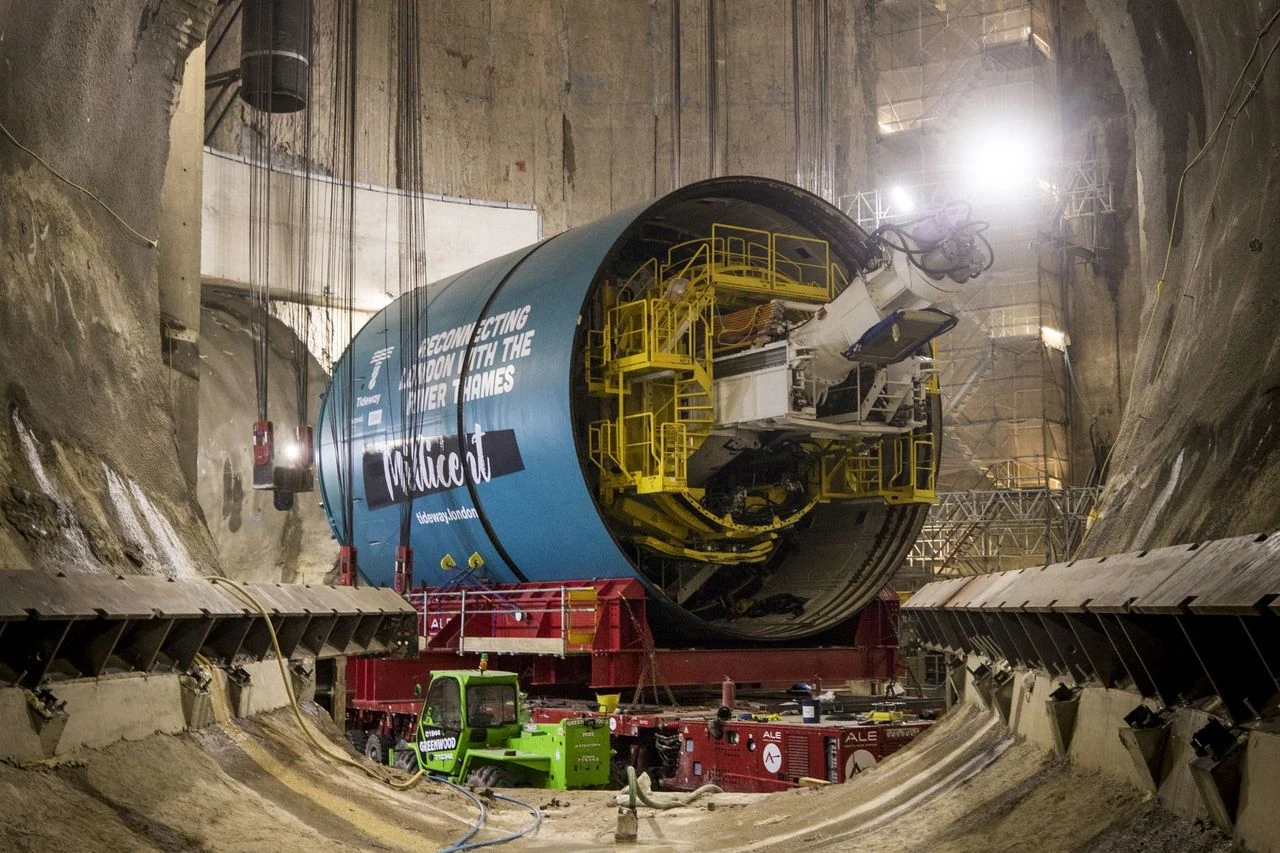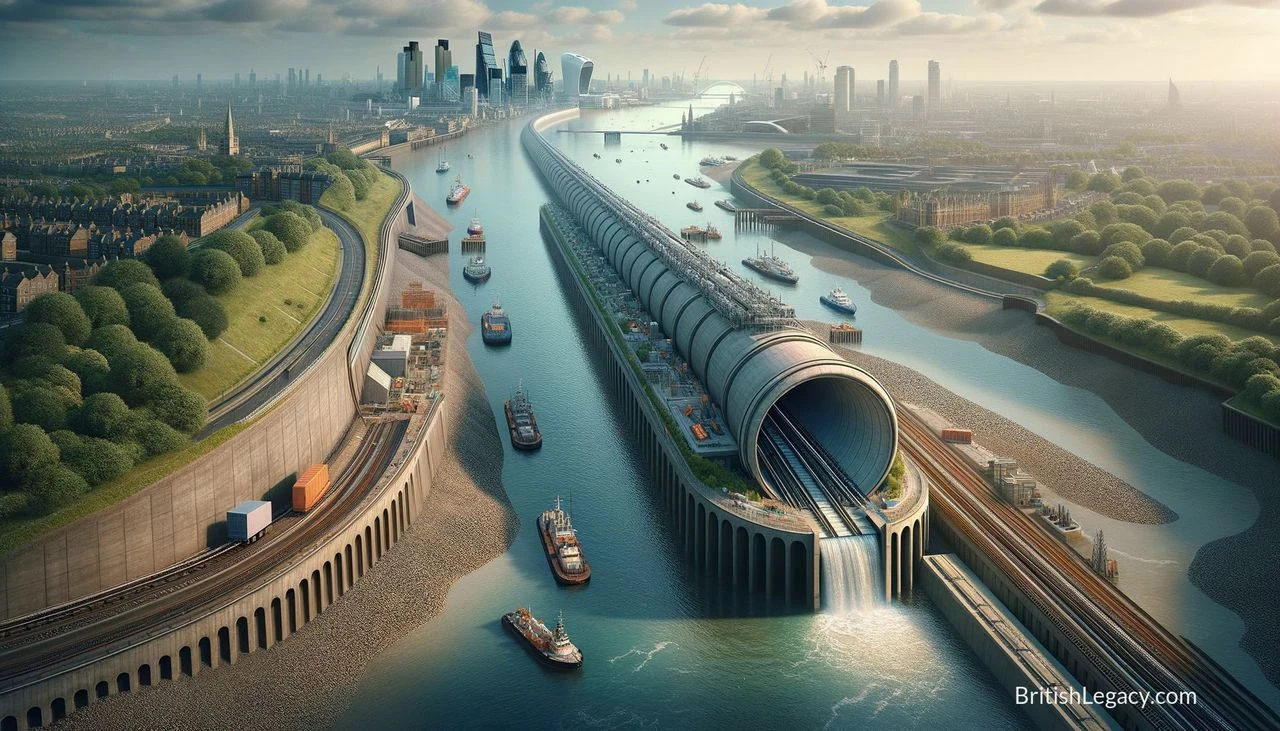
London’s Thames Tideway Tunnel was conceived to address a problem beneath the city: a Victorian sewer network that can be overwhelmed, allowing untreated sewage to enter the river. The project’s answer is a large tunnel running below London, intended to intercept storm overflows and transfer them away from the Thames. It is a modern infrastructure scheme shaped by the same basic challenge faced by earlier generations of London engineers: how to provide for a growing city while protecting the river at its centre.
A Victorian system under pressure
London’s original sewer system was designed in the nineteenth century by engineers working under Joseph Bazalgette. Its scale and ingenuity helped serve the capital, but the system was not built to meet every later demand. As London grew, its sewers could be overwhelmed during heavy rainfall, with storm overflows carrying untreated sewage into the Thames.
The Tideway project was proposed as a response to that pressure. The original account describes millions of tonnes of untreated sewage entering the river each year, but gives no supporting source for its more specific annual figure. The important distinction is that the tunnel is designed to reduce pollution from overflows; its construction alone does not mean that all pollution in the Thames will disappear.
A tunnel beneath the capital
Plans for the Thames Tideway Tunnel took shape in 2015. The proposed 25-kilometre route runs from Acton in the west to Abbey Mills in the east, beneath a densely populated city. The tunnel is designed to intercept storm overflows, store them and transfer them for treatment rather than allowing them to flow directly into the river.
The project was led by Bazalgette Tunnel Limited and described in the original account as a £4.1 billion undertaking, among the largest in the UK water sector. Building deep beneath London brings practical challenges: the route passes under an established urban landscape, where construction must contend with the city above as well as the ground below. The scheme’s purpose is not simply to add capacity to the sewer network, but to capture overflow at points where it would otherwise reach the Thames.
What the project is intended to change
By diverting storm overflow from the river, the tunnel is intended to improve water quality and reduce the discharge of raw sewage. The original account links cleaner water with benefits for public health, river wildlife and people using the Thames. Those are projected benefits, rather than evidence in themselves that the project has already achieved a particular improvement.
The account also says the work creates thousands of jobs and contributes to the UK’s engineering sector. It offers no figures or further detail about those economic effects, so they are best understood as claims about the project’s potential contribution rather than a quantified assessment. Likewise, its prediction that the river will teem with diverse life is aspirational: the stated purpose is to reduce pollution, not to guarantee a particular ecological outcome.
Why the Thames Tideway Tunnel deserves a place in British Legacy
The Thames Tideway Tunnel belongs in a record of British public works because it addresses a specific, long-running problem in London: the limits of a sewer system designed in the nineteenth century. Its deep route, planned over 25 kilometres beneath the capital, represents a major attempt to adapt essential infrastructure to the demands of a modern city. By intercepting and transferring storm overflows, the project is intended to reduce one source of sewage pollution reaching the Thames.
Its significance also lies in the connection between the river and the systems that support urban life. The Thames is not only a landmark; it is part of a living environment affected by decisions about drainage, engineering and development. The tunnel’s proposed benefits for water quality, public health and wildlife make clear why the work matters, while remaining distinct from proof that those outcomes have been fully achieved. In that respect, the project’s British legacy is grounded in a practical civic ambition: to renew inherited infrastructure and reduce its impact on a river running through the heart of London.