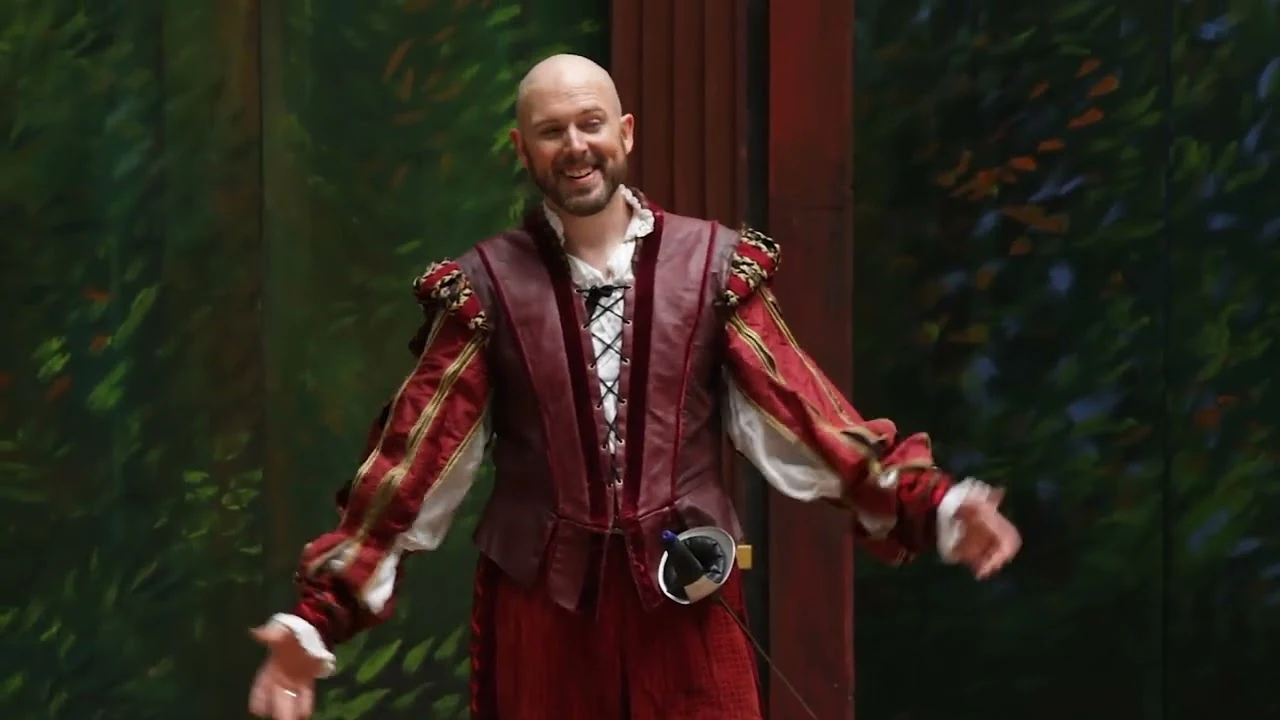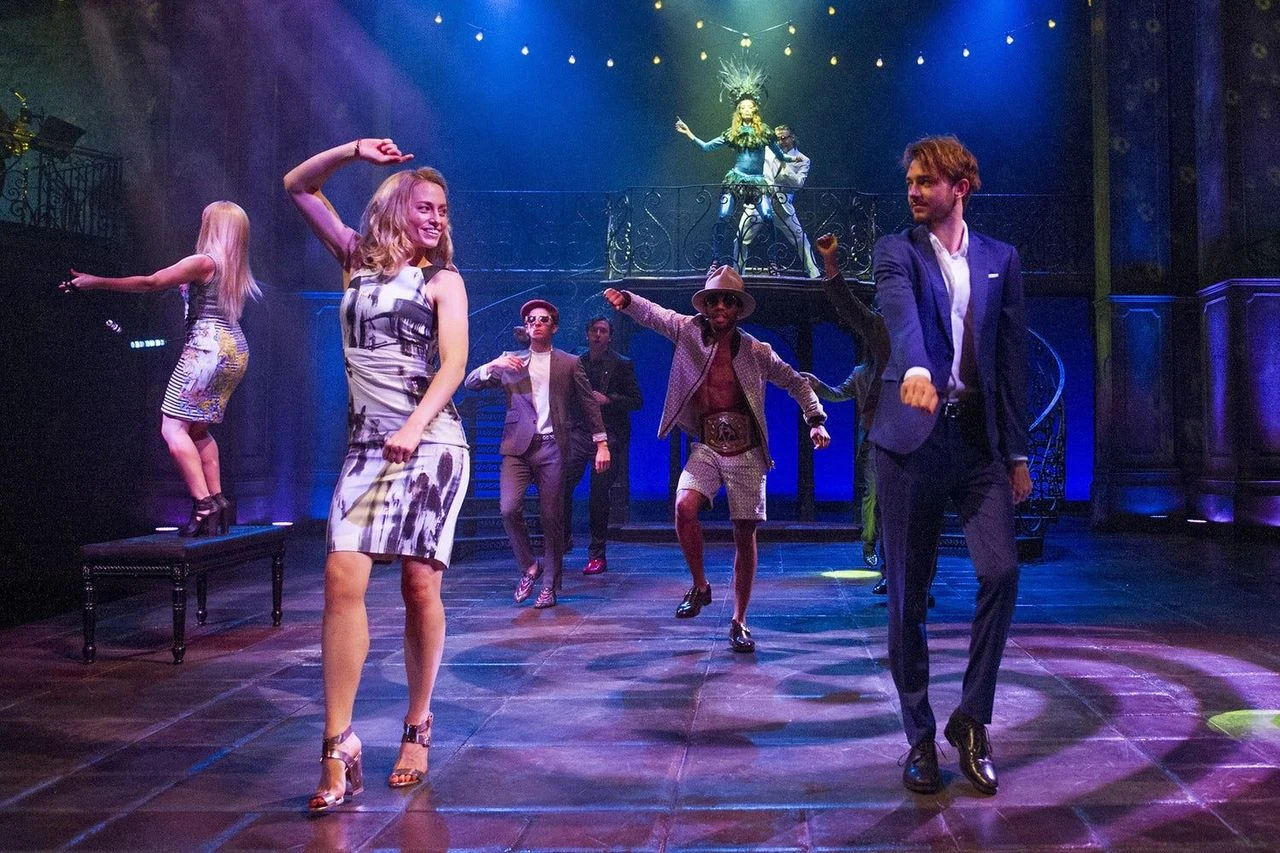
In The Two Gentlemen of Verona, friendship and romantic love compete until loyalty itself becomes difficult to trust. Valentine leaves Verona for the Duke of Milan’s court; his friend Proteus follows, abandoning Julia and turning his attention to Silvia, the woman Valentine loves. The play’s disguises and reversals belong to the machinery of comedy, but its ending resists a simple account of reconciliation: Proteus has threatened Silvia, and Valentine’s response has long divided readers and performers.
An early play, with an uncertain date
Shakespeare’s exact date of composition is unknown. The play is generally placed among his earliest works, probably written in the early 1590s, although proposed dates range from the late 1580s to the early 1590s. It is sometimes described as his first play, but that remains a theory rather than an established fact. The first recorded evidence that it existed is its inclusion in Francis Meres’s 1598 list of Shakespeare’s plays. It was not printed until the First Folio of 1623.
The play draws on earlier stories. One important source was Los Siete Libros de la Diana, a Spanish prose romance by Jorge de Montemayor. Its story of a woman who follows her lover disguised as a boy has close parallels with Julia’s journey and her adoption of the name Sebastian. The English translation appeared in 1598, though its translator, Bartholomew Young, said he had completed it years earlier; Shakespeare may instead have encountered the story in French or through another version.
Another likely influence was Thomas Elyot’s The Boke Named the Governour (1531), which recounts the friendship of Titus and Gisippus and the tension between male friendship and love. John Lyly’s Euphues: The Anatomy of Wit (1578) also features inseparable friends whose relationship is tested by a woman. These connections place Shakespeare’s comedy within a wider tradition of stories about loyalty, desire and changeable affection.
Friends, rivals and a page called Sebastian
Valentine sets out for Milan to advance his prospects at court. Proteus stays in Verona at first, unwilling to leave Julia, with whom he exchanges vows and rings. His father then sends him to Milan. There, Valentine has fallen in love with Silvia, the Duke’s daughter, while the Duke favours the wealthy Thurio as her suitor. Proteus arrives, sees Silvia and promptly betrays both Julia and his friend.
To get Valentine out of the way, Proteus tells the Duke that his friend intends to elope with Silvia using a ladder. Valentine is banished. In the forest he encounters outlaws, claims to have been exiled after killing a man in a duel, and is chosen as their leader. Julia, meanwhile, disguises herself in boys’ clothes and travels to Milan. Calling herself Sebastian, she becomes Proteus’s page and discovers that he has sent her back to Silvia with the ring she gave him. Silvia rejects his advances, in part because she recognises his inconstancy.
Silvia eventually flees into the forest and is captured by the outlaws. Proteus rescues her, but continues to press his unwanted suit. Valentine, watching unseen, intervenes when Proteus says he intends to force himself on her. Proteus professes remorse; Valentine forgives him, and Julia’s identity is revealed when she faints. Proteus renews his vows to her. The Duke and Thurio arrive with the outlaws; Thurio abandons his claim to Silvia, and the Duke consents to her marriage to Valentine. The play ends with the two couples united and the outlaws pardoned.
A comedy with an unsettled ending
The final scene has never been an easy resolution. Valentine tells Proteus, “All that was mine in Silvia I give thee” after Proteus has pursued and threatened her. Some readers take the line as an offer to hand Silvia over; others interpret it as Valentine promising to love his friend as deeply as he loves Silvia. The difference changes the meaning of the ending: it can appear to subordinate Silvia’s wishes to male friendship, or to reconcile friendship and romantic love. Productions have made that uncertainty visible through staging, cuts and altered wording.
Julia’s disguise is also significant in the play’s place in Shakespeare’s work: it is the first of his plays in which a heroine dresses as a boy. The comedy contrasts the elevated language of the lovers with the practical humour of their servants. Launce, Proteus’s servant, and Valentine’s servant Speed puncture the protagonists’ elaborate ideas about love with jokes and everyday observations. Launce’s dog, Crab, has no speaking part, yet has often been singled out as a scene-stealing presence.
The play has sometimes been judged one of Shakespeare’s weaker works, and its uncertain dramatic handling is part of its critical history. It is also read as an early testing ground for themes and devices that receive more complex treatment elsewhere: mistaken identity, exile, romantic jealousy and the conflict between friendship and love. Its value need not depend on treating it as a finished version of later comedies. The awkwardness and moral difficulty are part of what makes it worth staging and discussing.
From the London stage to later adaptations
The earliest known performance was at Drury Lane in 1762, in Benjamin Victor’s rewritten version. A performance of Shakespeare’s text followed at Covent Garden in 1784, advertised as “Shaxespeare’s with alterations”; it closed after one night. Later productions repeatedly cut Valentine’s controversial offer. William Macready restored the lines in a Drury Lane production in 1841, although they continued to be removed in some productions well into the twentieth century.
The Royal Shakespeare Company returned to the play at Stratford-upon-Avon in several notably different productions. Peter Hall’s 1960 staging, his first as the company’s artistic director, treated it as the opening of a reconsideration of Shakespearean comedy. Robin Phillips’s 1970 production cast Valentine and Proteus as privileged students and emphasised friendship and treachery. John Barton directed a heavily edited RSC production in 1981; David Thacker’s 1991 version used a live band and music from the 1930s. Edward Hall set his 1998 Swan Theatre production in a contemporary city shaped by material obsession. Simon Godwin directed an RSC production in 2014, broadcast live to cinemas as part of the company’s Live from Stratford-upon-Avon series.
Adaptation has carried the story into other forms and places. Frederic Reynolds staged an operatic version at Covent Garden in 1821; Franz Schubert set Proteus’s song “Who is Silvia?” to music in 1826. A musical adaptation opened on Broadway in 1971, won Tony Awards for Best Musical and Best Book, and later played in London’s West End. In 2012, Vakomana Vaviri Ve Zimbabwe, performed in Shona by two actors, toured UK venues and appeared at Shakespeare’s Globe. The range of versions shows how readily the play’s central conflict can be recast without settling its questions.
Why The Two Gentlemen of Verona deserves a place in British Legacy
The Two Gentlemen of Verona belongs in British Legacy because it offers a specific view of Shakespeare’s development, not because it needs to be declared a masterpiece. Its uncertain early date, its first recorded appearance in 1598 and its publication in the 1623 First Folio give the play a place in the history of English drama. Its use of disguise, mistaken identity and divided loyalties also lets readers see Shakespeare working with materials drawn from European romance and English writing, shaping them into a comedy that tests the boundaries between friendship and love.
Its continuing value lies partly in what it does not resolve. The final scene’s treatment of Silvia has prompted generations of readers and theatre-makers to ask what Valentine’s offer means and whose interests the reconciliation serves. British stages have responded through cuts, restorations and radically different interpretations, while musical, operatic and multilingual adaptations have taken the story into new settings. That record is a concrete legacy: the play has remained available for argument and reinvention, rather than surviving only as a fixed monument. Its comic servants and memorable disguise sit alongside an ending that demands scrutiny, making it a useful work for understanding both Shakespeare’s early experiments and the changing standards through which audiences judge them.
Sources
The Two Gentlemen of Verona — revision 1368517650
Adapted in part from The Two Gentlemen of Verona by Wikipedia contributors, under CC BY-SA 4.0. Text has been edited and combined with the existing article; this adapted text is shared under the same licence. Contributor history.