Two cousins and close friends are taken prisoner after fighting on the wrong side of a war. From captivity, they catch sight of Emilia and fall in love with her; their fellowship gives way to rivalry. In The Two Noble Kinsmen, that contest ends not with a simple victory but with a death that changes the meaning of the prize. The play joins this love story to a comic subplot and a larger question about how much human choice can alter the course of events.
Attributed jointly to William Shakespeare and John Fletcher, the Jacobean tragicomedy reshapes material from Geoffrey Chaucer’s The Knight’s Tale. Its history connects medieval English poetry with the collaborative theatre of the early seventeenth century, while its plot moves between courtly ceremony, physical combat and the disordered world of the forest.
A story inherited and reshaped
The play’s immediate literary source is Chaucer’s The Knight’s Tale, part of The Canterbury Tales. Chaucer’s story, in turn, was a shortened version of Giovanni Boccaccio’s Teseida. The tale had already reached the stage in earlier adaptations: one, Richard Edwardes’s Palamon and Arcite, was performed for Queen Elizabeth at Oxford in 1566; another play on the subject was performed by the Admiral’s Men in 1594. Both are now lost.
That chain of retelling gives the drama a place between literary periods, but the play is not simply a transfer of an old story to a new medium. Its prologue tells the audience that the action comes from Chaucer, while the theatrical version develops its own scenes and characters. The jailer’s daughter, for example, belongs to a comic subplot without a direct source in the poem. Her unreturned love for Palamon and subsequent distress create a counterpoint to the formal contest between the two noblemen.
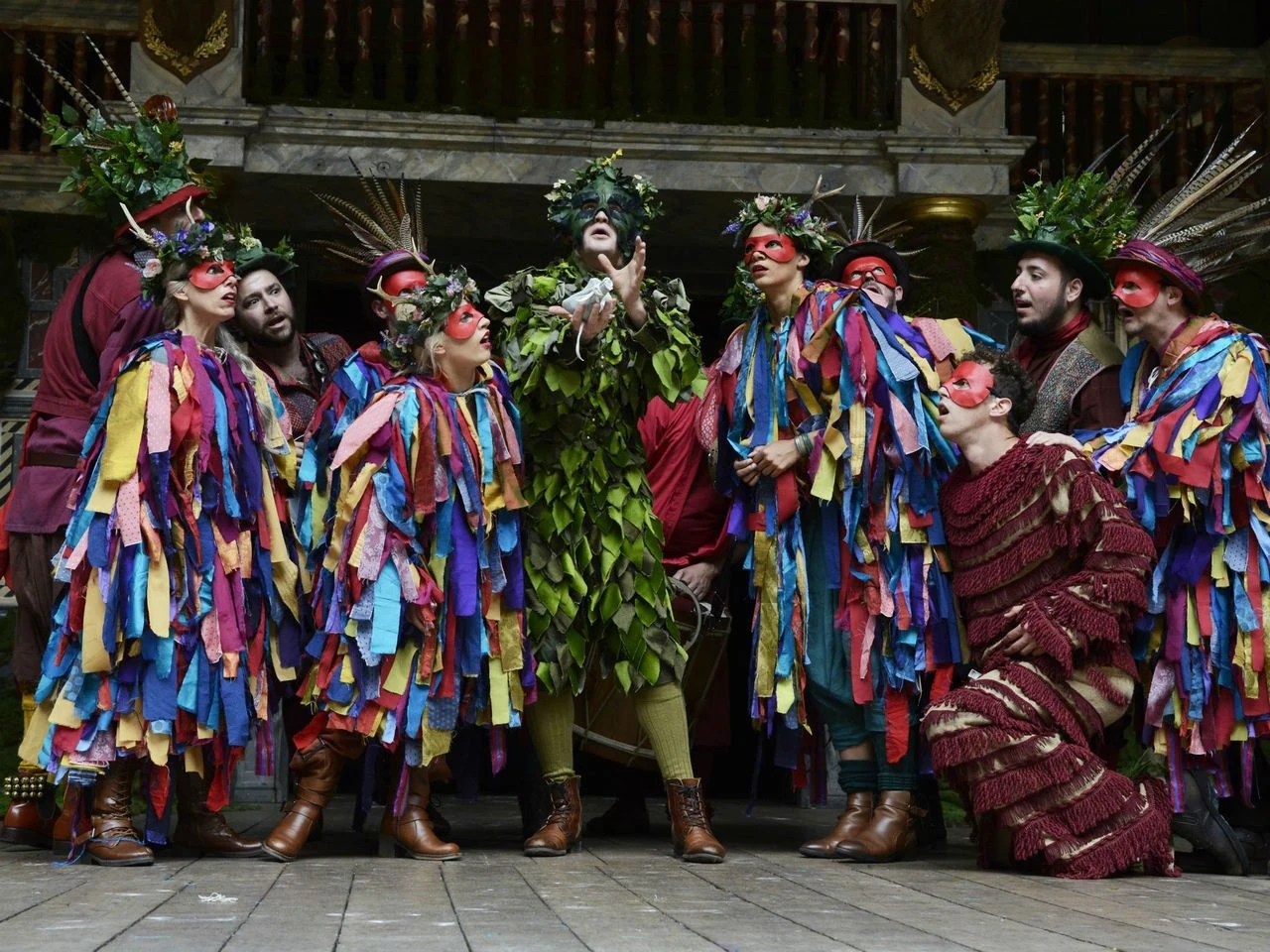
The play’s mixture of high and low registers is central to its shape. Theseus and the queens frame the action with questions of justice, burial and war; the imprisoned cousins debate fate and friendship; and country performers bring a rougher, comic spectacle into the royal world. A story inherited from medieval literature becomes a stage work that can move between public ceremony, private obsession and popular entertainment.
Palamon, Arcite and the cost of rivalry
At the opening, three queens ask Theseus and Hippolyta, rulers of Athens, to avenge their husbands, whom Creon of Thebes has killed and denied proper burial. Theseus agrees to make war on Creon. Palamon and Arcite, Theban cousins and close friends, are bound to fight for their ruler even though they abhor his tyranny. After the Thebans are defeated, the two men are imprisoned.
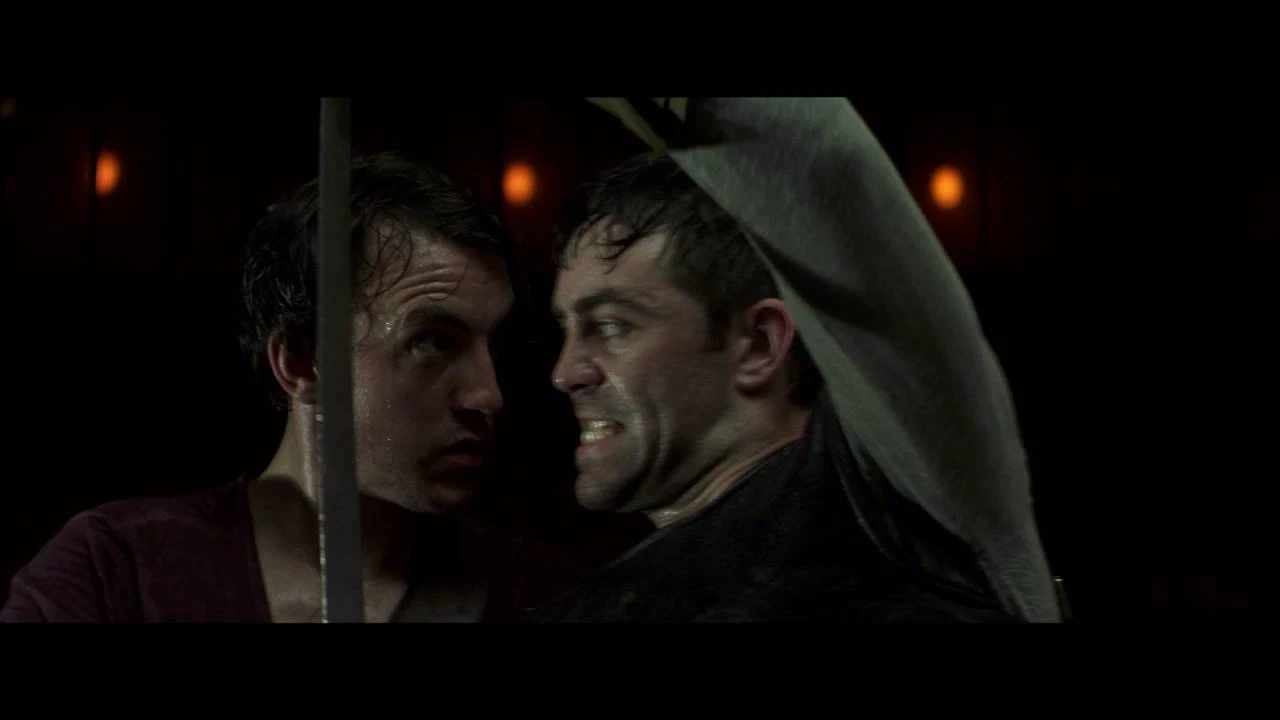
Their composure does not survive the sight of Emilia, Hippolyta’s sister. Both cousins fall in love with her, and an attachment that had endured hardship turns into competition. Arcite is released after a relative intervenes, but banished from Athens. Disguised, he wins a wrestling match and becomes Emilia’s bodyguard. Palamon later escapes with help from the jailer’s daughter. In the forest, he meets Arcite again. Their argument gives way to an agreement to fight on more equal terms, with Arcite promising to bring food, drink and weapons.
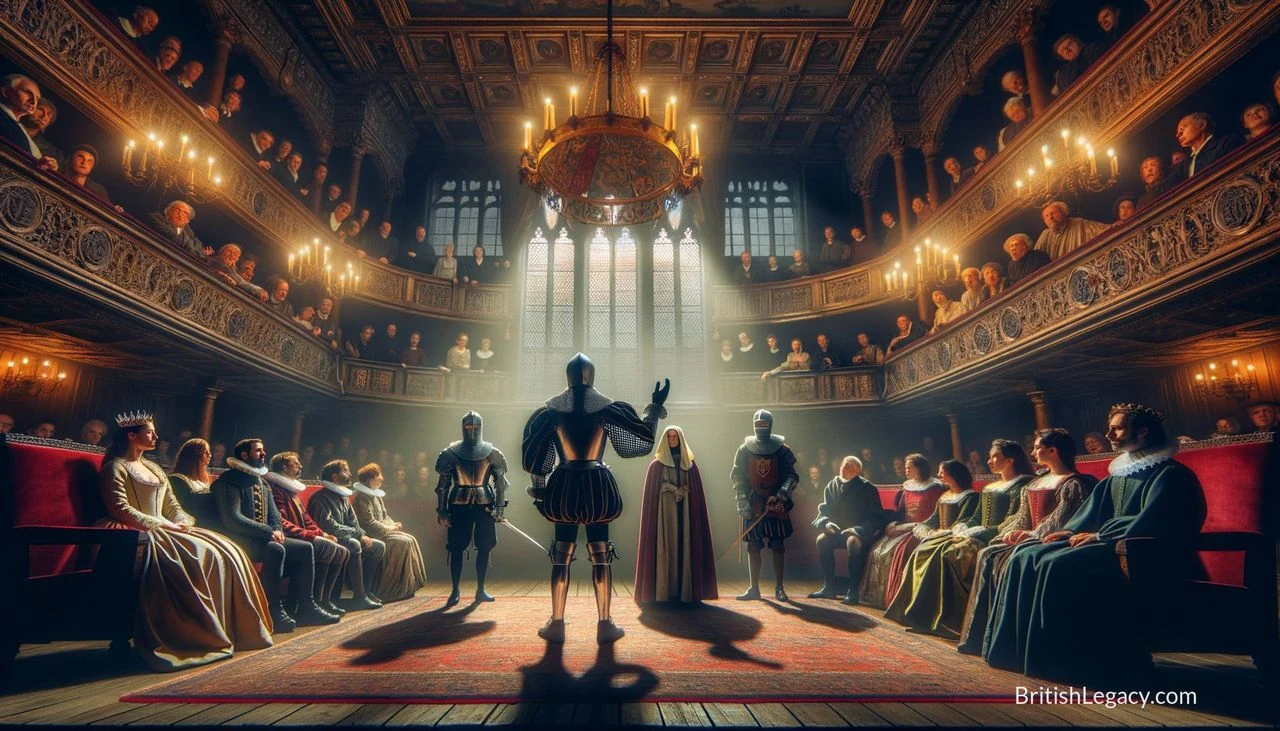
Their meeting is interrupted by Theseus and his party. Theseus orders the cousins’ arrest and execution, but Hippolyta and Emilia plead for them. He instead arranges a public tournament for Emilia’s hand, with three companions for each combatant and execution for the losing side and his knights. The contest is thus governed by a political authority that first threatens death and then sets the terms on which it may be avoided.
The ending complicates any straightforward sense of victory. Before the tournament, Arcite prays to Mars for success in battle, Palamon asks Venus for marriage to Emilia, and Emilia asks Diana to be wed to the man who loves her most. All three prayers are granted, but not in a way that produces a simple happy ending: Arcite wins the combat, then falls from his horse and dies. Palamon is left to marry Emilia. The outcome brings together chance, divine intervention and human desire, while making victory inseparable from loss.
Two playwrights, one Jacobean play
The Two Noble Kinsmen is attributed to Shakespeare and Fletcher, a partnership that reflects the collaborative habits of the early seventeenth-century theatre. The two writers’ shares have been examined through features including metre, vocabulary, contractions and imagery. One scholarly division assigns Shakespeare the opening three scenes of Act I, Act II, scene 1, Act III, scene 1, and substantial portions of the final act. Fletcher is assigned much of the remaining material, including the prologue and epilogue. Some scenes remain uncertain, and the precise boundaries of authorship should not be treated as settled line by line.
Links with other works point to composition and first performance in 1613–14. Ben Jonson’s Bartholomew Fair, performed in 1614, refers to Palamon in a passage taken as evidence that audiences already knew the play. A masque by Francis Beaumont from 1613 contains a rural cast and stage effect that appear to have been adapted in the play’s Morris dance, suggesting it followed soon after. These connections place the work within a lively theatrical culture in which plays borrowed, answered and reworked material from one another.
The play was entered in the Stationers’ Register on 8 April 1634 and published later that year in a quarto printed by Thomas Cotes for bookseller John Waterson. It was absent from Shakespeare’s First Folio of 1623 and subsequent Shakespeare folios, but appeared in the second Beaumont and Fletcher folio in 1679. Its publication history therefore reflects its dual authorship as well as the changing ways in which early modern plays were grouped and preserved.
From Restoration adaptation to modern revivals
After the theatres reopened during the Restoration, William Davenant adapted the play as The Rivals for the Duke’s Company in 1664. Thomas Betterton played Philander, Davenant’s version of Palamon. Samuel Pepys saw the production and recorded a mixed verdict: “no excellent play, but good acting in it”. The comment offers a small but telling record of the work’s reception: it could be reshaped for a new stage and judged through the performance as much as the writing.
Modern productions have returned to the original title and its shifting balance of tragedy and comedy. The Royal Shakespeare Company staged the play at the Swan Theatre during its inaugural season in 1986 and again there in 2016. Shakespeare’s Globe included it in its 2018 summer season. A production at the White Bear Theatre in Vauxhall opened in June 2015; a later account described it as the play’s first London production since 2000.
The story has also been staged beyond Britain. In 2007, the Hudson Shakespeare Company performed it in New Jersey as part of its Shakespeare in the Parks series, setting it in ancient Greece with a diverse cast. A Los Angeles production in 2019 recast the Morris dance as a hallucination shaped by the jailer’s daughter’s life and removed the cousins’ prayers, foregrounding Emilia’s dilemma. In Toronto in 2024, Shakespeare Bash’d presented the play at The Theatre Centre Incubator. These different approaches show how productions can shift emphasis without abandoning the central collision of friendship, desire and public judgement.
Why The Two Noble Kinsmen deserves a place in British Legacy
The Two Noble Kinsmen deserves a place in British Legacy because its history makes visible the movement of stories across British literary and theatrical traditions. Chaucer’s The Knight’s Tale supplied the central narrative; Shakespeare and Fletcher transformed it into a stage work shaped by Jacobean performance; and later readers and theatre-makers encountered it through Restoration adaptation, print editions and modern revivals. This is not a claim that the play belongs to one author alone. Its joint attribution is part of what makes it valuable: it records a collaborative practice in early modern theatre and invites attention to how two writers could contribute to a shared work.
The play also offers more than a literary link between periods. Its plot puts loyalty, desire and authority under pressure: Palamon and Arcite’s friendship is broken by their love for Emilia, while Theseus’s power determines whether their conflict ends at the scaffold or in a tournament. The jailer’s daughter’s story brings vulnerability and comedy into that contest, preventing the noblemen’s rivalry from becoming the only human experience on stage. The work’s return in British productions at the Royal Shakespeare Company, Shakespeare’s Globe and London’s White Bear Theatre shows that it remains available for new interpretation. Its place in the national dramatic inheritance rests both on its connection to Chaucer and on the questions its theatrical form continues to stage.
Sources
The Two Noble Kinsmen — revision 1366974903
Adapted in part from The Two Noble Kinsmen by Wikipedia contributors, under CC BY-SA 4.0. Text has been edited and combined with the existing article; this adapted text is shared under the same licence. Contributor history.