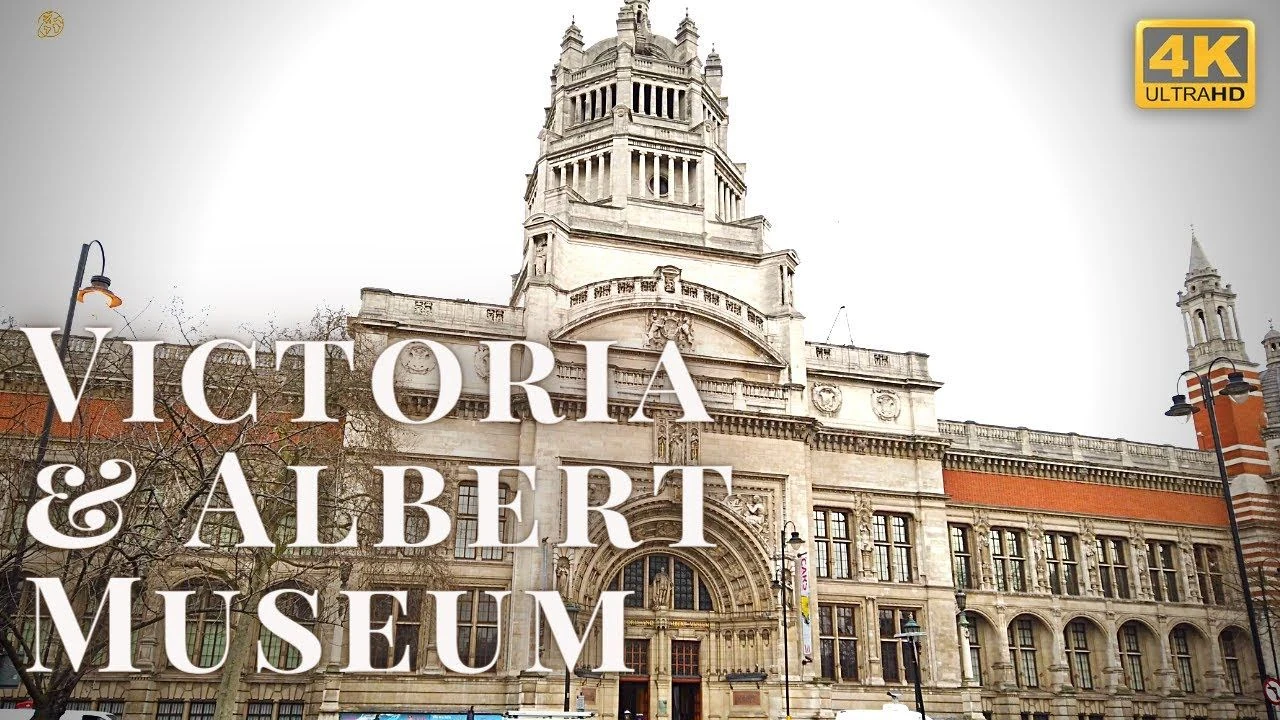
The Victoria and Albert Museum in South Kensington was conceived as more than a storehouse for beautiful objects. Established in 1852 after the Great Exhibition, it was intended to make art accessible and to use examples of design to educate and inspire. Today, its collections range across fashion, textiles, ceramics, furniture, jewellery, photography and art from Europe and Asia, placing objects from different times and cultures within a shared public institution.
A museum shaped by the Great Exhibition
The V&A takes its name from Queen Victoria and Prince Albert. Its origins are linked to the Great Exhibition of 1851, an event that showcased industrial design and innovation. The museum’s founding purpose reflected Prince Albert’s vision: to make art available to the public and to assemble examples of design excellence that could support education and encourage future artists and designers.
That ambition gives the institution a particular place in Britain’s cultural life. Rather than limiting its attention to fine art, the V&A encompasses decorative arts and design, fields in which skilled making, materials and everyday use meet. Its holdings offer ways to consider how styles and craftsmanship have changed, while the breadth of the collections brings objects from different places into the same setting.
Collections across materials and cultures
The museum’s collection is described as containing more than 2.7 million objects. Its range includes textiles and fashion, ceramics, furniture, jewellery and photography, alongside European sculpture, metalwork, glass and other decorative arts. Together, these areas present many forms of creative work rather than a single account of artistic achievement.
Fashion and textiles form a significant part of the collection, with garments and related material spanning five centuries. They offer a record of changing styles and social norms as well as evidence of design and making. The museum’s Asian collections include ceramics, textiles and paintings from China, Japan, India and the Islamic world. Set alongside European objects, these holdings give visitors opportunities to encounter artistic traditions across regions and periods.
The range matters because the museum can show both difference and connection: how objects are made, how styles develop, and how design crosses cultural boundaries. Its collections include work intended for practical use as well as objects valued for their artistic qualities. This breadth makes the V&A relevant to anyone interested in the history of things people create, wear and use.
Building, learning and public access
The museum’s architecture is part of its public identity. Its main entrance was designed by Aston Webb and completed in 1909. The building’s grand façades and carefully designed interiors introduce visitors to the collections, while its rooms provide a setting in which objects from different periods and places can be viewed together.
Education remains central to the institution’s stated purpose. Workshops, lectures and exhibitions provide ways to encounter art and design, and the museum also makes collections available through a digital presence. In this way, its work reaches beyond the South Kensington building: visitors can engage with the collections through programmes on site and online, whether they are beginning to explore the arts or already have a specialist interest.
Why the Victoria and Albert Museum deserves a place in British Legacy
The V&A deserves a place in British Legacy because its founding ambition joined public access with the study of design. Established in the wake of the Great Exhibition, it set out to make art accessible and to use objects as resources for education and inspiration. Its continuing focus on decorative arts and design keeps that purpose visible: the collections bring attention not only to celebrated works, but also to the materials, skills and choices involved in making objects.
Its contribution is also grounded in the breadth of what it preserves and shares. Fashion, textiles, ceramics, furniture, jewellery, photography, European sculpture and Asian art all have a place in a museum whose holdings cross periods and cultures. Workshops, lectures, exhibitions and digital access extend that resource beyond the galleries. The V&A’s British legacy therefore lies not in a claim to represent all art, but in its enduring role as a London institution that makes design and making available for public encounter, learning and inspiration.