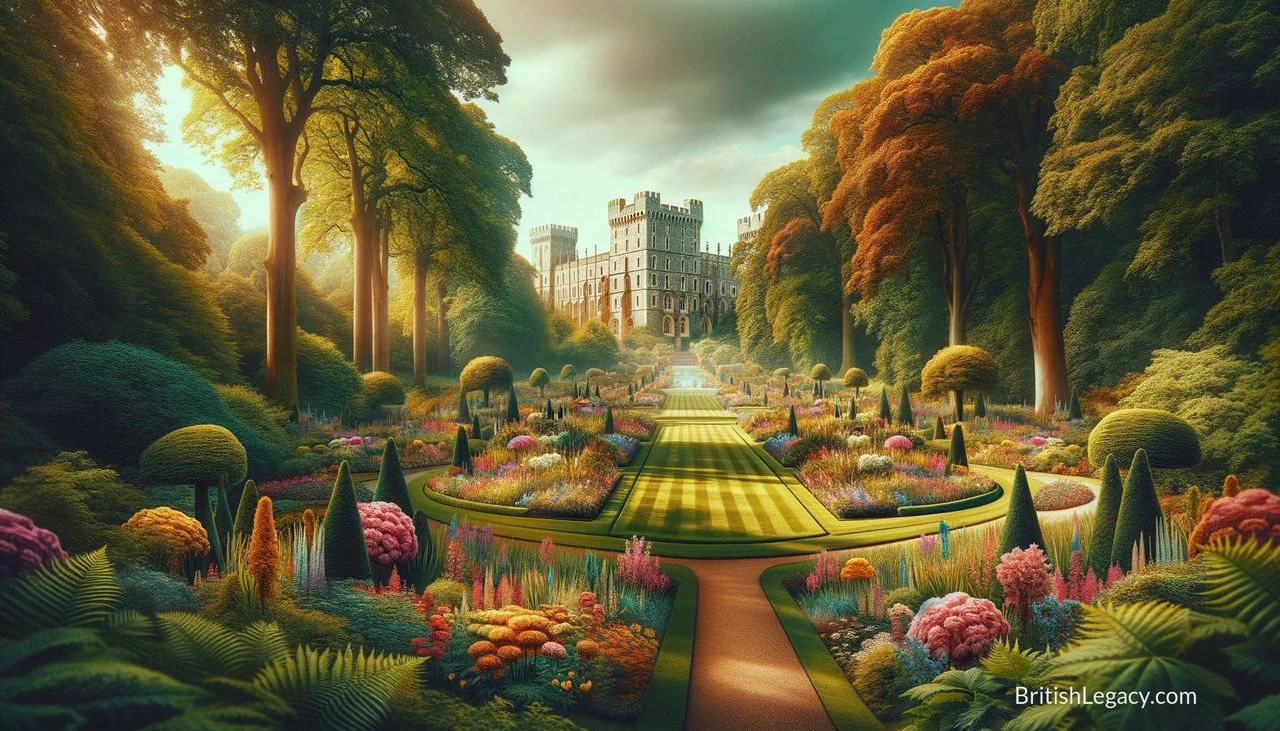
Windsor Great Park is a landscape shaped by royal use and public enjoyment. Beside Windsor Castle, its woods, gardens and walking routes include both carefully designed destinations and broad open spaces. The Long Walk draws the eye towards the Castle; the Savill Garden and Valley Gardens offer a different experience, with cultivated planting and seasonal colour. Together, these places make the park more than a backdrop to royal history: they are part of a living landscape used for recreation and shared with visitors.
From royal hunting ground to public landscape
The park’s origins are associated with William the Conqueror, who is said to have established it as a hunting ground in the eleventh century. Its closeness to Windsor Castle tied the landscape to the monarchy, and successive monarchs shaped it over time. The account of the park describes a gradual change from woodland and hunting grounds towards a managed estate, a history reflected in the contrast between its formal routes, gardens and more natural areas.
That royal history is visible in the Long Walk, a three-mile avenue leading towards Windsor Castle. Traditionally dated to the reign of Charles II, the route gives visitors a direct view of the Castle and a strong sense of the relationship between the residence and its surrounding parkland. Its scale makes it both a practical walking route and a defining feature of the landscape.
Gardens and changing seasons
The Savill Garden brings a more intimate scale to the park. Created in the 1930s by Sir Eric Savill, it covers 35 acres and is known for varied planting and seasonal displays. The Woodland Garden and Summer Garden give different character to parts of the site, while the wider gardens invite visitors to notice changes in colour and growth through the year. Rather than a single fixed vista, the experience comes from moving among distinct planted areas.
The Valley Gardens offer another kind of seasonal interest, with flowers, heathers, magnolias and azaleas. The combination of these gardens with the avenue, woodland and open parkland gives Windsor Great Park a range of landscapes to explore. The setting is also described as habitat for red deer and many bird species, alongside ancient oak trees. Conservation and public access are presented as continuing considerations in the care of the park.
Gatherings, recreation and public use
The park has also served as a place for large gatherings. In 1929 it hosted celebrations for the Boy Scouts’ Jamboree, an international event attended by tens of thousands. The occasion connected the landscape with a different kind of public life: one based not on royal ceremony but on an international meeting of young people.
Today, Windsor Great Park is described as managed by the Crown Estate, with conservation, public access and royal tradition all part of its role. The Royal Windsor Horse Show and outdoor theatre productions bring events into the landscape, while everyday visitors use its paths and open spaces for walks, runs, picnics and time outdoors. These uses sit alongside, rather than erase, the park’s history and designed features.
Why Windsor Great Park deserves a place in British Legacy
Windsor Great Park deserves a place in British Legacy because its significance lies in the way royal history and public use meet in a single landscape. Its association with the monarchy is visible in its relationship with Windsor Castle and in features such as the Long Walk. Yet the park is not only a setting for royal history: its gardens, woodland and open spaces give visitors ways to experience and enjoy the landscape directly.
The Savill Garden and Valley Gardens show how designed planting contributes to that experience, while the park’s routes and open areas support recreation and gatherings, from everyday walks to the 1929 Jamboree and present-day events. Its reported wildlife and ancient trees also give conservation a place alongside public access. This combination of historical association, horticultural interest and public use explains the park’s British connection without reducing it to a royal symbol. It remains a place where a long past and contemporary outdoor life share the same ground.