In Titus Andronicus, revenge does not settle a score; it multiplies the damage. Shakespeare’s early tragedy places a Roman general and his family in a sequence of political decisions and retaliatory violence. Its graphic plot, in which each act of vengeance provokes another, gives the play a distinctive and unsettling place in Shakespeare’s dramatic work.
A Roman tragedy in the Elizabethan theatre
The play is set in a fictional ancient Rome. Its composition has been dated to between 1588 and 1593, though no precise date is established here. The early performance history is uncertain too: the first performance is placed in the late sixteenth century, with the Rose Theatre and the court of Elizabeth I offered as possibilities rather than confirmed venues.
The play’s macabre tone belongs to a period associated with an interest in the grotesque and with the popularity of revenge tragedy. Its violence has also been compared with themes in Seneca’s Roman plays. The play was initially popular, according to the existing account, but later fell out of favour for centuries amid criticism of its sensational violence. The broad outline of that reception is clear, while its particulars remain unspecified.
How the revenge begins
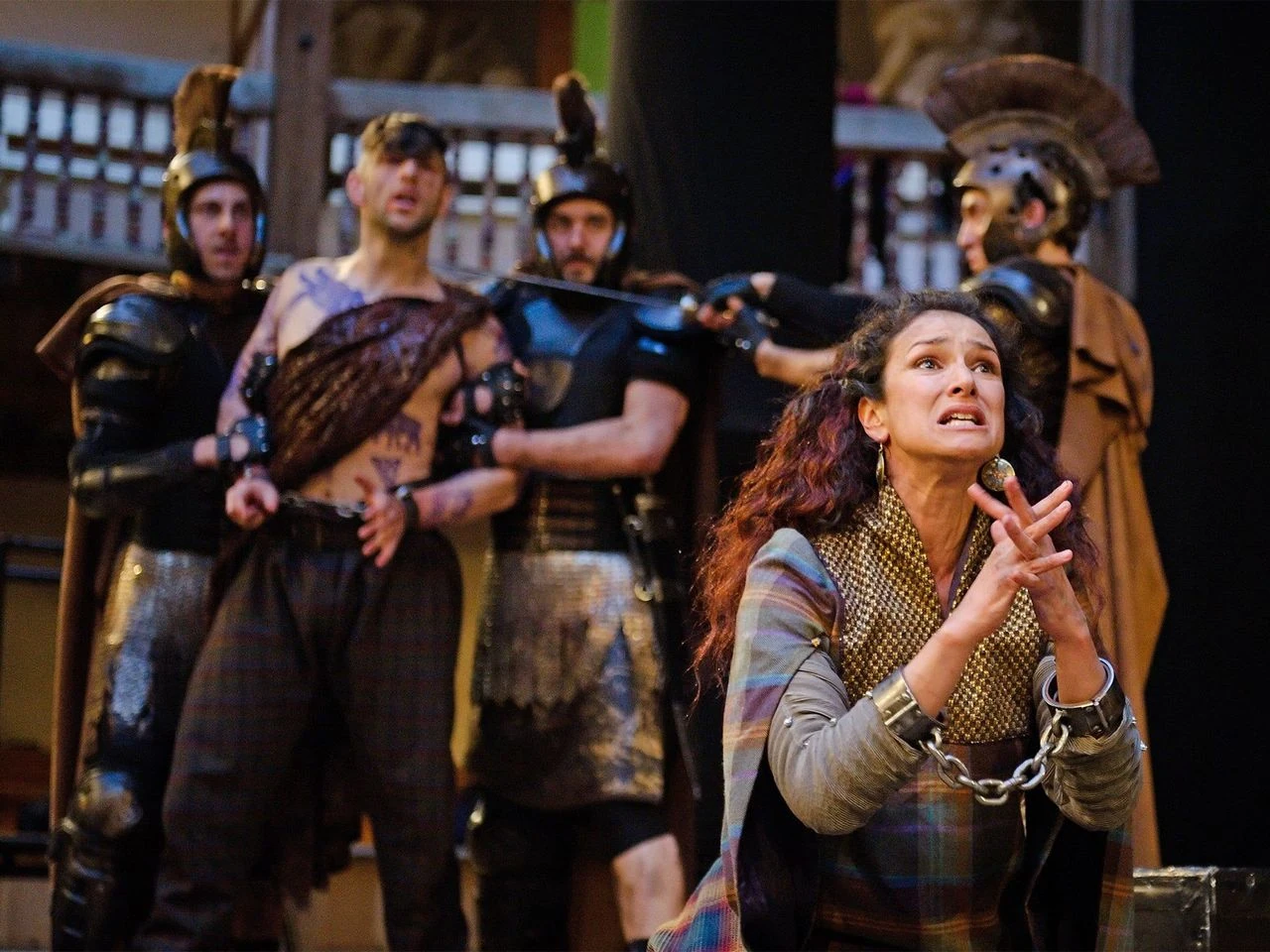
Titus returns from war against the Goths as a Roman general. He has lost sons in the conflict and sacrifices Tamora’s eldest son, a captive, in honour of his own dead children. Tamora, Queen of the Goths, pleads for her son’s life, but Titus refuses. His decision sets the cycle of revenge in motion.
Tamora later becomes empress through her marriage to Saturninus, the Roman emperor. With political power on her side, she pursues vengeance against Titus and his family. Her sons, Demetrius and Chiron, rape and mutilate Titus’s daughter, Lavinia. The attack and the wider destruction around him leave Titus overwhelmed by grief and rage.
At the climax, Titus kills Demetrius and Chiron and serves them to Tamora at a feast. Titus is killed in the escalating violence, and Tamora also dies. The ending gives no easy resolution: the retaliatory acts have consumed both the family that Titus sought to avenge and the people who set out to punish him.
Changing fortunes on stage and screen
The play’s reputation changed over time. After falling out of favour because of its sensational violence, it drew renewed attention in the twentieth century. Peter Brook’s production in the 1950s and Julie Taymor’s 1999 film adaptation are identified as notable examples of that revival.
Those productions brought the play’s violence and its cycle of retaliation into renewed view. Its subject is not simply revenge as an act of punishment: the plot follows the damage as it spreads through families and political power. The starkness that once drew criticism is also central to the play’s continuing dramatic challenge.
Why Titus Andronicus deserves a place in British Legacy
Titus Andronicus merits a place in British Legacy as an early Shakespeare tragedy that makes the consequences of revenge its organising force. Titus’s sacrifice of Tamora’s son initiates a chain of reprisals; the attack on Lavinia, the revenge feast and the deaths at the end show how that chain expands rather than restores order. The story is set in Rome, not Britain, but its place in Shakespeare’s work connects it directly to the history of British drama.
The play’s reception adds another specific dimension to that legacy. It fell out of favour for centuries because of its violence, then received renewed attention through Peter Brook’s 1950s production and Julie Taymor’s 1999 film. Those examples show that its theatrical life did not end with early criticism. Its enduring value need not be overstated as an influence on all modern drama: the evidence supports a more grounded claim. It remains a challenging work in Shakespeare’s body of plays, asking audiences to confront how grief, political power and retaliation can feed one another.