In Troilus and Cressida, a promise of undying love is made in a city at war, while generals scheme over reputation and a celebrated warrior refuses to fight. The lovers’ story occupies only part of the play: Shakespeare sets it beside the Greek and Trojan commanders’ efforts to manage pride, authority and military honour. The result shifts between bawdy comedy and tragic gloom, leaving its audience to judge people whose conduct rarely matches their legends.
A play between categories
Shakespeare probably wrote the play around 1602, during the long history of his work for the English stage. Its first printed title, in the 1609 quarto, called it The Famous Historie of Troylus and Cresseid; the First Folio later placed it among the tragedies as The Tragedie of Troylus and Cressida. Neither label settles its character. The tone moves sharply from comic, often bawdy exchanges to the darkness of war, and the play has often been discussed as one of Shakespeare’s problem plays.
Its early performance history is uncertain. A Stationers’ Register entry from 1603 records the play as acted by the Lord Chamberlain’s Men. The two 1609 quarto versions then offer conflicting claims: one says it had been performed at the Globe by the King’s Men, while the other describes it as a new play that had never been staged. Those accounts do not establish when, or how often, it was performed. The uncertainty is part of the play’s history, not a reason to turn a disputed performance record into a confident opening-night story.
Two stories in a besieged city
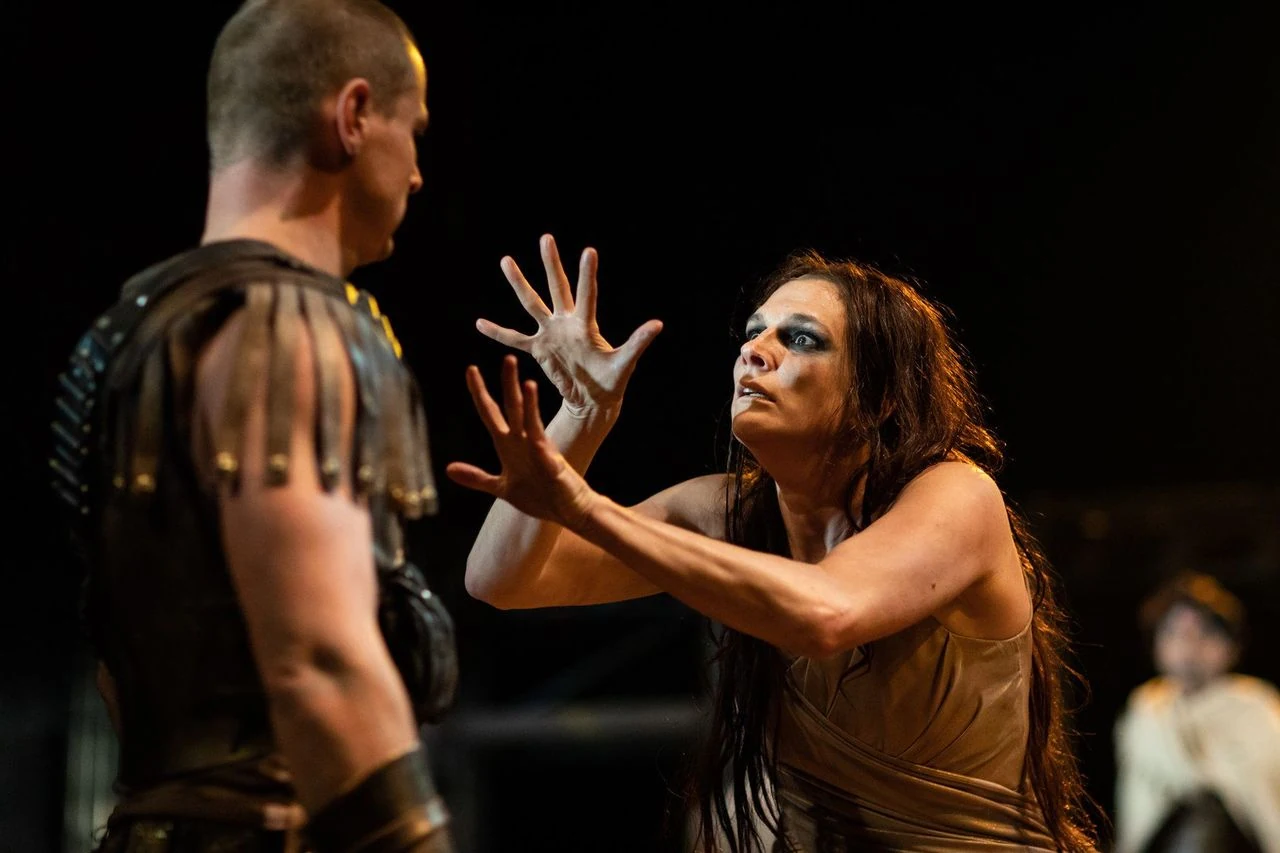
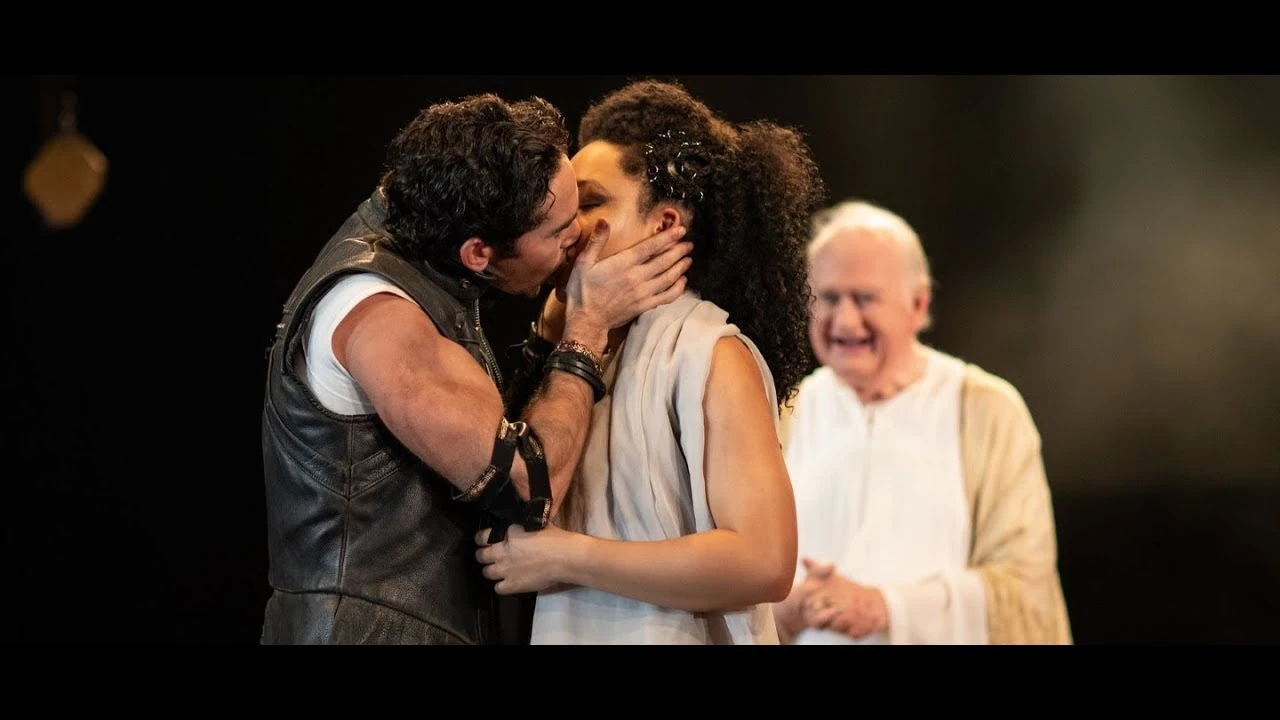
The setting is the Trojan War. In Troy, Prince Troilus confides to Pandarus, his uncle and Cressida’s go-between, that love has made him unable to fight. Cressida returns his feelings but initially holds him at a distance. Pandarus arranges their meeting, and the couple pledge fidelity. Their private assurances are soon tested by the public demands of a city and a war.
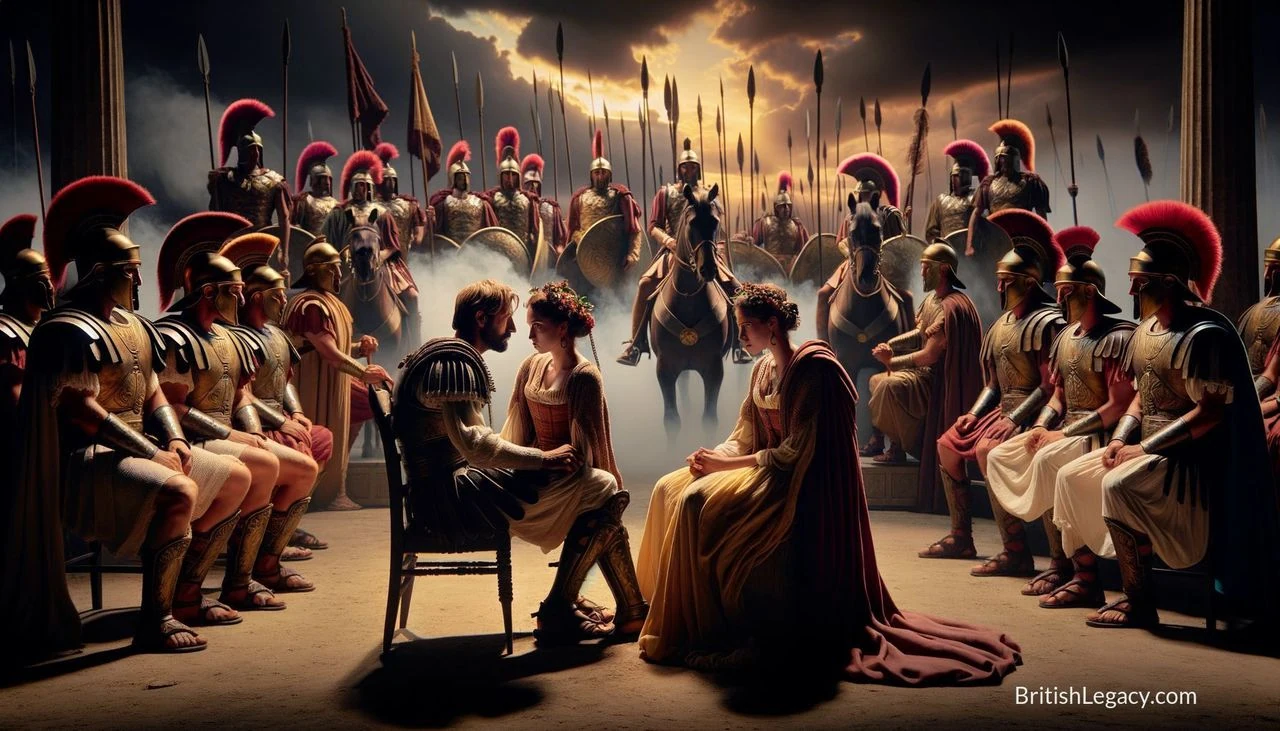
Cressida’s father, Calchas, has joined the Greek camp. He asks the Greek commander Agamemnon to exchange the captured Trojan Antenor for his daughter, and the exchange is arranged. Troilus and Cressida part with promises that she will remain true. In the Greek camp she is greeted by the commanders, who pass her around in a humiliating display of power. Later, Troilus watches her with Diomedes and sees her give him a love-token. His response is to swear revenge. The play gives the lovers’ separation and its aftermath no reassuring resolution.
That story is set alongside a struggle over military leadership. The Greek army is divided while Achilles stays in his tent with Patroclus rather than fighting. Ulysses argues that the problem is not simply the length of the siege: authority has broken down, and warriors are preoccupied with status. When Hector challenges a Greek to single combat, the leaders choose Ajax, partly to provoke Achilles into returning to battle. The plan exposes the Greeks’ calculations as well as their anxiety about the Trojan champion.
In Troy, the debate is different but no less political. Hector argues that Helen is not worth the human cost of continuing the war and points out that passion is clouding the judgement of the younger men. Cassandra warns that Troy will burn if Helen is not returned. Troilus rejects her warning and argues that Helen has become a matter of honour. Hector yields, and the war continues. The scene makes the cost of honour a decision made by people, rather than an abstract virtue.
From ancient war to medieval romance
Shakespeare draws on two strands of storytelling that have different origins. The conflict between the Greeks and Trojans belongs to the ancient Troy story, especially Homer’s Iliad. The romance of Troilus and Cressida, by contrast, developed in medieval writing and is not part of Greek mythology. Shakespeare knew Chaucer’s Troilus and Criseyde, and the story had also circulated in works such as John Lydgate’s Troy Book and Caxton’s English version of the Recuyell of the Historyes of Troye.
That layered inheritance matters to the play’s treatment of reputation. Its characters enter with the weight of familiar stories behind them, but Shakespeare does not simply repeat heroic legend. Hector makes an argument against the war and then returns to battle; Troilus speaks of fidelity and turns towards vengeance; the Greek leaders praise and manipulate one another. The play’s changing tone complicates the gap between public ideals and private conduct.
Honour, pride and Hector’s death
The duel between Hector and Ajax does not settle the conflict: the combatants discover that they are related and make peace. Later, after Patroclus is killed, Achilles returns to battle. The final fighting is fractured rather than triumphant. Hector spares Achilles when he finds him unarmed; later, after Hector has removed his armour, Achilles and his men surround and kill him. The Greeks have not conquered Troy by the play’s end. Instead, the Trojans learn that their great champion is dead, and Troilus condemns Pandarus as he carries that news.
The ending denies the audience a conventional military conclusion. Achilles does not simply defeat Hector in a fair contest: his men kill the unarmed Trojan. The Greek and Trojan leaders remain caught in the consequences of their choices, while the lovers’ promises have been overtaken by the exchange and by Cressida’s encounter with Diomedes. War, romance and reputation do not resolve into a neat moral lesson. Their collision is the play’s point of pressure.
Why Troilus and Cressida deserves a place in British Legacy
Troilus and Cressida deserves attention in British theatre history not because it offers an uncomplicated picture of British life, but because it is a distinctive work by an English playwright whose drama continues to be read and staged. Its sources bring ancient war stories and medieval English writing into the same play. Chaucer’s account of Troilus and Criseyde, the English tradition of Troy narratives, and the story of Achilles and Hector meet in Shakespeare’s treatment of love, power and war. That combination makes the play a particularly clear example of how British drama has reworked stories inherited from elsewhere rather than merely repeating them.
Its value also lies in its resistance to easy classification. The quarto calls it a history; the First Folio groups it with the tragedies; its comedy, bitterness and unresolved ending continue to invite debate. The conflicting records of its early performance and publication are themselves part of the work’s unusual place in Shakespeare’s canon. For readers and theatre-makers, the play offers a way to examine how war turns honour into political currency, how leaders use reputation to control one another, and how private promises fare under public pressure. Its British legacy is not a claim that its setting is British: it is the continuing contribution of a British playwright to a theatrical tradition willing to revisit difficult stories and leave their contradictions visible.
Sources
Adapted in part from Troilus and Cressida by Wikipedia contributors, under CC BY-SA 4.0. Text has been edited and combined with the existing article; this adapted text is shared under the same licence. Contributor history.