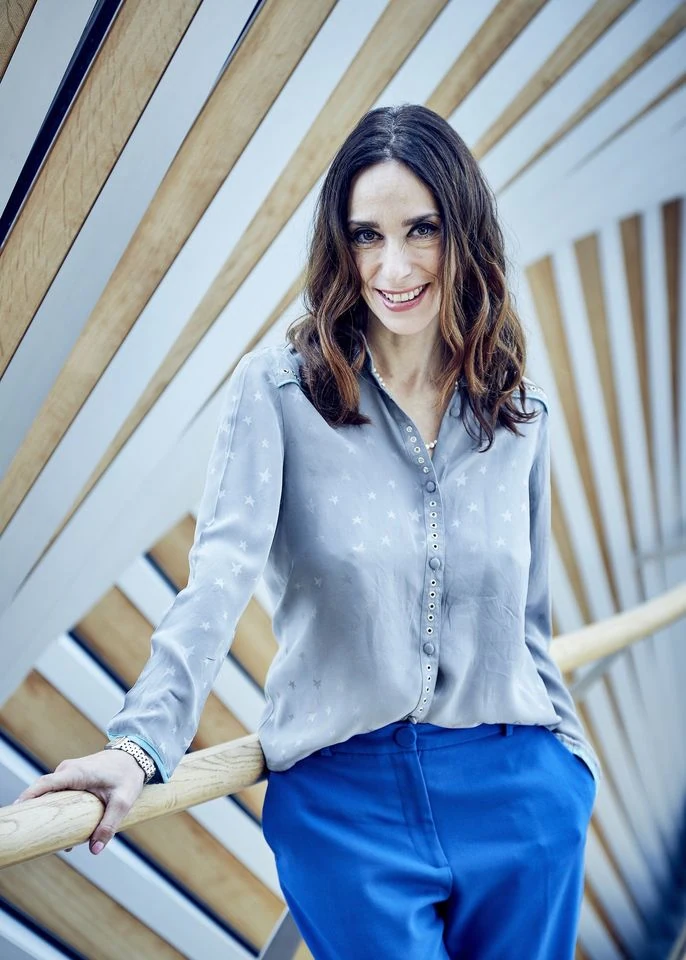
Viviana Durante’s career joined the dramatic demands of ballet to a path through some of its most prominent companies. Born in Rome, she trained at the Royal Ballet School in London and joined the Royal Ballet aged 17. At 21, she became the company’s youngest principal dancer. Her performances in works including Kenneth MacMillan’s Manon and Romeo and Juliet established her as a leading interpreter of the repertoire; later, coaching, teaching and directing extended her work beyond the stage.
From Rome to the Royal Ballet
Durante was born in Rome on 8 May 1967 and began ballet at the Teatro dell’Opera di Roma aged six. The ballerina Galina Samsova spotted her, and Durante joined the Royal Ballet School’s lower school at White Lodge in Richmond Park. A year later, she appeared in I Really Want to Dance, a Thames Television documentary. After progressing to the upper school, she joined the Royal Ballet Company in 1984, aged 17.
Her rise was strikingly swift. Two years after joining the company, she took over as Odette and Odile in Swan Lake during a performance, although she had not been taught the role. At 21, she became the Royal Ballet’s youngest principal dancer. In 1990, aged 22, she became the youngest artist to receive the Evening Standard Ballet Award.
These milestones mark a progression through training and demanding work in a major repertory company. Her British career took shape within the Royal Ballet School and the Royal Ballet, even as her performances and guest appearances later reached audiences internationally.
MacMillan, Ashton and the dramatic repertory
At the Royal Ballet, Durante danced leading roles in works by Kenneth MacMillan and Frederick Ashton, as well as in the classical repertory. MacMillan ballets included Manon, Romeo and Juliet, Mayerling, Requiem and Anastasia. In Ashton’s works she performed in Cinderella, La fille mal gardée, Ondine, A Month in the Country and A Midsummer Night’s Dream. Her classical roles included Giselle, Swan Lake, The Nutcracker and The Sleeping Beauty.
Her work was not confined to established parts. She created roles in new ballets, including MacMillan’s The Judas Tree and Winter Dreams, based on Anton Chekhov’s Three Sisters. Other choreographers whose work she helped introduce included Wayne McGregor, Ashley Page, Will Tuckett, David Bintley and Amedeo Amodio. Durante was both an interpreter of familiar repertory and a dancer involved in bringing new work to the stage.
Her role as Anastasia earned her a Laurence Olivier Award nomination in 1997. Critical accounts highlighted her combination of dancing and acting, particularly in character-led works. Her performances in Manon and Romeo and Juliet belong to a broader body of work in which dramatic expression and classical technique were closely joined.
In 1992, Durante and fellow Royal Ballet principal Darcey Bussell were the subjects of a South Bank Show documentary, Two Ballerinas at the Royal Ballet. The following year, both were invited by New York City Ballet to take part in its Balanchine Celebration. In 1995, Durante appeared in the title role in a 90-minute version of The Sleeping Beauty, later televised in the United States. She returned to the Rome stage as a guest artist in 1998, one of a number of international appearances.
A career beyond one company
Durante joined American Ballet Theatre as a principal dancer for its 1999 spring season at New York’s Metropolitan Opera House. She also appeared as a guest with companies including La Scala in Milan, Tokyo Ballet and Dresden Semperoper Ballett. From 2003 to 2012, she was the leading ballerina of Japan’s K-Ballet, founded by fellow Royal Ballet alumnus Tetsuya Kumakawa.
Her roles during this period continued to range across styles and choreographers. She performed in ballets by George Balanchine, Rudolf Nureyev, Uwe Scholz and Roland Petit, among others, as well as in works by David Bintley. The career that began in the Royal Ballet’s repertory became international, without losing its connection to the training and artistic experience she had gained in London.
During her Royal Ballet years, her public profile also extended beyond performances. She appeared on magazine covers, modelled for photographic shoots and fashion shows, and featured in commercials. In 1999, a disagreement with the Royal Ballet, reported in the media after a dispute over a casting change, became a national news story. She left the company in 2001 to pursue freelance work. That departure marked a change in her professional setting, not the end of her performing career.
Coaching, teaching and directing
Alongside performing, Durante developed work as a teacher and coach. She holds diplomas in dance education from the Royal Ballet School and Trinity College, London. In 2016, she returned to the Royal Ballet as a regular guest coach, bringing her experience of its repertory back into the company’s rehearsal rooms.
She founded the Viviana Durante Company in 2017. Its first production, Kenneth MacMillan: Steps Back in Time, opened at the Barbican Centre. In 2020, the company presented Isadora Now at the same venue. These productions connected her performance history with projects that revisited and presented dance to audiences.
Durante also took on leadership at English National Ballet School, becoming Director of Dance in 2019 and Artistic Director in 2020. She is a regular juror at international ballet competitions, including the Prix de Lausanne and the Beijing International Ballet Competition, and is a patron of the Hammond School and New English Ballet Theatre.
Other work has crossed into theatre and dance-making. In 2010, a work choreographed by Durante premiered at Dance Base in Edinburgh. That year she collaborated with Richard Eyre on a dance adaptation of the film Truly, Madly, Deeply. She was also a consultant and wrote the foreword for the 2018 book Ballet: The Definitive Illustrated History.
Why Viviana Durante deserves a place in British Legacy
Viviana Durante’s place in British Legacy rests on a substantial and specific connection to British dance. The Royal Ballet School trained her after her early studies in Rome; the Royal Ballet became the company in which she advanced from a 17-year-old newcomer to its youngest principal dancer. Her performances encompassed works by MacMillan and Ashton, central choreographers in the company’s repertory, while her creation of roles in new ballets connected her to the continuing development of dance. This is not simply the story of an international star appearing in Britain: London’s institutions shaped a significant part of her artistic formation and career.
Her contribution continued after she left the Royal Ballet. Returning as a guest coach, founding a company that presented work at the Barbican, and taking senior roles at English National Ballet School brought her experience into performance, rehearsal and training. Each is a distinct form of cultural work: coaching passes repertory knowledge to dancers, productions give audiences opportunities to encounter ballet, and a school prepares artists for the future. Durante’s career also shows how British ballet has been shaped by artists born elsewhere who trained and worked within its institutions. Her legacy is therefore both personal and institutional: a record of dramatic performance, creative collaboration and sustained involvement in British dance.
Sources
Adapted in part from Viviana Durante by Wikipedia contributors, under CC BY-SA 4.0. Text has been edited and combined with the existing article; this adapted text is shared under the same licence. Contributor history.