In War Horse, a boy’s search for his horse unfolds against the upheaval of the First World War. Michael Morpurgo’s novel became a stage adaptation by Nick Stafford, first performed at the National Theatre in London in 2007. Its central theatrical challenge was making Joey, a horse caught up in the conflict, present on stage. Life-sized puppets by South Africa’s Handspring Puppet Company gave the production a striking way to tell a story about loyalty, separation and war.
From novel to National Theatre stage
Morpurgo’s novel was first published in 1982. Stafford adapted it for the stage, where the story centres on Albert Narracott, a young boy from Devon, and Joey, his horse. When Joey is sold to the cavalry and sent to France, the two are separated. Joey passes through the hands of both sides in the war; Albert, too young to enlist, sets out to find him and bring him home.
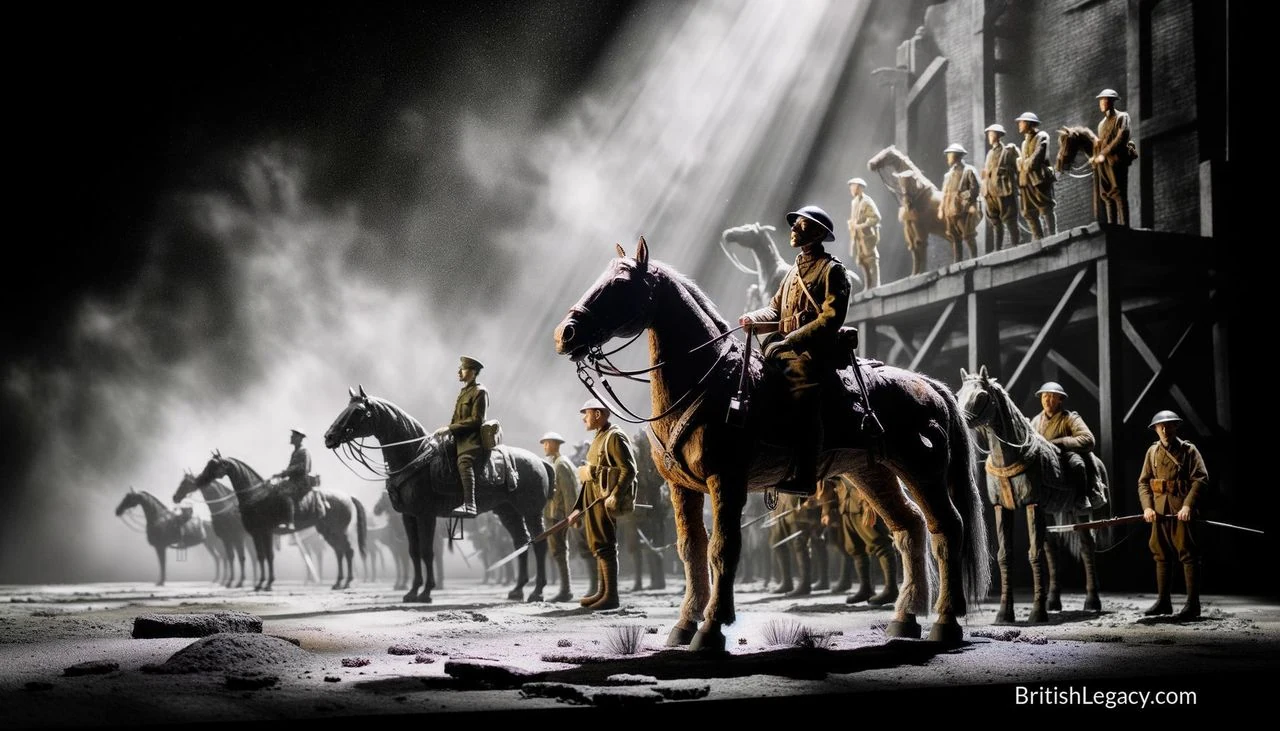
The plot follows their separation across a landscape shaped by conflict. Its emotional focus is not only on Albert’s determination but also on what the war demands of animals. Joey’s journey brings him into the harsh conditions of the front, while the possibility of reunion gives Albert’s search its purpose. The stage adaptation carries that story through a close, personal bond rather than through a broad account of military events.
Making Joey move
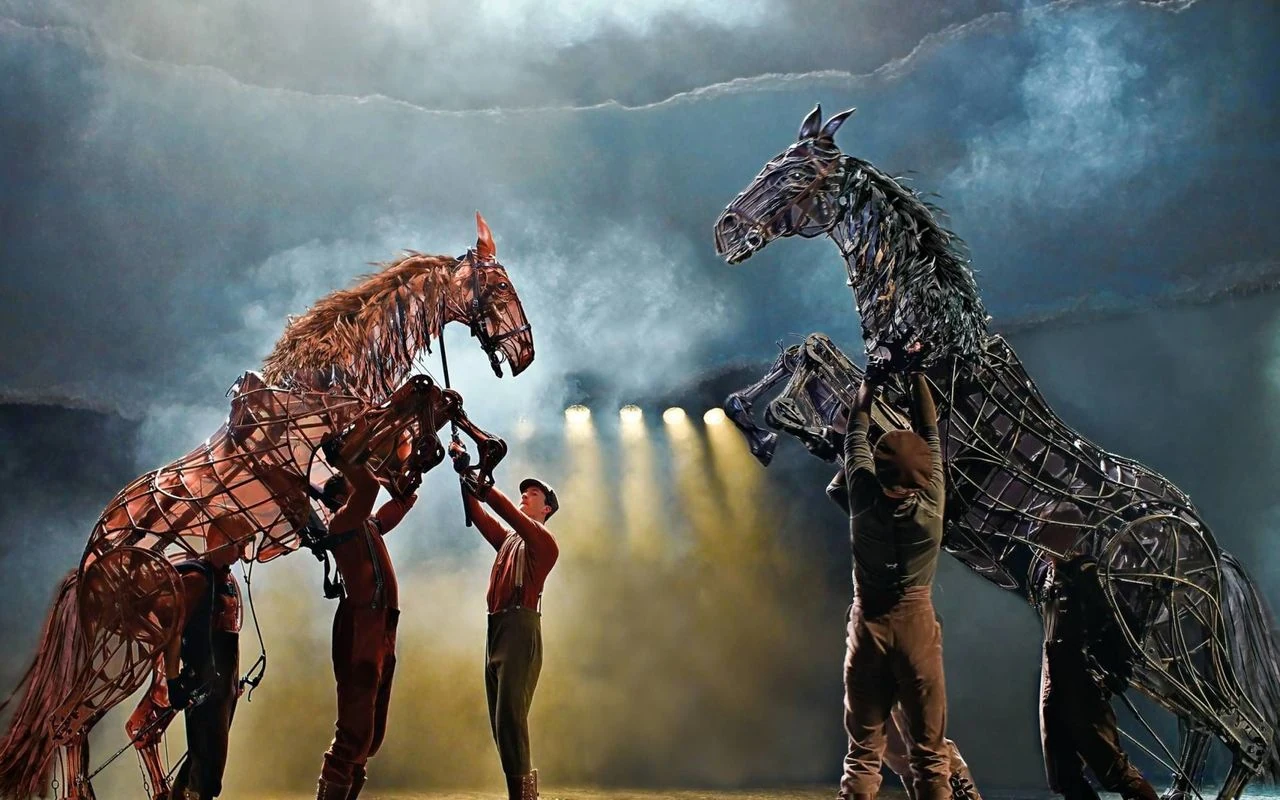
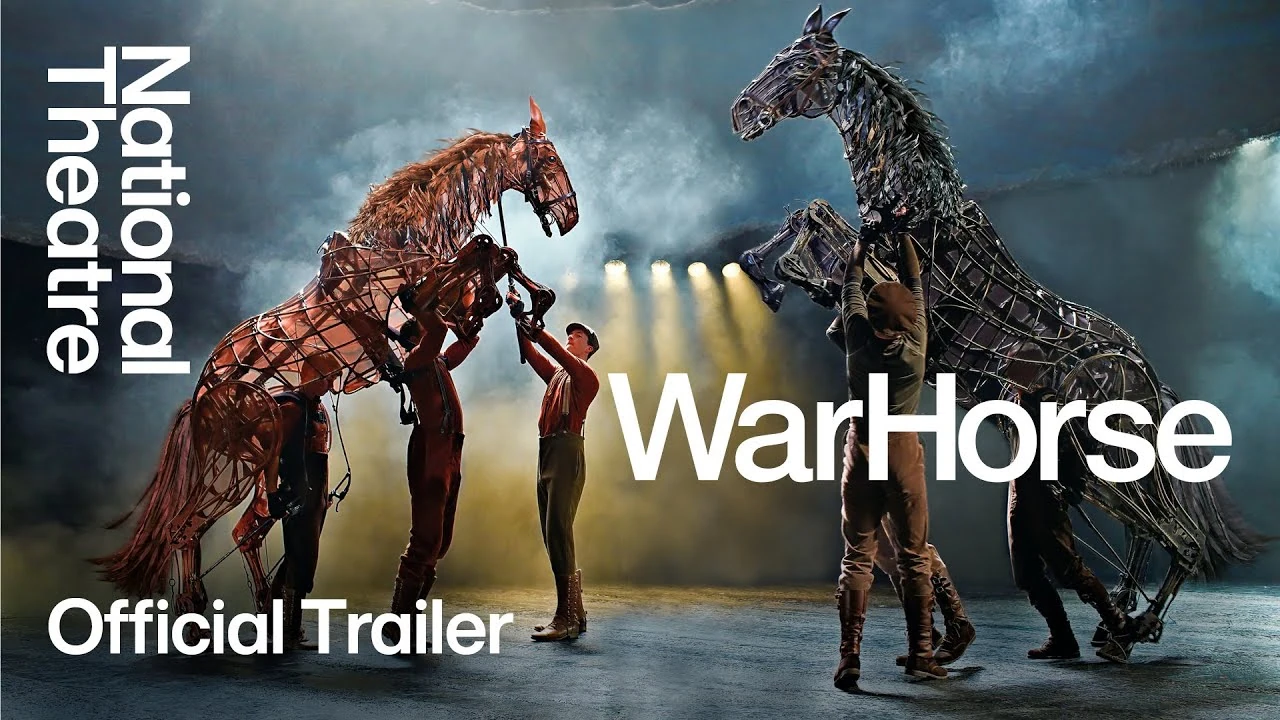
The production’s life-sized horse puppets were created by the South African company Handspring Puppet Company. Their scale allowed Joey to occupy the stage as a visible presence, while the work of the puppeteers made his movement part of the storytelling. The design gives the audience a way to follow a horse’s experience without turning him into a conventional human character.
That approach was central to the production’s identity: the puppets were not decoration around the story, but the means by which its most important animal character could be represented. The contrast between the physical construction of a puppet and the life it appears to have can make the audience attend closely to small movements. In War Horse, that theatrical focus serves a narrative about a relationship disrupted by war.
A London production with an international life
After its National Theatre premiere on 17 October 2007, the production reached the West End. It played at the New London Theatre from 2009 to 2016; the theatre is now called the Gillian Lynne Theatre. A Broadway production opened at the Vivian Beaumont Theater in 2011, and the play was also staged in other venues around the world.
The story also reached cinema audiences in a 2011 film directed by Steven Spielberg. The stage and film versions brought Morpurgo’s wartime story to different audiences, though the theatre production had a particular resource in the live puppetry: Joey’s presence was created in front of the audience, through movement and performance.
Why War Horse deserves a place in British Legacy
War Horse belongs in British Legacy because its stage history connects a novel by British author Michael Morpurgo with a major London theatre and an adaptation by Nick Stafford. The National Theatre premiere in 2007 established the play in British theatre before its West End run and Broadway opening carried it to further audiences. That chronology gives the production a specific British connection, rather than relying on general claims about national influence.
Its other lasting point of interest is how it made an animal’s experience central to a story of war. Handspring Puppet Company’s life-sized horses gave the production a distinctive theatrical language, allowing Joey’s movements to carry meaning without words. Alongside Albert’s search, that staging asks audiences to consider how conflict reaches beyond the people who fight it. The play’s combination of a personal relationship, wartime setting and visible stagecraft makes it a useful example of adaptation: a story moves from book to stage, and the demands of live performance shape how it is told.