Windsor Castle began as a Norman stronghold guarding the approaches to London. Over the centuries it became a royal palace, a centre of ceremony and a home repeatedly refashioned by its occupants. Its long history is visible in the contrast between medieval fortifications, the Gothic stonework of St George’s Chapel and the grand State Apartments. Still a working royal residence, it is also a place where the changing uses and tastes of the monarchy have left their mark.
A Norman fortress beside the Thames
William the Conqueror commissioned Windsor Castle in the decade after the Norman Conquest of 1066. It formed part of a defensive ring of castles around London, positioned near the Thames, an important route into the capital, and Windsor Forest, a royal hunting ground. The first castle was built of timber as a motte-and-bailey fortification: a keep stood on a man-made mound, protected by a bailey, or enclosed outer yard. A second bailey was later added to the east, followed by one to the west, establishing the plan that underlies the modern castle.
Windsor was not initially a royal home. Henry I was the first king to use it as a residence, celebrating Whitsuntide there in 1110. The castle’s role and fabric then grew together. Henry II replaced timber defences with stone walls and towers; John used Windsor as his base during the negotiations that preceded Magna Carta at nearby Runnymede. In 1216 the castle endured a siege during the First Barons’ War. Henry III repaired and strengthened its defences, while also commissioning a more luxurious palace. The combination of military stronghold and royal accommodation would define Windsor for centuries.
Palace, chapel and royal ceremony
Edward III, born at Windsor, undertook a major rebuilding programme between 1350 and 1377. William of Wykeham oversaw the work, which reshaped the Upper Ward and created a grand palace. Edward also made Windsor the headquarters of the Order of the Garter, the chivalric order he established in the mid-14th century. The castle’s ceremonial role continues to be expressed in the annual Garter service at St George’s Chapel.
The chapel is one of Windsor’s most distinctive buildings. Its present form was begun by Edward IV in 1475 and developed in the Perpendicular Gothic style. It is both a place of worship and a royal burial site: Henry VIII, Jane Seymour and Charles I are buried in its vault, while Edward IV lies nearby. The chapel has also hosted royal weddings, including the 2018 marriage of Prince Harry and Meghan Markle.
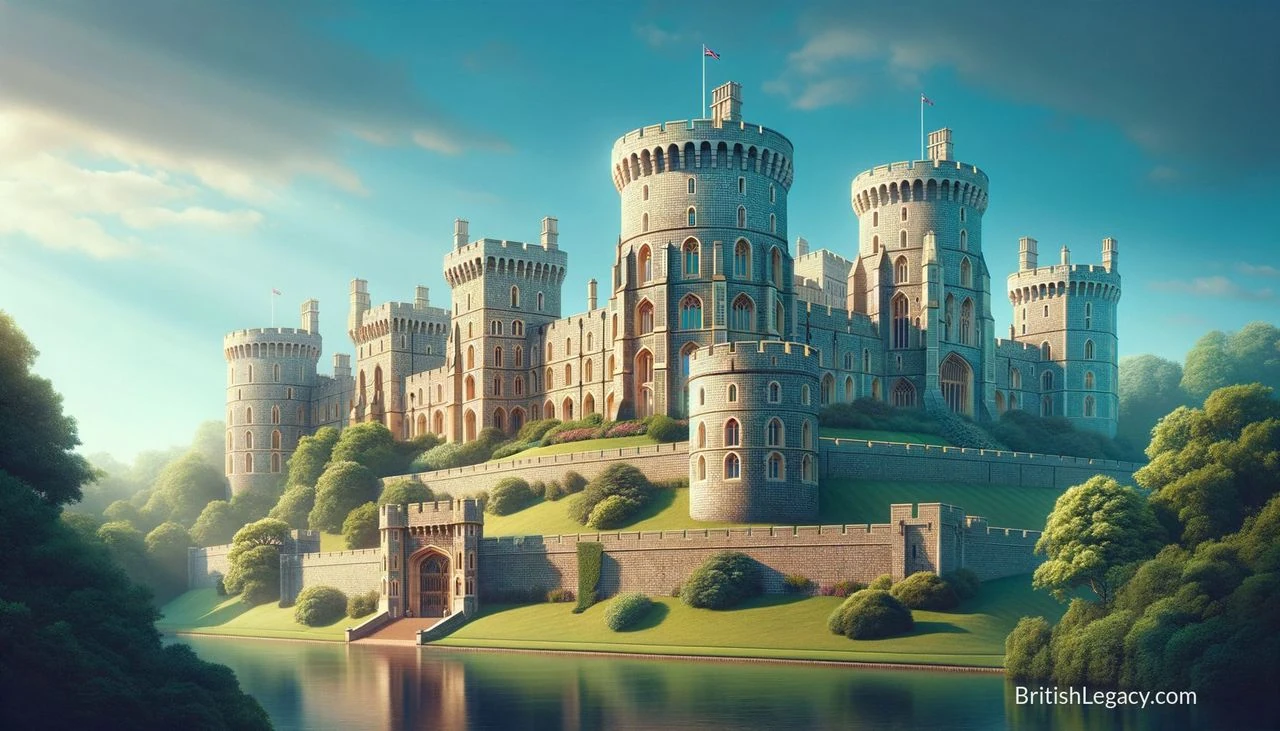
Windsor’s appearance reflects successive choices rather than a single architectural plan. Charles II employed Hugh May to rebuild much of the castle after the upheaval of the Civil War and Interregnum, creating lavish Baroque interiors. In the early 19th century, George IV commissioned Jeffry Wyatville to remodel the castle on a grand scale. Wyatville raised the Round Tower, altered the Upper Ward’s exterior and reshaped the State Apartments. Their interiors combine Rococo, Gothic and Baroque influences, while the castle’s older structure remains visible beneath later work.
War, fire and restoration
Windsor was caught up in the English Civil War. Parliamentary forces took control of the castle, using it as a headquarters and holding Charles I there as a prisoner for periods before his execution in 1649. The Restoration of the monarchy brought another major transformation: Charles II modernised the damaged royal palace and refitted its interiors.
In the Second World War, Windsor served as a refuge for George VI, Queen Elizabeth and their daughters. The royal family stayed at the castle while Buckingham Palace staff and valuable works of art were moved there for safety. The building’s more recent defining crisis came on 20 November 1992, when a fire broke out during renovation work. It burned for 15 hours, destroying nine principal State Apartments and damaging more than 100 other rooms. Firefighters and castle staff worked to contain the blaze and rescue artworks; water used to extinguish the fire also caused extensive damage.
The restoration raised practical and public questions: how the work should be paid for, and whether damaged rooms should be recreated as they were or redesigned. The solution combined public access to Buckingham Palace at selected times and new charges for access to parkland with a restoration that largely followed the castle’s pre-fire appearance. Modern materials and structural improvements were used to reproduce that appearance while allowing some changes to reflect contemporary tastes. The programme was completed in 1997.
A royal home and a public place
Windsor’s uses have shifted with the needs of its royal occupants. Elizabeth II made the castle her principal residence from 2011 until 2022, and it remains a royal home managed by the Royal Household. Its continuing ceremonial role includes the Garter service and state visits. It has also become a major visitor attraction, with public access organised alongside the demands of security and a functioning palace. In 2007, 993,000 people visited the castle.
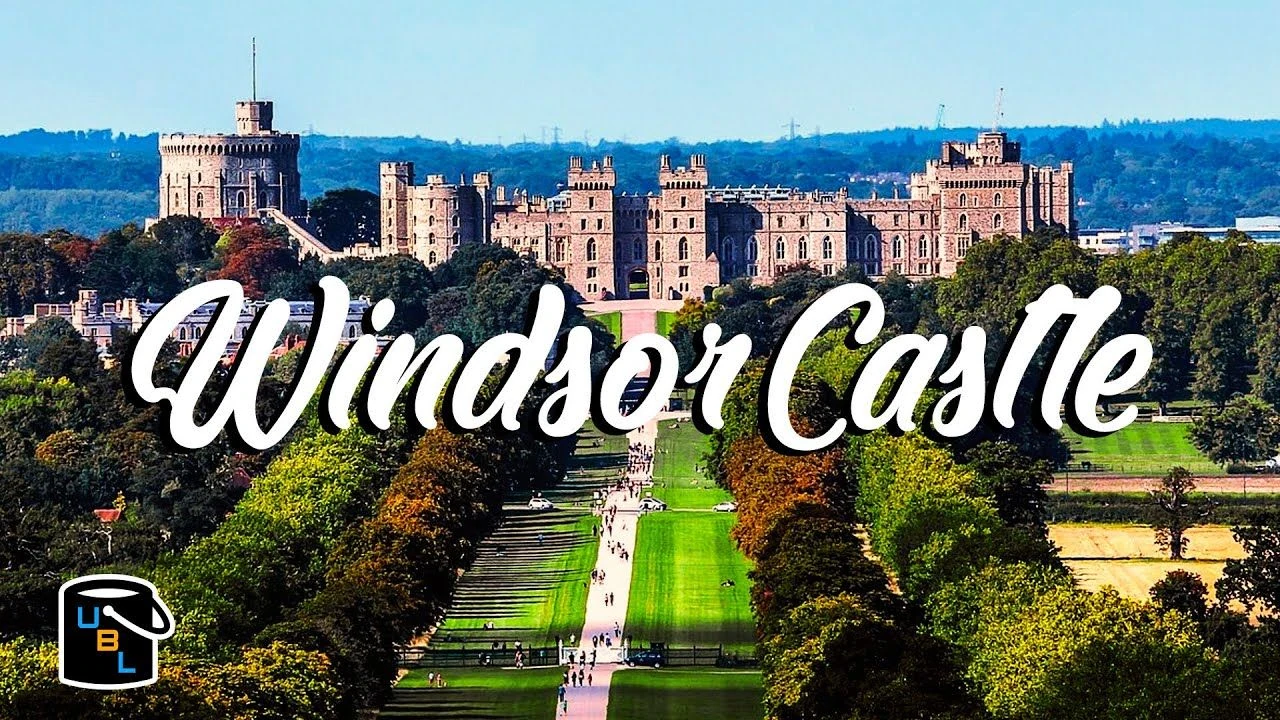
The State Apartments contain works from the Royal Collection, and the castle is closely associated with Queen Mary’s Dolls’ House, a miniature residence designed by the architect Edwin Lutyens and furnished by leading craftspeople and designers. Beyond the walls, the Home Park and Windsor Great Park connect the royal residence to a wider landscape. The Long Walk, an avenue running south from the castle, makes that relationship especially visible. Windsor is not simply a preserved monument: its rooms, grounds and ceremonies continue to serve distinct purposes.
Why Windsor Castle deserves a place in British Legacy
Windsor Castle deserves a place in British Legacy because its history can be read in the building itself. The Norman motte-and-bailey, medieval stone defences, St George’s Chapel, Charles II’s Baroque interiors and George IV’s remodelling show how changing political needs and royal tastes shaped one place over many centuries. Its story also reaches beyond architecture. The castle was a strategic stronghold, a royal residence, a Civil War headquarters and a refuge during the Second World War. Its continuing use for ceremonies and state occasions links those earlier chapters to public life today.
The 1992 fire and the restoration that followed offer a particularly clear example of heritage as practical work. Decisions about cost, access, historical appearance and modern construction shaped how the building could be preserved and used. The result was not simply the return of damaged rooms: it was a renewed working palace and a major public attraction, with access managed alongside royal and security requirements. Windsor’s cultural value also lies in the art and objects it holds, its chapel and its surrounding parks. Together, these features make the castle a specific and enduring record of the institutions, craftsmanship and historical change associated with England and the British monarchy.
Sources
Windsor Castle — Wikipedia revision 1377855934
Adapted in part from Windsor Castle by Wikipedia contributors, under CC BY-SA 4.0. Text has been edited and combined with the existing article; this adapted text is shared under the same licence. Contributor history.