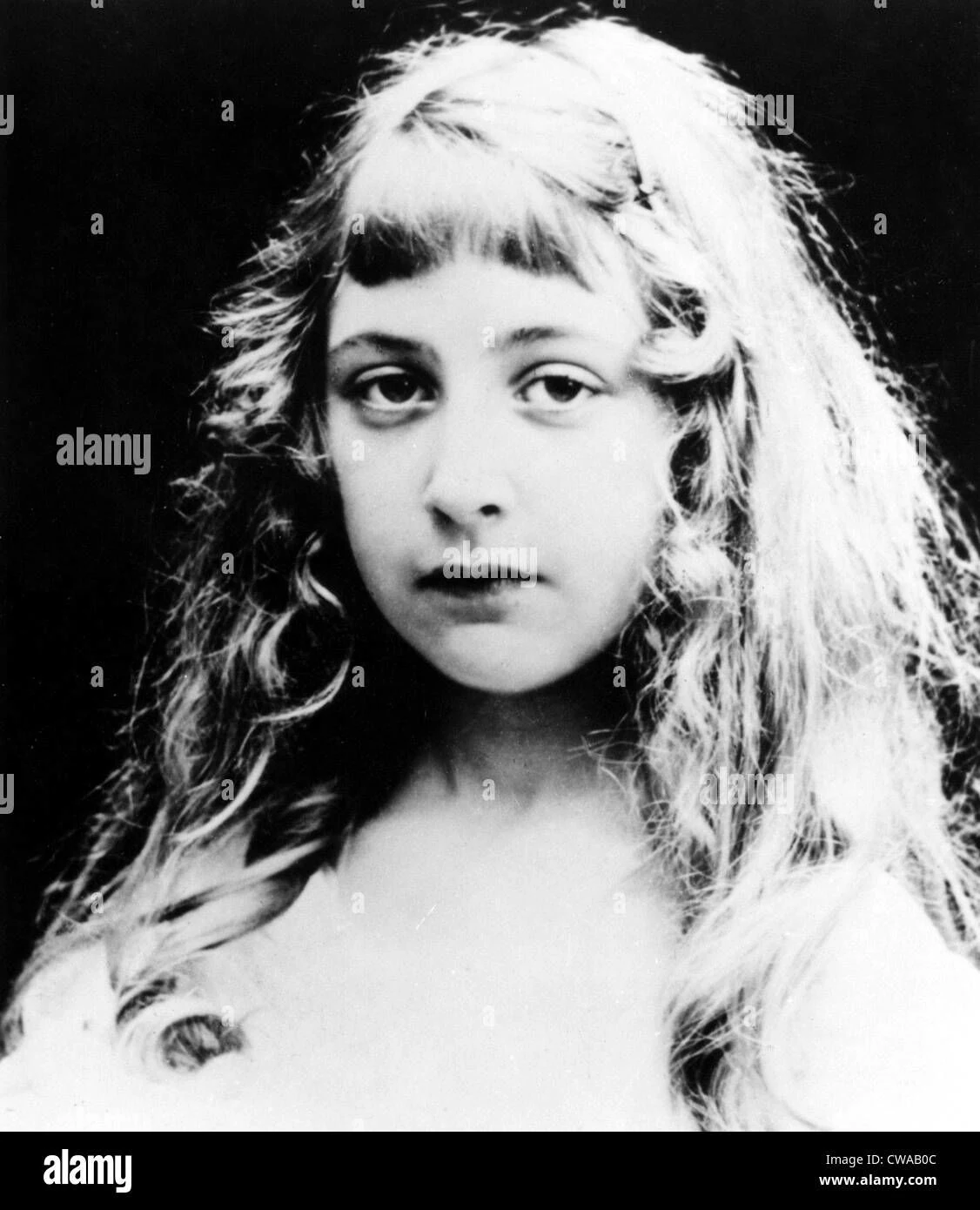
Agatha Christie built her reputation on puzzles whose solutions could be surprising without being arbitrary. Her first detective novel, The Mysterious Affair at Styles, introduced Hercule Poirot in 1920; Miss Marple followed in print in 1927. Across 66 detective novels, short stories, plays and fiction written under another name, Christie made the closed circle of suspects and the final accounting of clues her own. Her career also reached well beyond the page: The Mousetrap opened in London in 1952 and became the world’s longest-running play by initial run.
From Torquay to a first novel
Agatha Mary Clarissa Miller was born in Torquay, Devon, on 15 September 1890, the youngest of three children. Her family educated her at home before she attended schools in Torquay and Paris. She read widely as a child and began writing stories as a young woman. Her first submissions were rejected, as was her early novel, Snow Upon the Desert. Encouraged by the novelist Eden Phillpotts, she continued writing, but her route into print came through a different story.
During the First World War, Christie served in the Voluntary Aid Detachment at a hospital in Torquay. She worked first as a nurse and later as a dispenser, after training and qualifying in pharmacy. That experience gave her practical knowledge of medicines and poisons, which became a recurring resource in her crime fiction. She wrote The Mysterious Affair at Styles in 1916. After rejections, the novel was accepted by The Bodley Head and published in 1920.
The book introduced Poirot, a Belgian refugee and former police officer living in England. Christie drew on the Belgian refugees and soldiers she had encountered in Torquay. The detective’s first case began a long literary career: Poirot appeared in 33 novels and more than 50 short stories. Christie’s other early detective creation, the young couple Tommy and Tuppence Beresford, made their debut in The Secret Adversary in 1922.
Building a world of detectives and clues
Miss Jane Marple first appeared in stories published from 1927, before becoming the central detective in The Murder at the Vicarage in 1930. Unlike Poirot, a professional investigator who prizes method and order, Marple draws on her observation of village life. Christie used both detectives to examine familiar social settings—families, country houses and small communities—where manners could conceal motives and apparently minor details acquire weight.
Christie’s mysteries are not confined to the English village. She placed crimes on trains, ships, islands and archaeological sites, and regularly closed the circle of possible suspects around people who knew one another or had been brought together by circumstance. Her solutions often depend on everyday objects, careful timing and a reader’s assumptions about character. At the end, Poirot commonly gathers the survivors to explain the evidence; other novels take different approaches. The Murder of Roger Ackroyd (1926), Murder on the Orient Express (1934), And Then There Were None (1939) and Death on the Nile (1937) show the range of settings and structures she brought to the genre.
Christie also wrote six novels as Mary Westmacott, using the name to explore fiction beyond detective stories. Her playwriting became a major part of her career, too. After adaptations of her novels, she wrote original stage works including Black Coffee and Witness for the Prosecution. The Mousetrap, adapted from a radio play, opened at the Ambassadors Theatre in London on 25 November 1952. Its initial run was interrupted in 2020 when UK theatres closed during the coronavirus pandemic; it reopened in 2021.
Work, travel and life beyond the books
Christie married Archibald Christie in 1914. They had a daughter, Rosalind, before divorcing in 1928. In 1930, Christie married archaeologist Max Mallowan, whom she had met in Iraq. She accompanied him on excavations in the Middle East and helped with practical work on the digs. The travel and archaeological settings informed novels including Murder in Mesopotamia and Death on the Nile, while her knowledge of train journeys helped shape Murder on the Orient Express.
In 1938, Christie and Mallowan acquired Greenway in Devon as a summer home. She also lived at Winterbrook House near Wallingford, where she wrote much of her later work. During the Second World War she worked in the pharmacy at University College Hospital in London, refreshing her knowledge of poisons. Her experience of dispensing, first acquired during the previous war, continued to supply details for fictional cases.
Christie’s public life was generally private, but her disappearance in December 1926 became an international news story. She was found 11 days later at a hotel in Harrogate, registered under the name Tressa Neele. Accounts of why she disappeared remain disputed, so the incident is best recorded without presenting a definitive explanation. Her marriage to Mallowan lasted until her death. She continued writing in later life, though her final novel, Postern of Fate, appeared in 1973.
Recognition and an enduring stage presence
Christie was elected a fellow of the Royal Society of Literature in 1950. She received a CBE in 1956 and was made a Dame Commander of the Order of the British Empire in 1971 for her contributions to literature. The Mystery Writers of America named her its first Grand Master in 1955. Her work has since travelled through film, television, radio and the stage, with many adaptations introducing her characters to audiences beyond the readership of the novels.
Christie died at Winterbrook House on 12 January 1976, aged 85, and was buried at St Mary’s, Cholsey. Greenway passed to the National Trust in 2000 and is now associated with her life and work in Devon. In 2016, the Royal Mail marked the centenary of her first detective story with six stamps featuring her novels; the Royal Mint commemorated her on a £2 coin in 2020. In Wallingford, a bronze statue of Christie was unveiled in 2023.
Why Agatha Christie deserves a place in British Legacy
Christie’s place in British literary history rests on a substantial, identifiable achievement: she gave crime fiction a durable set of forms and then repeatedly found new ways to use them. Poirot’s methodical reconstructions and Miss Marple’s local knowledge offered contrasting approaches to detection. Christie’s plots made the reader’s assumptions part of the puzzle, while her varied settings—from a Devon village to an archaeological dig or a railway carriage—kept the familiar machinery flexible. Her 66 detective novels and 14 short-story collections represent not simply a handful of famous characters but a sustained body of work that helped make the mystery novel a popular and adaptable form.
Her contribution also connects literature to British cultural life beyond the bookshop. The Mousetrap has maintained a presence in the West End since 1952, apart from its temporary closure during the 2020 theatre shutdown. Her novels continue to be adapted for stage and screen, and places associated with her life, including Greenway and Wallingford, give readers a tangible connection to the writer behind the stories. Christie’s service in hospital dispensaries during both world wars also shaped the technical detail of her fiction, especially its use of poisons. Together, these achievements explain her lasting British legacy: she joined inventive storytelling to an unusually far-reaching career across publishing, theatre and popular culture.
Sources
Agatha Christie — revision 1379486831
Adapted in part from Agatha Christie by Wikipedia contributors, under CC BY-SA 4.0. Text has been edited and combined with the existing article; this adapted text is shared under the same licence. Contributor history.