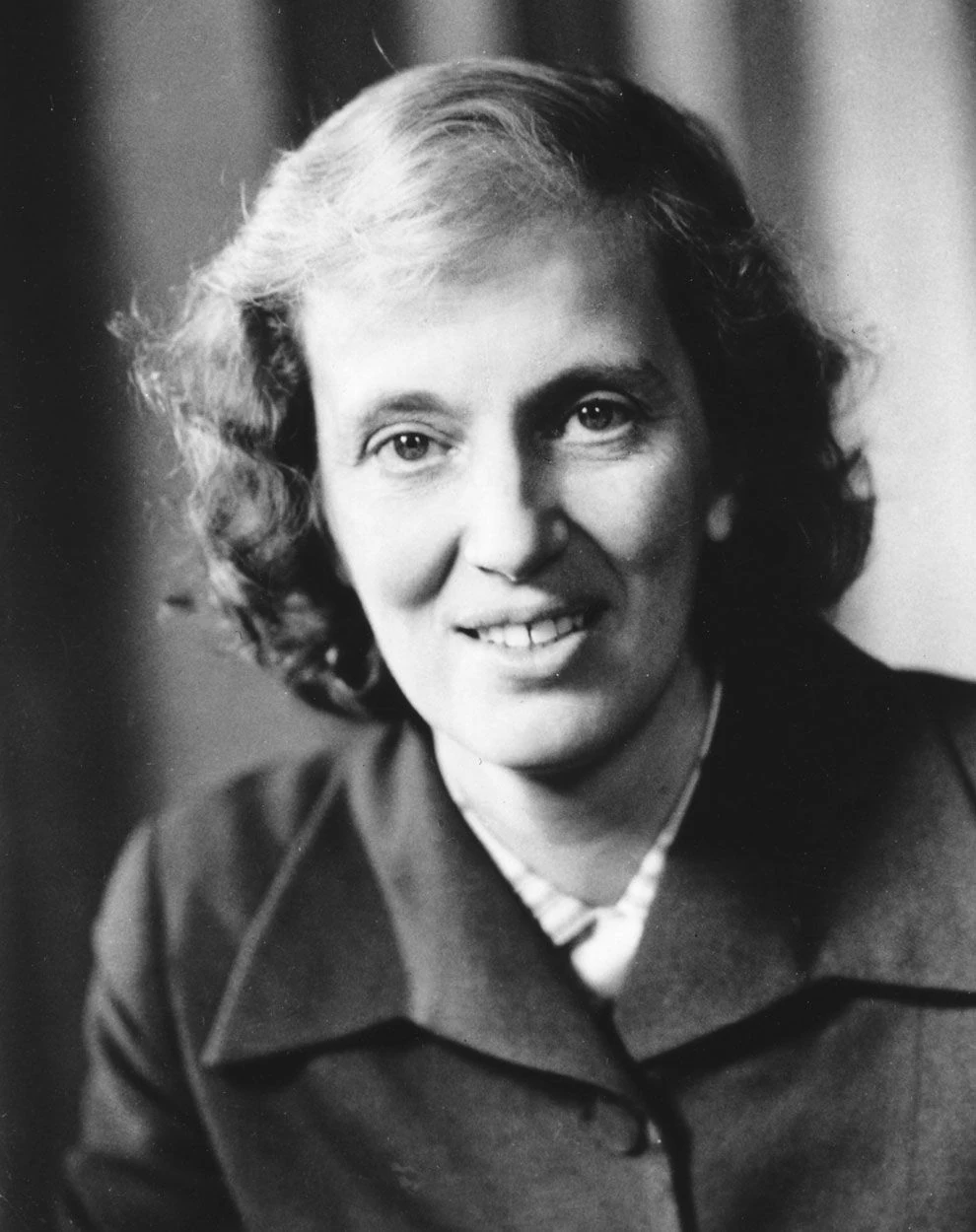
Dorothy Hodgkin: Illuminating the Shadows of Biochemistry
In the annals of British science, few names shine as brightly as Dorothy Hodgkin's. An eminent chemist, Nobel Prize laureate, and a trailblazer for women in science, Hodgkin's contributions to the field of X-ray crystallography have left an indelible mark on both the scientific community and the broader tapestry of British heritage.
Early Life and Education
Dorothy Mary Crowfoot was born on 12 May 1910, in Cairo, Egypt, where her archaeologist father was stationed. From an early age, Dorothy exhibited a keen interest in science, nurtured by her mother’s introduction to the world of crystals. This childhood curiosity crystallised into a lifelong passion as she pursued her education at the University of Oxford. It was there, under the tutelage of brilliant minds, that Dorothy developed an affinity for X-ray crystallography.
Pioneering X-ray Crystallography
X-ray crystallography is a technique that allows scientists to visualise the three-dimensional structures of molecules by observing the patterns formed when X-rays are diffracted through them. When Hodgkin entered the field, it was still in its nascent stages—a shadowy frontier requiring precision and patience to chart.
Hodgkin's first major breakthrough came in 1945 when she successfully mapped the structure of penicillin, revolutionising our understanding of antibiotics. This success was followed by another monumental achievement in 1956, when she elucidated the structure of vitamin B12, a molecule crucial for human health. The latter success earned her the prestigious Nobel Prize in Chemistry in 1964, making her one of the few women at the time to receive such a distinction.
Insulin: The Crown Jewel
Perhaps her most celebrated work came later in her career with the mapping of insulin, a hormone vital for the regulation of blood sugar. This was a Herculean task, one that took over three decades to complete, and it cemented her reputation as a titan in the field. The determination, meticulousness, and sheer intellect displayed in this endeavour not only advanced biochemistry but also had profound implications for diabetes treatment worldwide.
Advocate and Mentor
Beyond her scientific prowess, Dorothy Hodgkin was a fervent advocate for education and the advancement of women in science. Despite the barriers and biases of her time, she never wavered in her commitment to mentorship, often encouraging young women to pursue careers in scientific fields. Her life serves as a testament to perseverance and the importance of providing equal opportunities for all.
Legacy and Impact
Dorothy Hodgkin’s contributions have had a lasting impact, both within the United Kingdom and internationally. The techniques she refined continue to be pivotal in modern biochemical research, influencing everything from the development of pharmaceuticals to the burgeoning field of molecular biology.
Hodgkin’s story also highlights the importance of diversity and inclusivity in the scientific community. Her achievements have inspired countless women to follow in her footsteps, breaking down barriers and widening the horizons of what is possible in science.
Wrap-Up
In the grand mosaic of British legacy, Dorothy Hodgkin represents a stellar intersection of brilliance, perseverance, and humanity. Her pioneering work in X-ray crystallography not only deciphered the hidden structures of life-saving molecules but also illuminated the path for future generations of scientists. As we look back on the myriad contributions that form the bedrock of Britain's rich heritage, Hodgkin's unparalleled impact on science and society stands as a beacon, reminding us that the pursuit of knowledge and the spirit of inquiry know no bounds.
Through her dedication, intelligence, and unyielding spirit, Dorothy Hodgkin has left an indelible mark on the world. Her legacy is not just one of scientific achievement but also of inspiration and innovation—a fitting tribute to the enduring spirit of British scholarship and discovery.