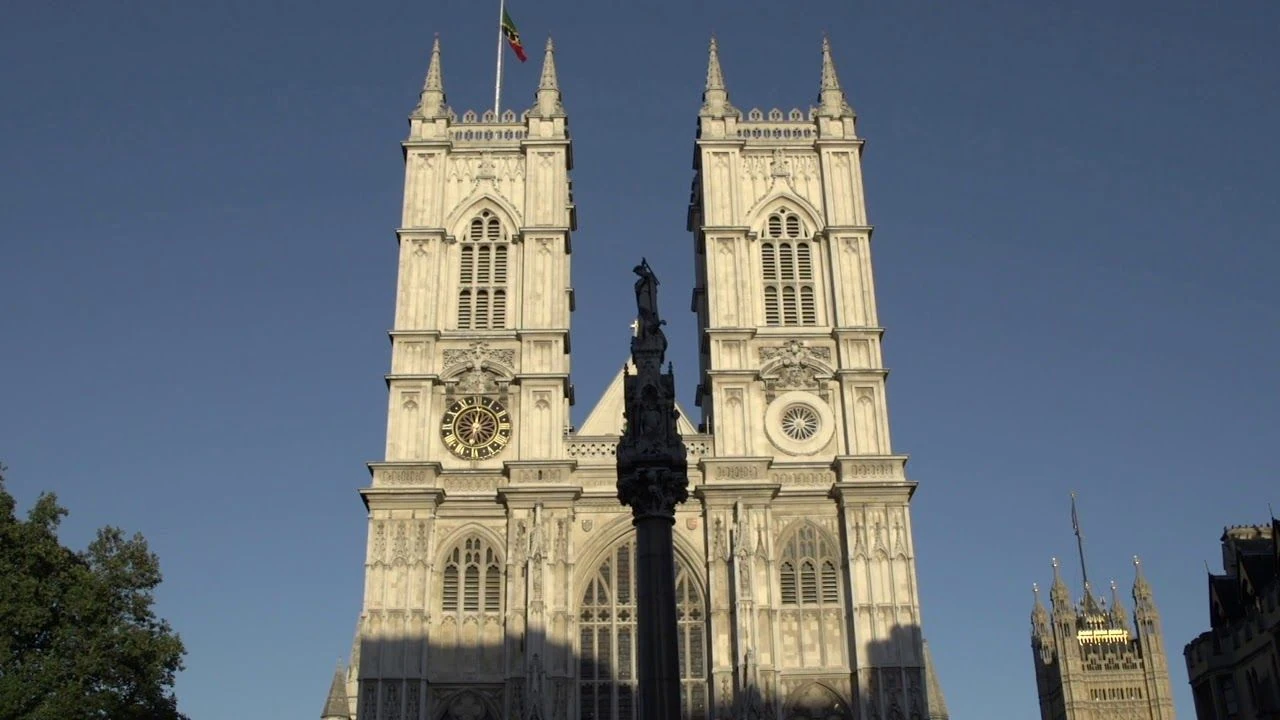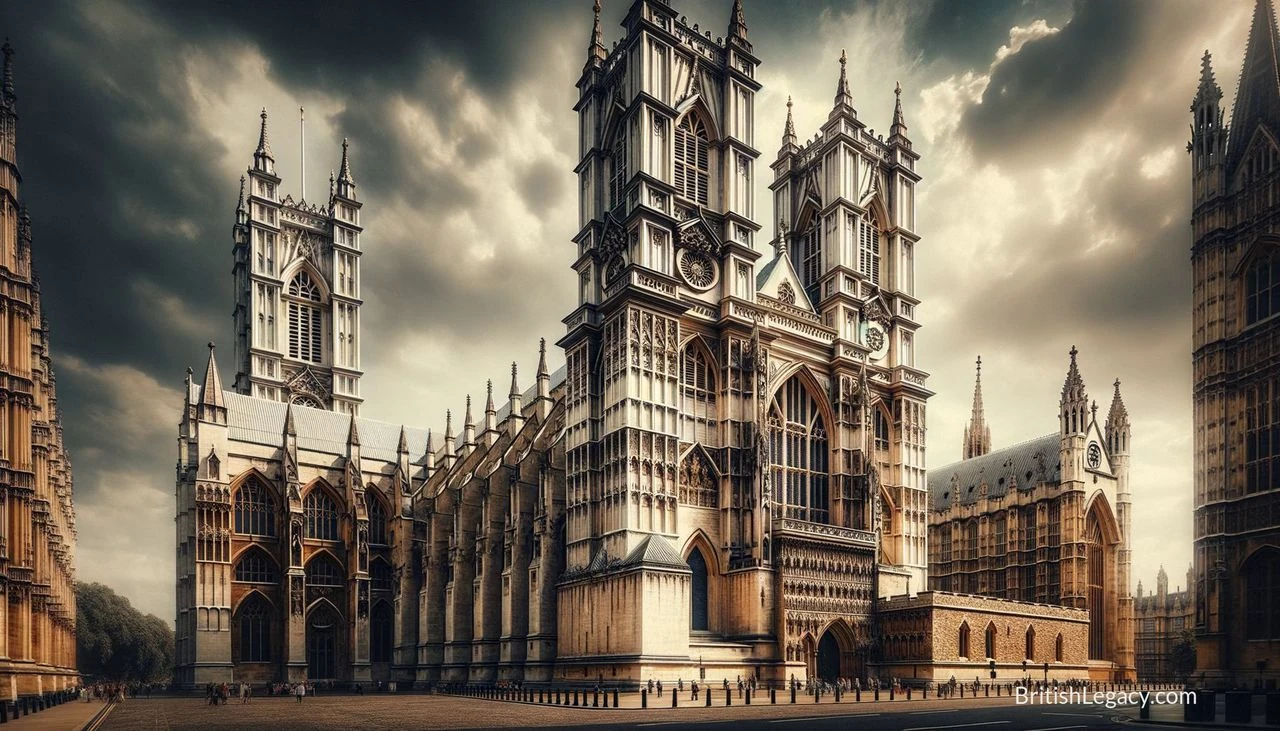
Westminster Abbey is both a place of worship and a setting for some of Britain’s most visible ceremonies. Its Gothic architecture stands beside the Houses of Parliament; its history encompasses royal coronations and weddings, as well as remembrance of writers, scientists and other public figures. These roles have accumulated over centuries, making the Abbey a working church as well as a record of changing religious and national life.
Medieval beginnings and Gothic rebuilding
The Abbey’s history reaches back to the early medieval period. Its beginnings are placed in 960, when Benedictine monks founded a church on the site. Edward the Confessor began a reconstruction in 1045, in the Romanesque style. The building familiar today owes much to Henry III, who undertook a major rebuilding in the thirteenth century and gave it a Gothic character.
The architecture makes that history visible. The Abbey’s soaring vaults, carved stonework and stained glass form part of a building that continues to serve as a devotional space. The Henry VII Chapel is noted for its fan vaulting, while the Lady Chapel is distinguished by its carvings. Together, these features show how craftsmanship and religious purpose are joined in the Abbey’s fabric. Its position beside Parliament also places it close to the institutions of national government.
Coronations, weddings and mourning
Westminster Abbey is closely associated with the coronation of English and British monarchs. William the Conqueror was crowned there in 1066, establishing a tradition that has made the church a setting for the rites of monarchy. The Coronation Chair, commissioned by Edward I in 1296 to contain the Stone of Scone, gives that ceremonial history a physical focus. The chair and stone connect the pageantry of coronation with a longer history of the British Isles.
Royal weddings have brought another kind of ceremony to the Abbey. The marriage of Prince William and Catherine Middleton took place there in 2011, attracting attention around the world. The church has also been a setting for national mourning: the source account associates it with the funerals of Sir Winston Churchill and Sir Isaac Newton. Its ceremonial life therefore encompasses both celebration and commemoration, alongside its continuing religious use.
Memorials and a record of cultural life
The Abbey’s monuments preserve more than the story of monarchy. Poets’ Corner is associated with Geoffrey Chaucer, Charles Dickens and Jane Austen, placing writers of different generations within a shared space of remembrance. The Abbey’s account also describes royal and ecclesiastical objects, effigies and manuscripts among its historical holdings. These memorials and collections add cultural and institutional history to the story told by the building’s architecture.
That breadth matters: visitors encounter a church whose significance is expressed not only through its ceremonies, but through the people and traditions it has chosen to remember. Its reputation extends beyond Britain, while the building itself remains rooted in London and in the continuing life of its congregation.
Why Westminster Abbey deserves a place in British Legacy
Westminster Abbey deserves a place in British Legacy because its history brings together distinct parts of British public life. It is a church with medieval beginnings and a Gothic form shaped by rebuilding; it is also the traditional setting for coronations. The Coronation Chair and the Stone of Scone make that ceremonial role tangible. At the same time, the Abbey remains a place of worship, rather than simply a monument to past rulers. Its architecture, religious purpose and public ceremonies are intertwined in a single London institution.
The Abbey’s memorials broaden that story beyond monarchy. Poets’ Corner and the names of writers such as Chaucer, Dickens and Austen show how literary achievement has been commemorated alongside royal occasions and national mourning. The result is a building that holds several kinds of memory at once: religious, political and cultural. Its British significance lies in these specific, continuing roles—not in abstract claims about national identity, but in the ceremonies, worship and acts of remembrance that have taken place within its walls.