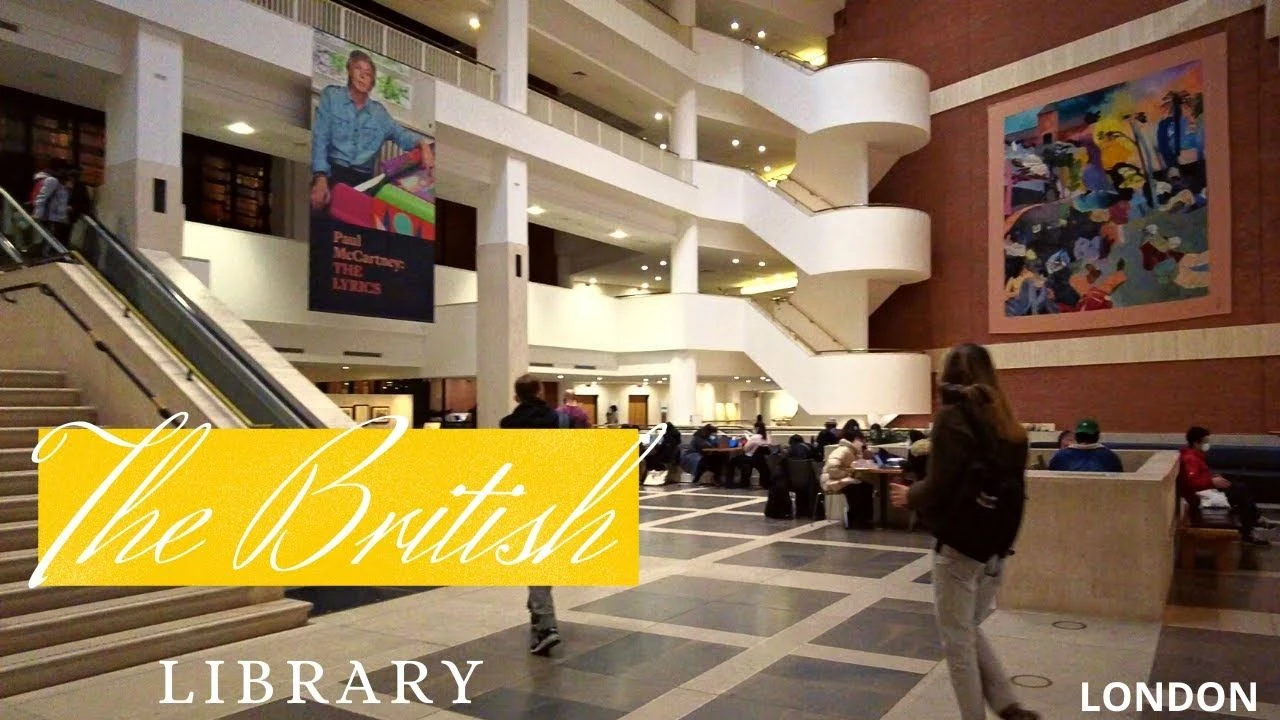
The British Library is both a national collection and a place where people encounter books, manuscripts and other records of human knowledge. Its story reaches back to 1753, when its collections formed part of the British Museum; it became a separate institution in 1973. Today, its holdings span historical manuscripts and printed books as well as contemporary digital resources, supporting research while giving visitors and online users ways to explore the past.
From the British Museum to a national library
The library’s origins lie in the British Museum, but its separation in 1973 gave it a distinct institutional identity. The account describes a collection of more than 170 million items, extending from ancient manuscripts to digital resources. That breadth helps explain why the library serves different purposes: it preserves material, makes it available for study and presents selected parts of its collections to the public.
Its holdings include the Magna Carta, the Lindisfarne Gospels and the Gutenberg Bible. These objects represent different kinds of historical evidence: a document associated with constitutional history, an illuminated manuscript and an early major book printed using movable type. Together, they make visible the range of material gathered by a national library, from texts important to political and legal history to works valued for their religious, artistic and printing histories.
Collections for study and discovery
The library’s resources support work across subjects including science, technology, history, literature and the arts. Researchers use its collections to consult material relevant to their studies, while the institution’s digitisation projects extend access beyond people able to visit in person. British Library Sounds and the International Dunhuang Project are named as examples of projects through which collections can be explored online.
Online access changes how readers can encounter some of the library’s holdings: geographical distance need not prevent someone from exploring digitised material. Digitisation does not replace the original objects or the work of preserving them. Rather, it adds another route to collections, making selected resources available to people who might otherwise be unable to consult them directly.
Exhibitions and public programmes
The library also opens its collections and subjects to general audiences through exhibitions, lectures, workshops and educational activities. Shakespeare in Ten Acts and Harry Potter: A History of Magic are examples of exhibitions that bring literary subjects to public attention. Such displays offer visitors a focused way into a topic, while the library’s broader programme provides opportunities for learning beyond the reading room.
Its public work is not limited to exhibitions. The account also describes writer-in-residence programmes and collaborations with contemporary authors and artists. These activities connect the library’s historical collections with present-day creative work, giving the institution a role in cultural life as well as in the preservation and study of older material.
Why the British Library deserves a place in British Legacy
The British Library deserves a place in British Legacy because its work links the preservation of important records with practical opportunities to use and encounter them. The Magna Carta, Lindisfarne Gospels and Gutenberg Bible offer distinct ways of understanding the past; they are not simply celebrated objects, but examples of the varied evidence held in a national collection. The library’s support for research across many subjects gives that preservation a continuing purpose: collections can inform study rather than remain inaccessible.
Its contribution also reaches beyond scholars and physical visitors. Digitisation projects such as British Library Sounds and the International Dunhuang Project make selected material available online, while exhibitions, workshops and educational programmes invite wider audiences to engage with ideas and collections. Writer-in-residence programmes and work with contemporary artists and authors extend that public role into current creative life. Together, these activities show a specific British legacy: an institution rooted in the nation’s public collections that preserves, shares and interprets knowledge for audiences in Britain and beyond.