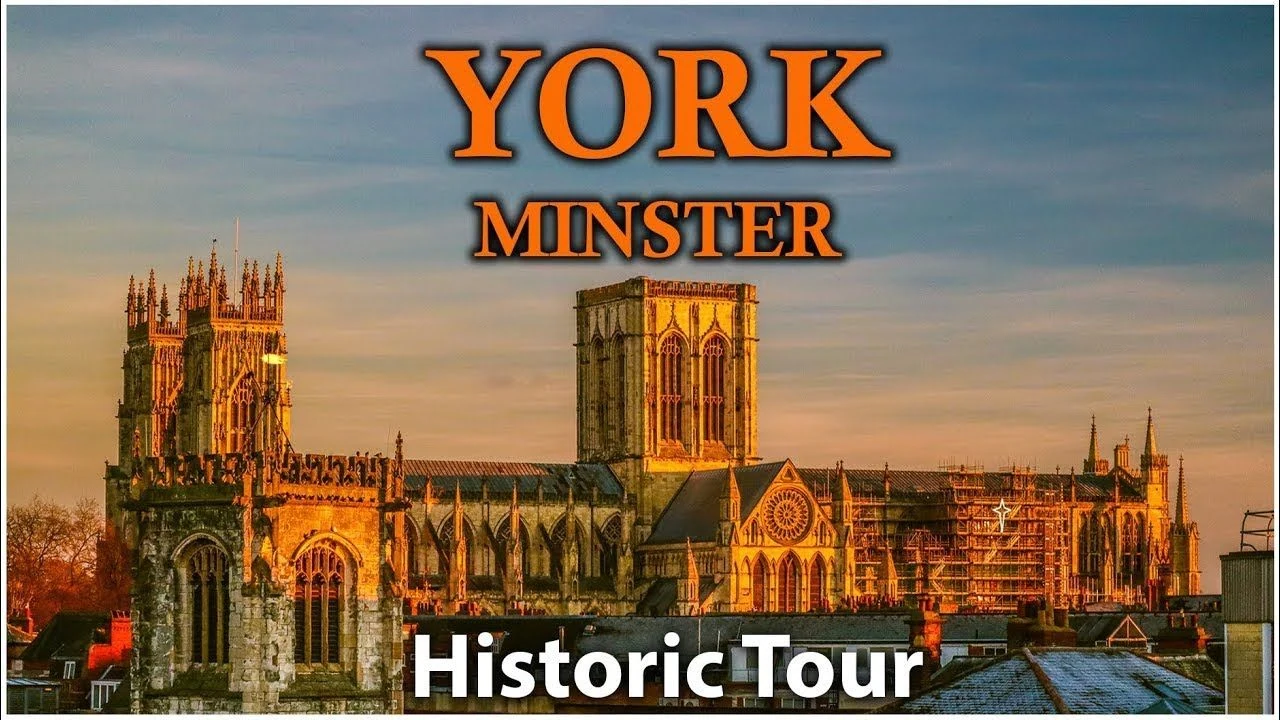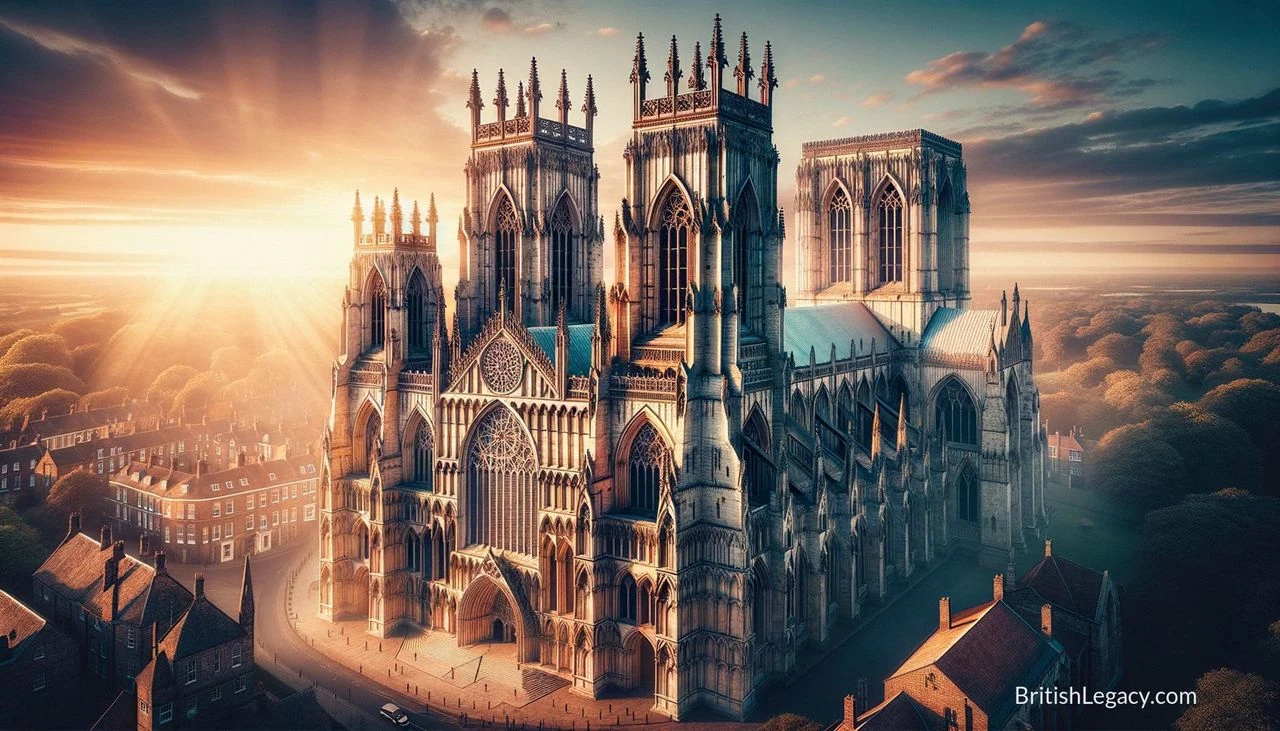
York Minster is a cathedral whose history can be read in its changing fabric: a medieval Gothic building shaped over centuries, with a celebrated collection of stained glass and spaces that served both worship and church governance. Standing in the centre of York, it connects the city’s earlier history with an active religious and cultural life. Its significance lies not only in its scale, but also in the craftsmanship, stories and continuing uses held within its walls.
A cathedral built over centuries
The earliest recorded mention of a church on the site dates to 627. The building visible today began to take shape in the 13th century, as successive phases of construction added to and transformed the Minster. Its Gothic character is evident in its soaring spires, intricate stonework and vaulted interior. Rather than the work of a single moment, the cathedral is the result of generations of building and care.
The West Front gives visitors an imposing entrance, with medieval sculpture and large stained-glass windows. Inside, the nave’s vaulting draws the eye upwards and gives the space a sense of height and breadth. The Choir, with its wooden stalls and high altar, has a different character: a more enclosed setting for worship within the larger building. Together, these spaces show how architecture, decoration and religious purpose are joined in the Minster.
The Chapter House offers another view of the cathedral’s life. Its octagonal form and carved walls distinguish it from the main body of the building. It was used for ecclesiastical meetings, linking the Minster’s architecture to the organisation of church affairs and the work of its clerics.
Stories told in glass and stone
Two of the Minster’s best-known windows are the Rose Window and the Great East Window. The Rose Window is associated with the union of the Houses of York and Lancaster, whose marriage brought the Wars of the Roses to an end. Its circular design and coloured glass make it both an important work of decoration and a reminder of a defining episode in English dynastic history.
The Great East Window presents a much larger sequence of biblical scenes, from the Creation to the Day of Judgement. It is described as the largest expanse of medieval stained glass in the world and contains more than 300 scenes. The scale of the window makes it a striking feature in its own right; its narrative also shows how stained glass could communicate religious stories within a church.
Below the cathedral, the Undercroft brings a different timescale into view. Remains associated with a Roman fortress and Anglo-Saxon material point to the history of York before the Minster’s present structure was built. The space preserves evidence from earlier periods beneath the medieval building, placing the cathedral within a longer story of the city.
Worship, conservation and public life
York Minster remains a centre of worship, as well as a historic building visited for its architecture and art. Its activities include choir concerts, exhibitions and public events. These uses keep the cathedral connected to contemporary life rather than leaving it solely as a monument to the past.
The building has faced fires and the effects of age, and its survival depends on continued restoration and maintenance. The work of craftsmen and conservationists is part of its history: the Minster’s fabric is not simply inherited, but cared for and repaired. Its architectural details also make it a resource for the study of medieval craftsmanship, from stonework and carving to the design and preservation of stained glass.
Why York Minster deserves a place in British Legacy
York Minster deserves a place in British Legacy because it brings several strands of the country’s history together in a single, still-used building. Its construction, begun in its present form in the 13th century, records centuries of religious life and skilled making. The West Front, vaulted nave, Chapter House and great windows each reveal different aspects of that history. The Rose Window’s association with the union of York and Lancaster connects the cathedral’s art to a major turning point in the Wars of the Roses, while the Great East Window preserves an extensive visual account of biblical stories.
The Minster’s value is not confined to its medieval fabric. Its Undercroft places the building alongside evidence of earlier York, and ongoing conservation helps preserve that layered inheritance. Worship, concerts, exhibitions and public events give the cathedral roles in the present as well as the past. For British Legacy, York Minster is therefore significant not simply as a landmark, but as a place where architecture, religious practice, artistic skill and the history of a city remain closely connected.