
Virginia Woolf: the modernist who made room for new voices
Novelist, essayist and publisher, Woolf reshaped literary form and argued that women needed the means and freedom to write.
Read the entryBRITISH LEGACY / THE COLLECTION
British writers have shaped literary genres and styles, contributing enduring works to the global canon. Their narratives, whether fictional or factual, provide insight into the human condition and continue to resonate with new generations. British writers remain at the forefront of literary innovation and exploration.
85 entriesNovelist, essayist and publisher, Woolf reshaped literary form and argued that women needed the means and freedom to write.
Read the entry
From Jamaica Inn to The Birds, Daphne du Maurier built a body of fiction in which landscape, memory and menace remain closely entwined.
Read the entry
A life at sea and in England informed novels that confronted imperial power, isolation and moral uncertainty.
Read the entry
Gilbert Keith Chesterton made paradox a tool of argument, wrote across fiction and journalism, and created one of Britain’s best-known priest-detectives.
Read the entry
An Irish and British novelist and philosopher, Murdoch joined intricate fiction to a distinctive account of attention, moral perception and the Good.
Read the entry
From The Time Machine and The War of the Worlds to histories and political essays, Wells joined scientific speculation to arguments about society.
Read the entry
From Hackney repertory actor to Nobel laureate, Pinter transformed the tensions of ordinary conversation into a distinctive force in British theatre.
Read the entry
From the Booker-winning Midnight’s Children to the controversy surrounding The Satanic Verses, Rushdie’s fiction has crossed borders and tested the limits of free expression.
Read the entry
The novelist behind Lord of the Flies made human nature, power and moral choice the subjects of a varied literary career.
Read the entry
From Canterbury scholar to the author of Tamburlaine and Doctor Faustus, Marlowe helped establish blank verse as a force in Elizabethan theatre.
Read the entry
From Dulwich College to Jeeves and Bertie Wooster, Wodehouse fashioned a distinctive comic world that travelled far beyond England.
Read the entry
Born to British parents in Persia and raised in Southern Rhodesia, Lessing wrote about divided societies, fractured identity and women's experience.
Read the entry
The Irish poet helped build a national literary movement, founded the Abbey Theatre and carried Irish cultural independence onto the international stage.
Read the entry
The Scottish author of The Thirty-Nine Steps carried a career in literature, wartime information and politics to Canada’s highest viceregal office.
Read the entry
From the comic shock of Decline and Fall to the wartime memories of Brideshead Revisited, Waugh made a sharply individual portrait of twentieth-century English life.
Read the entry
French-born and educated in England, Belloc became a writer of comic verse, essays and polemical history, as well as an MP for Salford South.
Read the entry
From the West End stage to stories shaped by travel and medicine, Maugham built a long career as one of the most widely read English writers of his generation.
Read the entry
From the wartime upheaval of Shanghai to the motorways and high-rises of his fiction, Ballard transformed unease about technology, landscape and desire into a distinctive body of English writing.
Read the entry
The creator of The Forsyte Saga also brought questions of class, law and social responsibility to the stage.
Read the entry
From wartime broadcasting and family hardship to Booker-winning novels, Fitzgerald made a late start as a novelist and built a distinctive literary career.
Read the entry
From Edinburgh classrooms to the unsettling precision of The Prime of Miss Jean Brodie, Spark made authority, belief and human fallibility subjects for comedy and scrutiny.
Read the entry
From The Shepheardes Calender to The Faerie Queene, Spenser reshaped English verse while serving in Ireland.
Read the entry
From Metroland to his final novel, Barnes made the uncertainties of memory and identity the material of a distinctive English writing career.
Read the entry
From Howards End to A Passage to India, Forster examined the barriers of class, empire and convention—and the human ties that might cross them.
Read the entry
From prize-winning children’s fiction to Booker-winning Moon Tiger, Lively made the past an active presence in stories for readers of every age.
Read the entry
From My Beautiful Laundrette to The Buddha of Suburbia and Shattered, Kureishi has written about race, class, desire and belonging across film, fiction and memoir.
Read the entry
Born in Nagasaki and raised in Surrey, Ishiguro became a British citizen and one of the most widely recognised novelists writing in English.
Read the entry
From a Pentecostal childhood in Lancashire to award-winning fiction, Winterson has made questions of identity, belief and form central to a distinctive literary career.
Read the entry
The Booker-winning novelist made Thomas Cromwell the centre of a vivid Tudor trilogy and built a wide-ranging career in fiction, memoir and criticism.
Read the entry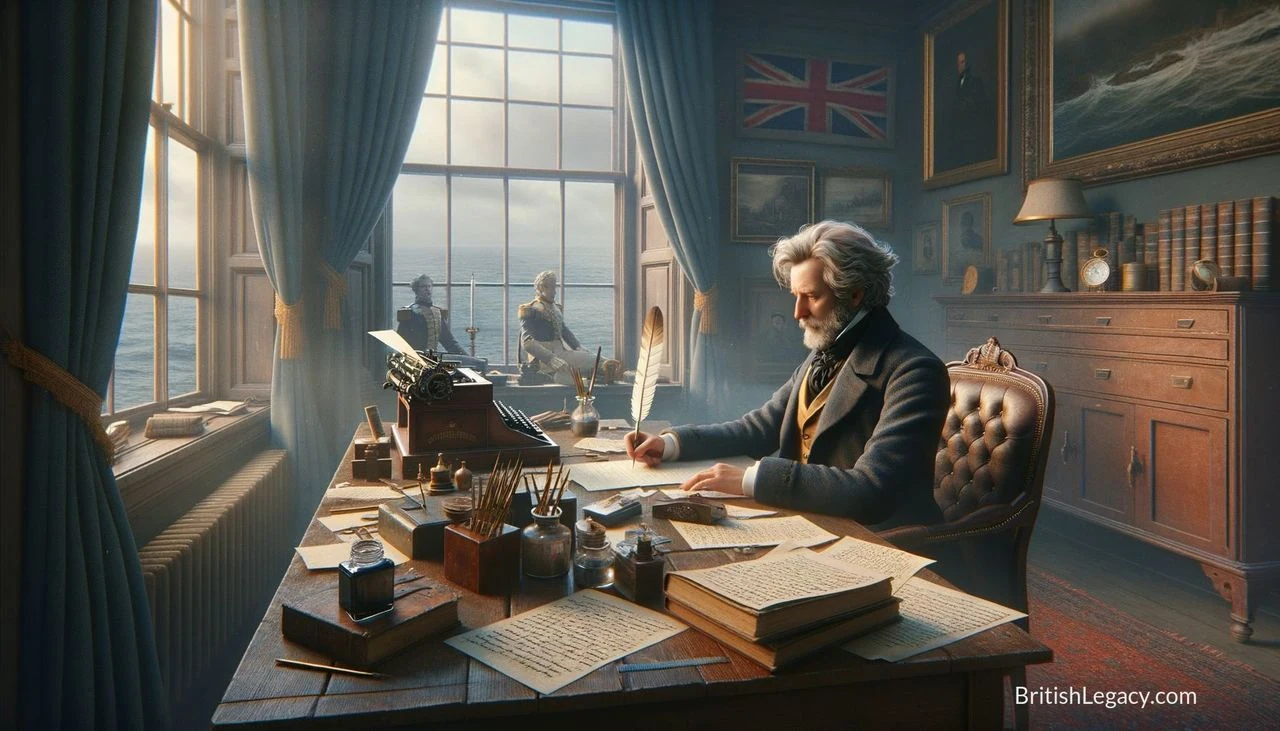
The Aubrey–Maturin novels joined close attention to naval life with a sustained story of friendship, work and adventure.
Read the entry
From the Fens of Waterland to the London–Margate journey of Last Orders, Graham Swift made place and remembered experience central to his fiction.
Read the entry
The novelist’s French-set historical fiction sits alongside a career in journalism, broadcasting and literary reinvention.
Read the entry
From The Rachel Papers to Money and London Fields, Martin Amis made the excesses and anxieties of contemporary life material for fiction.
Read the entry
From the north-west London of White Teeth and NW to The Fraud, Zadie Smith’s fiction and essays move between British life, history and wider questions of identity.
Read the entry
From the Booker-winning Possession to a quartet rooted in Yorkshire, Byatt made intellectual curiosity part of the pleasure of reading.
Read the entry
From unsettling early fiction to Booker-winning Amsterdam and Atonement, McEwan has made moral uncertainty a defining subject of his work.
Read the entry
The Trinidad-born novelist and essayist turned migration, empire and the search for belonging into a varied body of English-language writing.
Read the entry
The South African novelist used stories of private life to examine race, power and moral choice under apartheid.
Read the entry
From Manchester to the international stage, Burgess made language, music and the moral questions of fiction central to a remarkable literary career.
Read the entry
From The Good Companions to An Inspector Calls, Priestley joined Yorkshire storytelling to a searching interest in Britain’s social responsibilities.
Read the entry