
William Wordsworth: poetry, memory and the Lake District
From the experiment of Lyrical Ballads to the posthumous publication of The Prelude, Wordsworth reshaped English poetry and made the landscapes of his home central to his work.
Read the entryFrom the experiment of Lyrical Ballads to the posthumous publication of The Prelude, Wordsworth reshaped English poetry and made the landscapes of his home central to his work.
Read the entry
Charles Lutwidge Dodgson brought mathematical logic, playful language and memorable invention together in two Victorian books that continue to shape British literature.
Read the entry
Born in Bombay, Kipling became one of the most widely read English writers of his age. His stories and poems remain influential, while his imperial politics continue to provoke argument.
Read the entry
Controversial novelist known for his explorations of human sexuality and industrial society in works like "Lady Chatterley's Lover" and "Sons and Lovers."
Read the entry
From the Brontë children’s imaginary worlds to the success of Jane Eyre, Charlotte Brontë built a literary career on vivid invention and a distinct female perspective.
Read the entry
Emily Brontë’s novel first appeared under the name Ellis Bell. Its unsettling passions and unusual narrative have since secured its place in English literature.
Read the entry
From Edinburgh medical student to author of four Holmes novels and fifty-six stories, Conan Doyle built a literary career that reached well beyond Baker Street.
Read the entry
The English writer behind Brave New World ranged from social satire to spiritual enquiry, while warning about the uses of power and technology.
Read the entry
From Belfast and Oxford to the BBC airwaves, Lewis brought medieval literature, imaginative fiction and Christian argument to a broad readership.
Read the entry
From rural Dorset to the novels and poems that examined class, convention and the force of chance.
Read the entry
The Irish writer became one of late-Victorian London’s most successful dramatists. His plays endure alongside the record of the trials and imprisonment that ended his career in Britain.
Read the entry
Mary Shelley’s fiction ranged from Gothic invention to political history. Her career also included travel writing, biography and the careful editing of Percy Bysshe Shelley’s work.
Read the entry
From a wartime hospital dispensary to the West End stage, Christie built a body of work that travelled far beyond the English settings of many of her mysteries.
Read the entry
From the Bloomsbury Group and the Hogarth Press to Mrs Dalloway and A Room of One’s Own, Woolf made literary experiment and women’s intellectual freedom central to her work.
Read the entry
An Oxford philologist drew on language, medieval literature and experience of war to create two of the most influential works of modern fantasy.
Read the entry
From reporting on poverty in Britain to the warnings of Animal Farm and Nineteen Eighty-Four, Orwell made political language part of everyday life.
Read the entry
From Stratford-upon-Avon to London’s stages, Shakespeare wrote tragedies, comedies, histories and sonnets that continue to be performed and read.
Read the entry
From childhood hardship to serial publishing and public readings, Dickens reshaped popular fiction while bringing poverty, class and institutional failure into view.
Read the entry
From the family theatricals at Steventon to six novels of manners, Jane Austen turned courtship, money and rank into enduring comedy and social observation.
Read the entry
A divorced couple meet again on honeymoon with their new spouses in Coward’s 1930 comedy, a play that has travelled from Edinburgh and London to stages around the world.
Read the entry
John Osborne’s 1956 drama put class, marriage and post-war frustration on a cramped Midlands stage—and helped give a generation its name.
Read the entry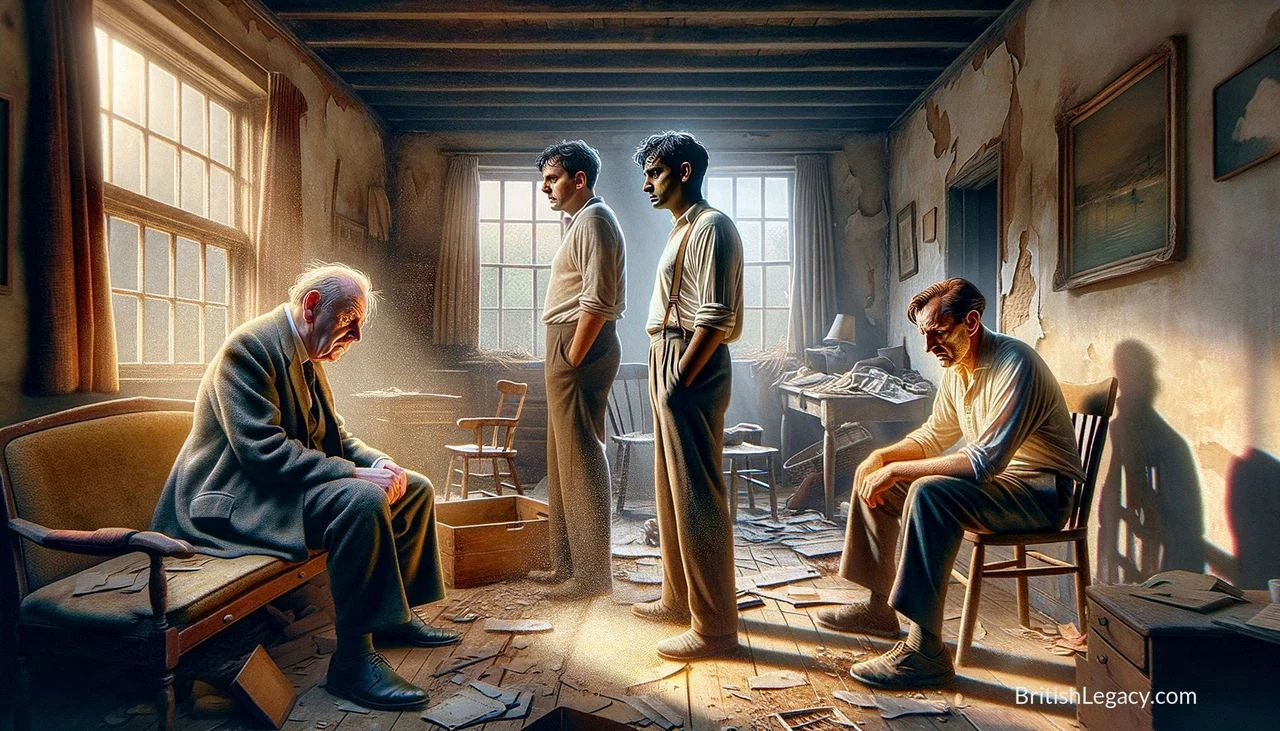
Three men, one cluttered room and a disputed offer of shelter: Pinter’s 1960 play turns everyday talk into a tense contest over trust, identity and home.
Read the entry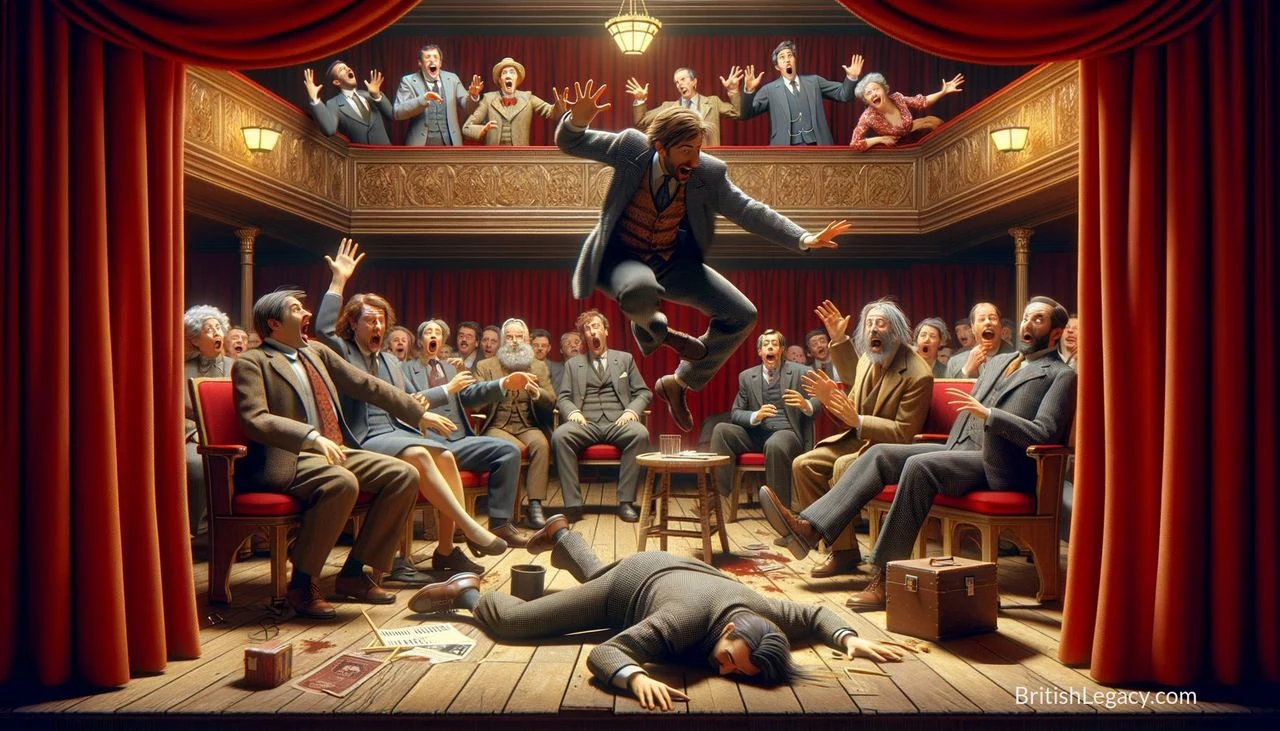
Mischief Theatre’s comedy turns an amateur murder mystery into a precisely timed chain of theatrical disasters, from its London beginnings to productions around the world.
Read the entry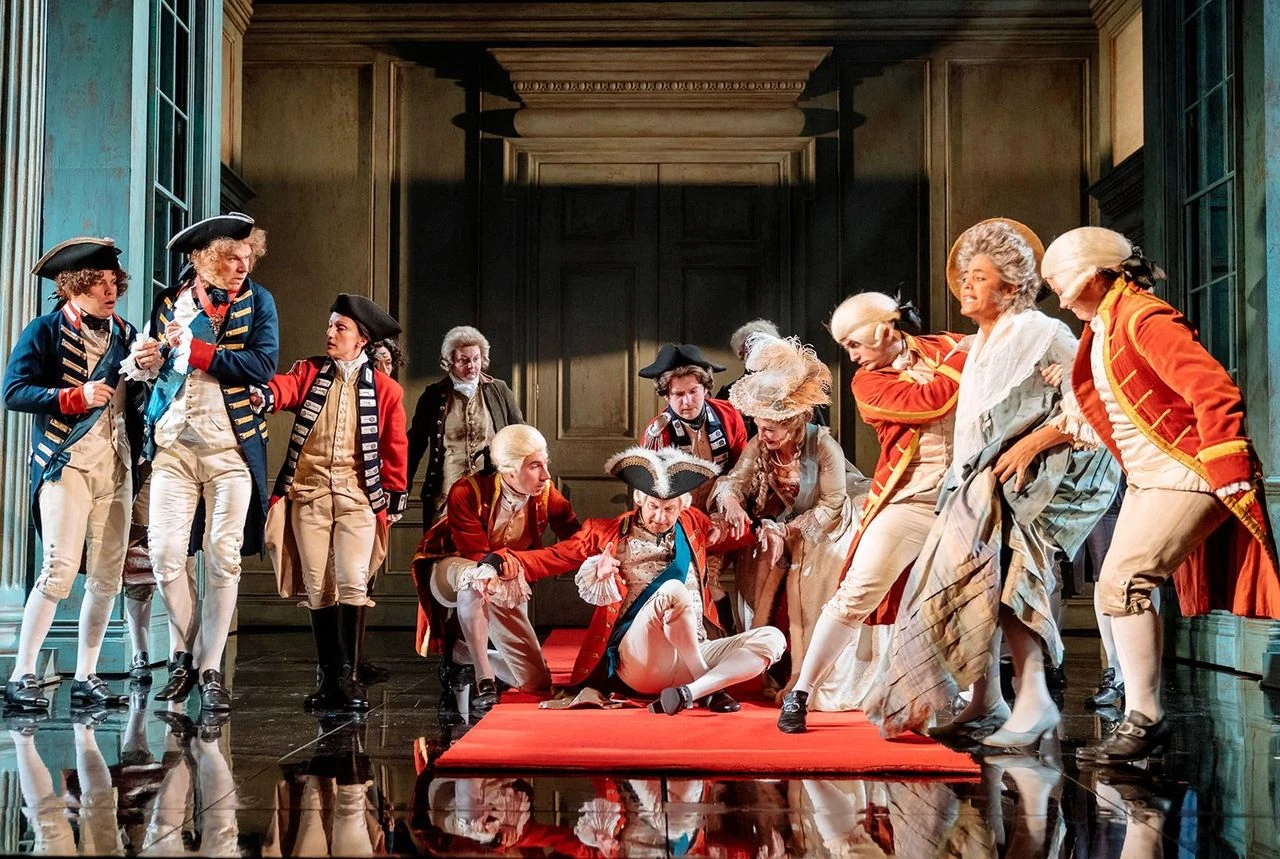
Alan Bennett’s 1991 National Theatre play turns the illness of George III into a drama of private suffering, court politics and the limits of power.
Read the entry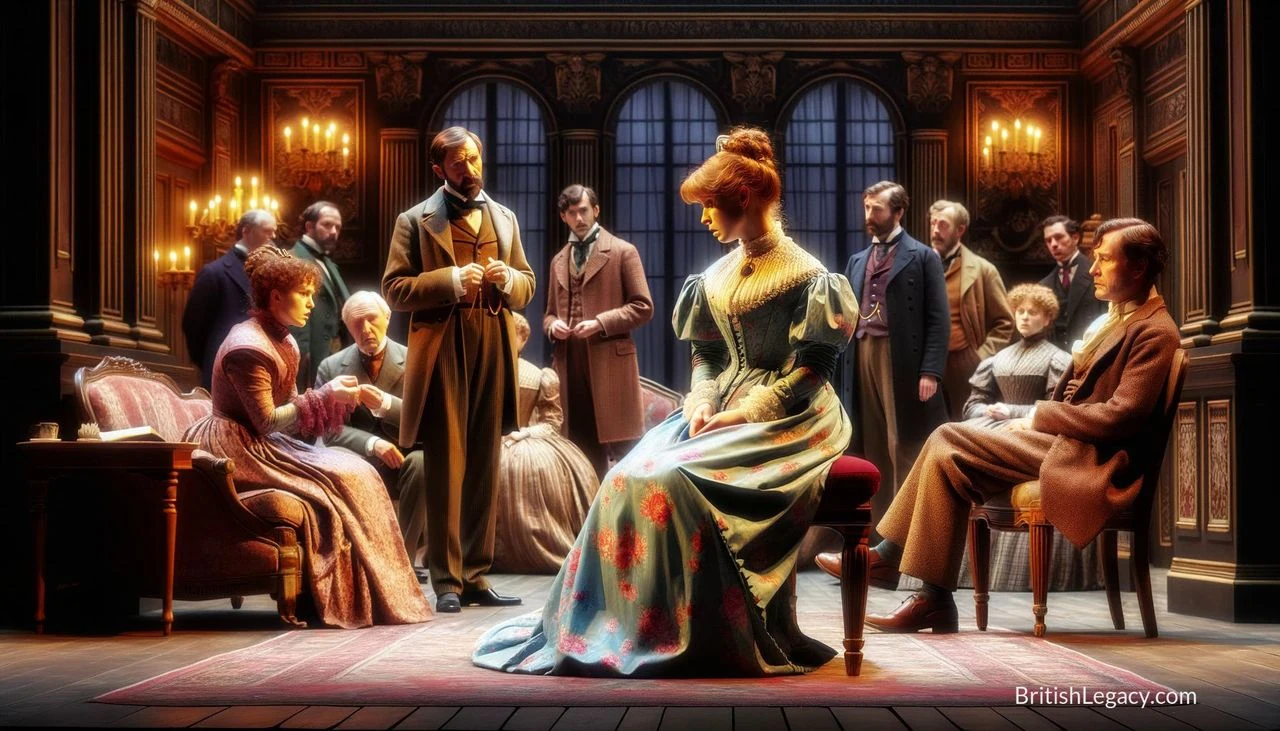
Henrik Ibsen’s drama of marriage, money and independence found an early British stage in London and later a distinct screen life in a British-French film.
Read the entry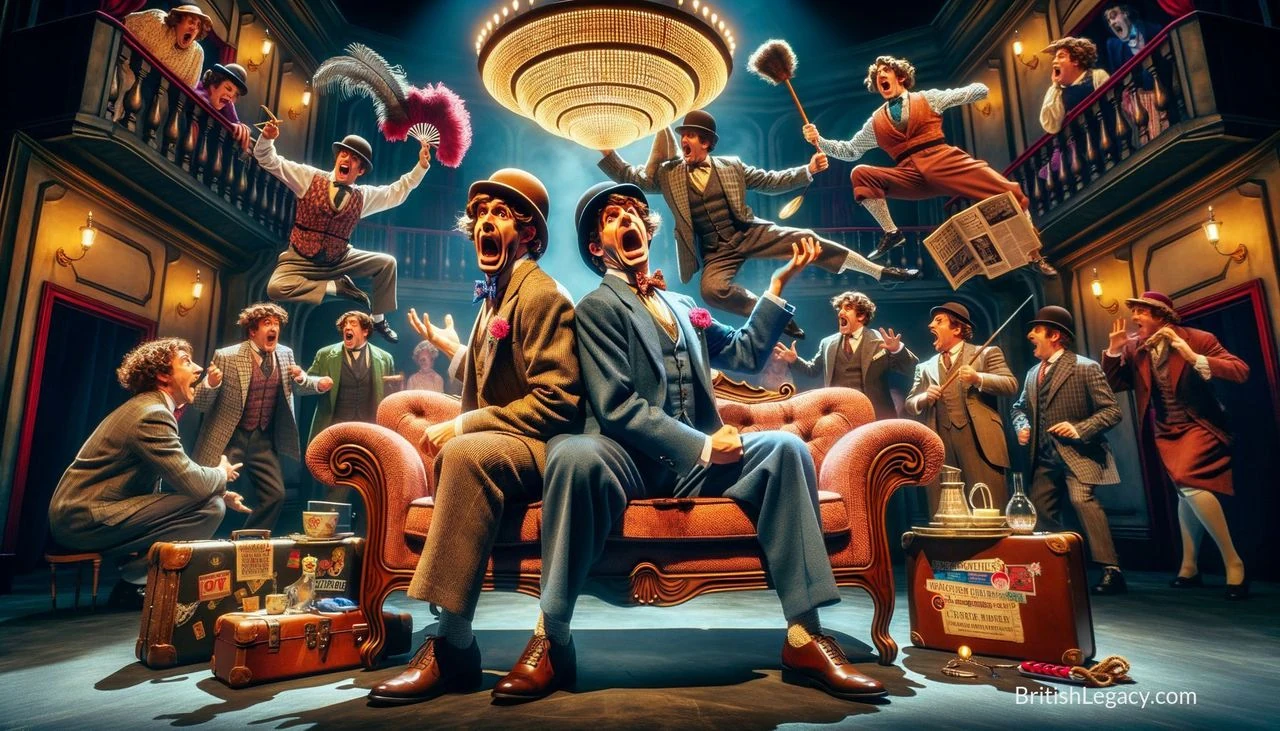
Richard Bean reset Carlo Goldoni’s comedy in 1963 Brighton. The National Theatre production became a West End and Broadway hit, driven by James Corden’s performance and a live skiffle band.
Read the entry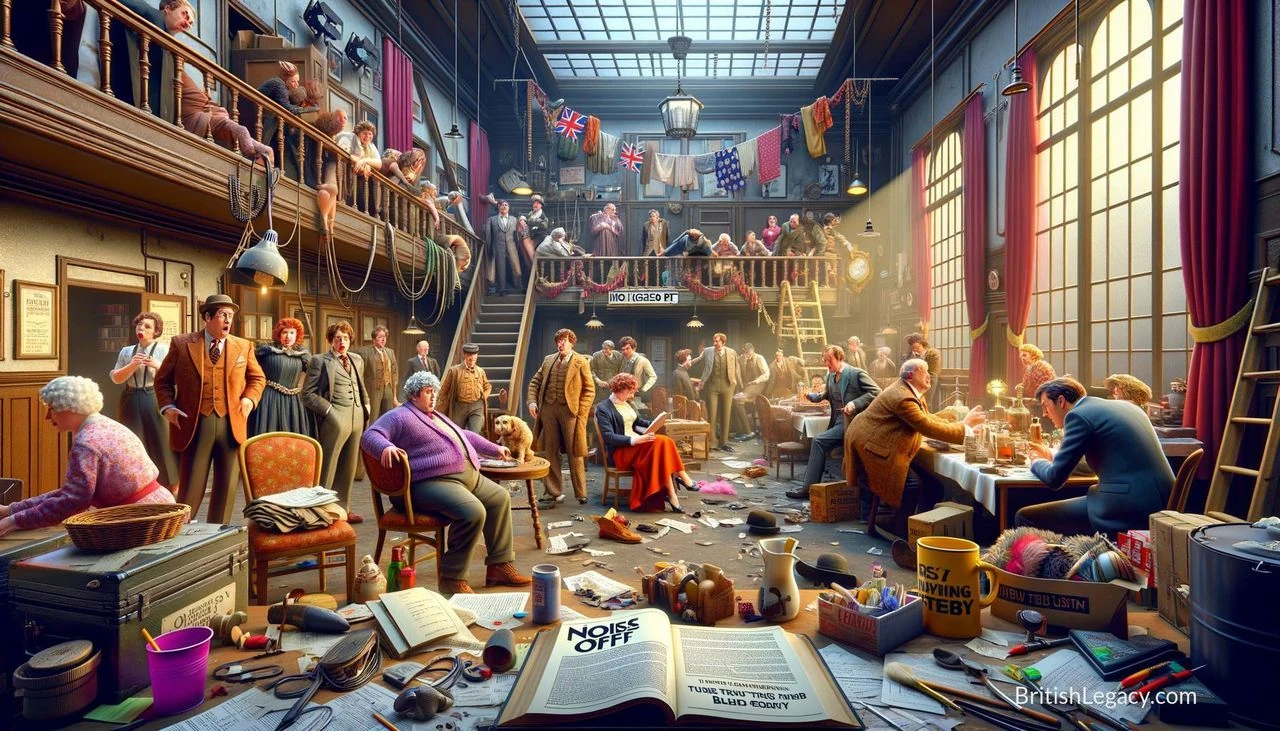
First staged in London in 1982, Michael Frayn’s farce turns the struggle to keep a play on track into a precisely arranged comedy of errors.
Read the entry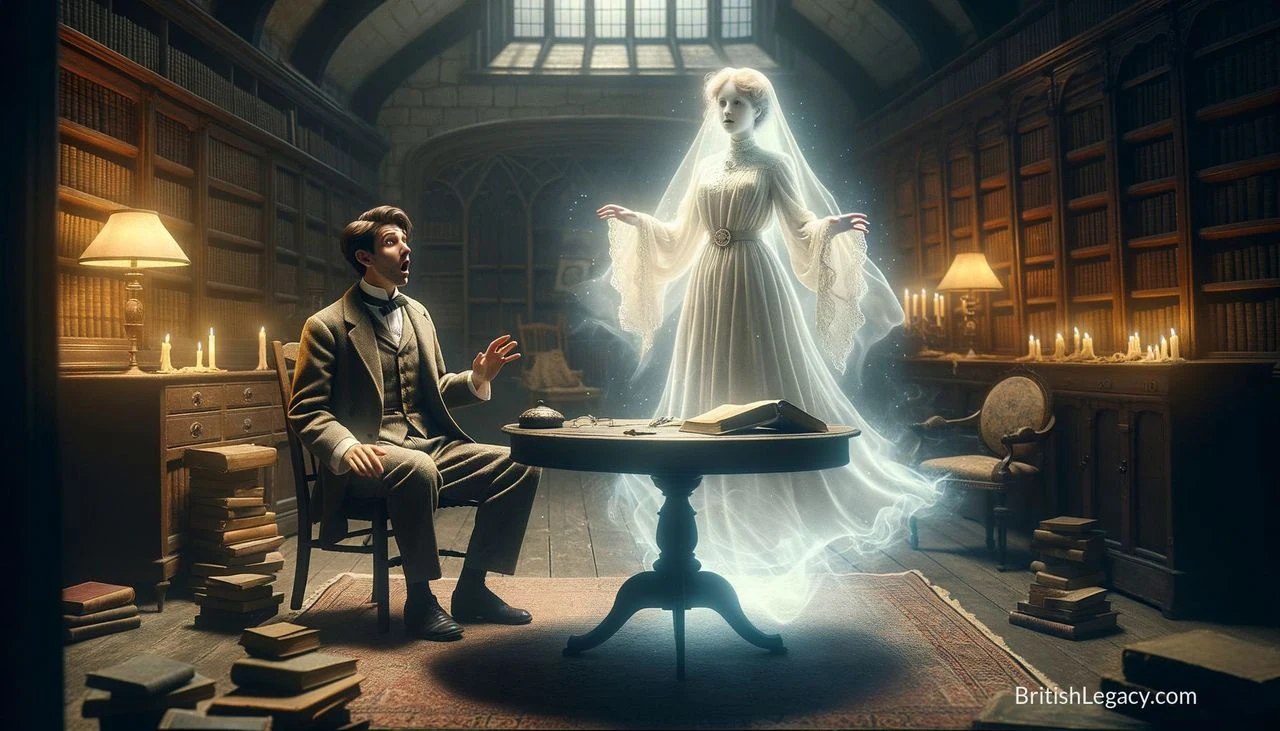
A séance brings a dead first wife into a novelist’s second marriage. Noël Coward’s comedy became a West End record-setter and a fixture of British theatre.
Read the entry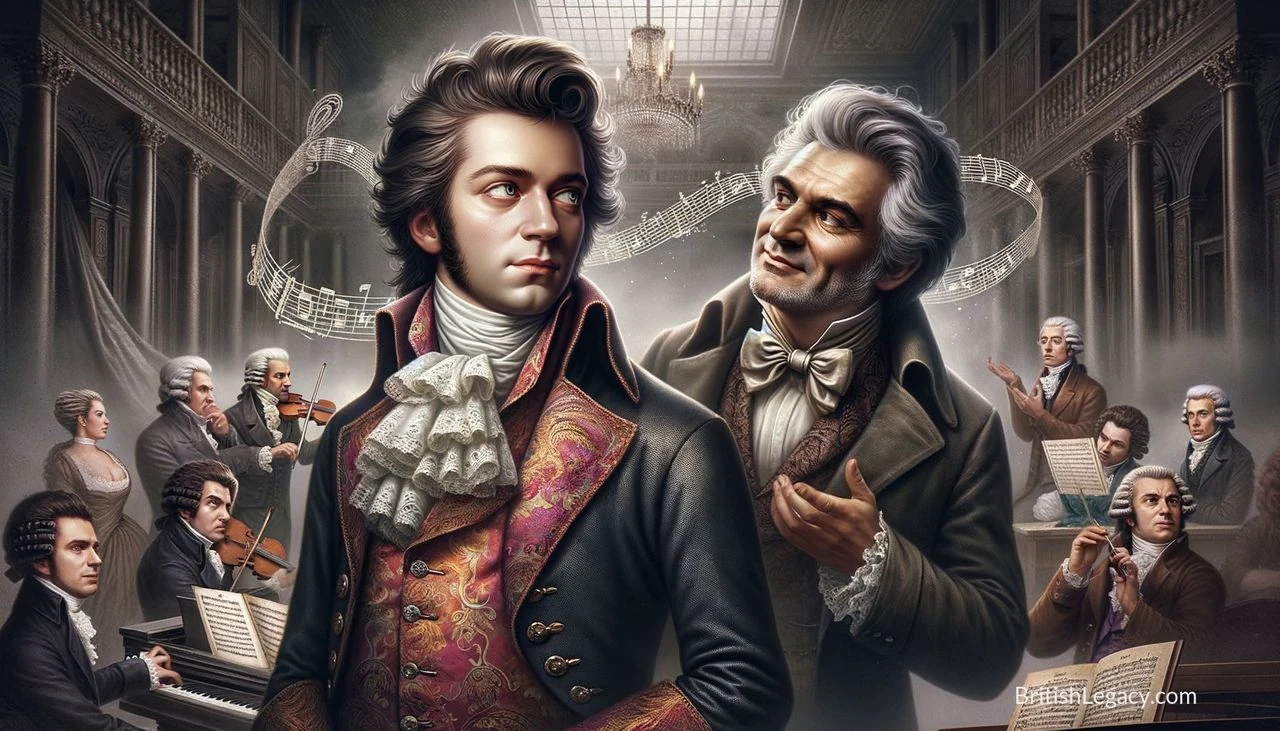
Peter Shaffer’s play turns the imagined rivalry between Mozart and Salieri into a defining success of British theatre.
Read the entry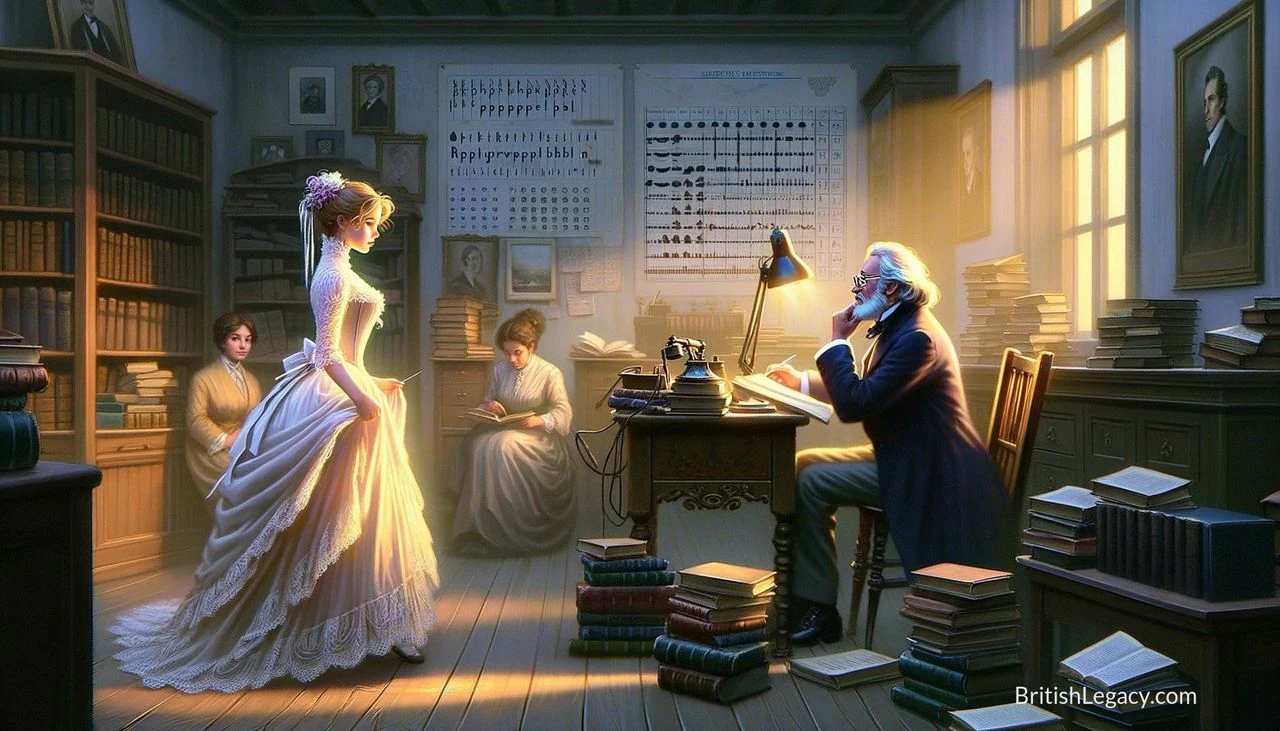
Shaw’s London-set comedy turns a wager about accent into a sharp examination of class and who gets to shape Eliza Doolittle’s future.
Read the entry
Tom Stoppard brings two minor Hamlet characters into the foreground in a comedy about chance, performance and a fate they cannot see.
Read the entry
Stephen Mallatratt’s two-actor adaptation turned Susan Hill’s ghost story into a landmark of British stage horror.
Read the entry
Tom Stoppard’s play connects two eras at an English country house, where mathematics, historical research and personal relationships meet.
Read the entry
First produced in French in Paris, Samuel Beckett’s play reached English-language audiences at London’s Arts Theatre in 1955.
Read the entry
From its 2009 Royal Court premiere to West End revivals and international productions, the play sets a vivid rural community against the stories it tells about itself.
Read the entry
Jez Butterworth’s play brings the Troubles into a rural family home, then carried its Royal Court production from London’s West End to Broadway.
Read the entry
First staged at the National Theatre in 2004, Alan Bennett’s comedy-drama sets rival ideas about education against the pressures of adolescence and university entrance.
Read the entry
First staged at London’s National Theatre in 1973, Peter Shaffer’s play follows a psychiatrist confronting a disturbing case—and his own doubts about what it means to cure.
Read the entry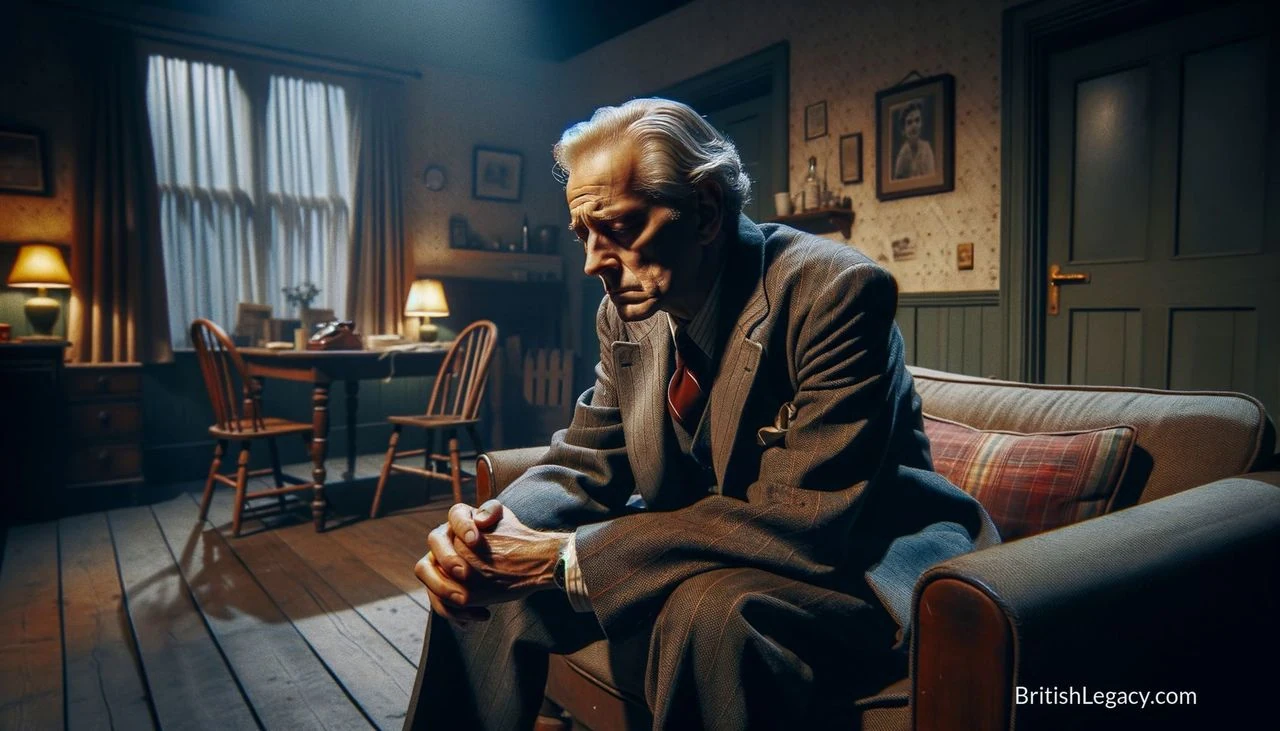
From its 1949 London opening to major National Theatre, RSC and West End revivals, Miller’s tragedy has found a lasting life in Britain.
Read the entry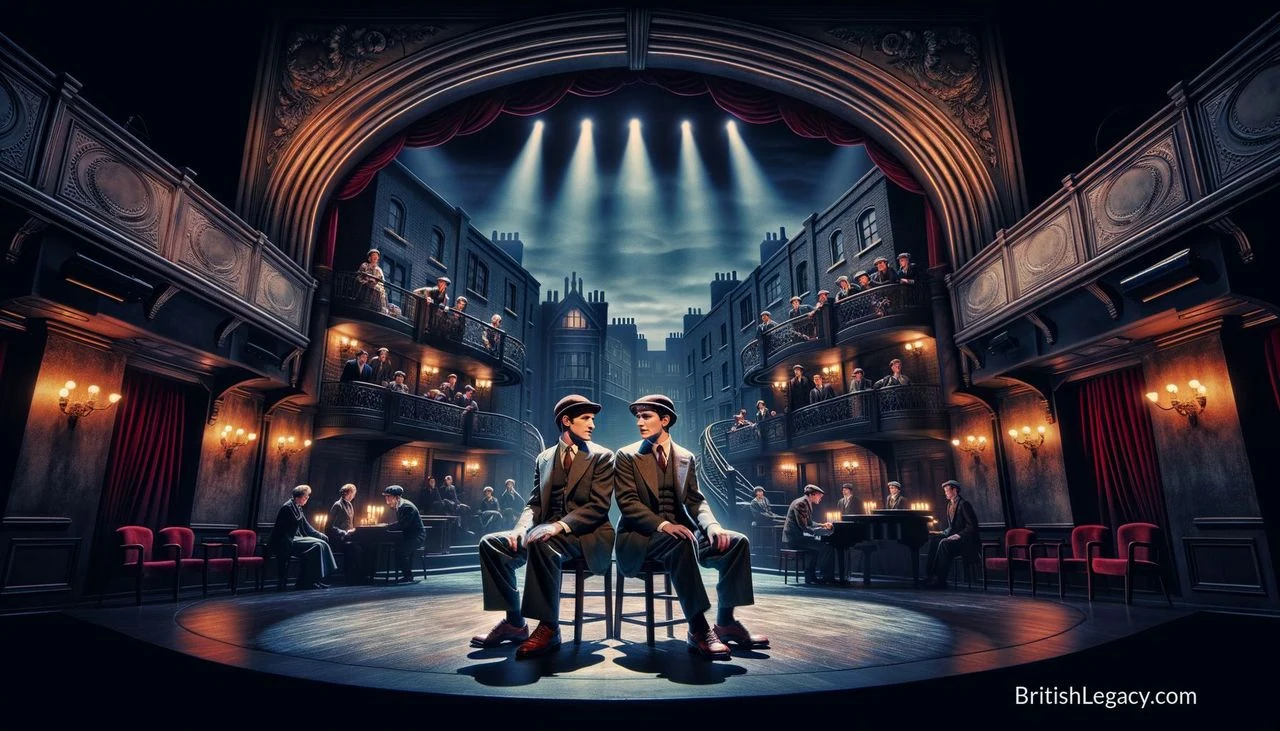
From a Liverpool school play to a long West End revival, Willy Russell’s musical follows separated twins through lives shaped by class, opportunity and circumstance.
Read the entry